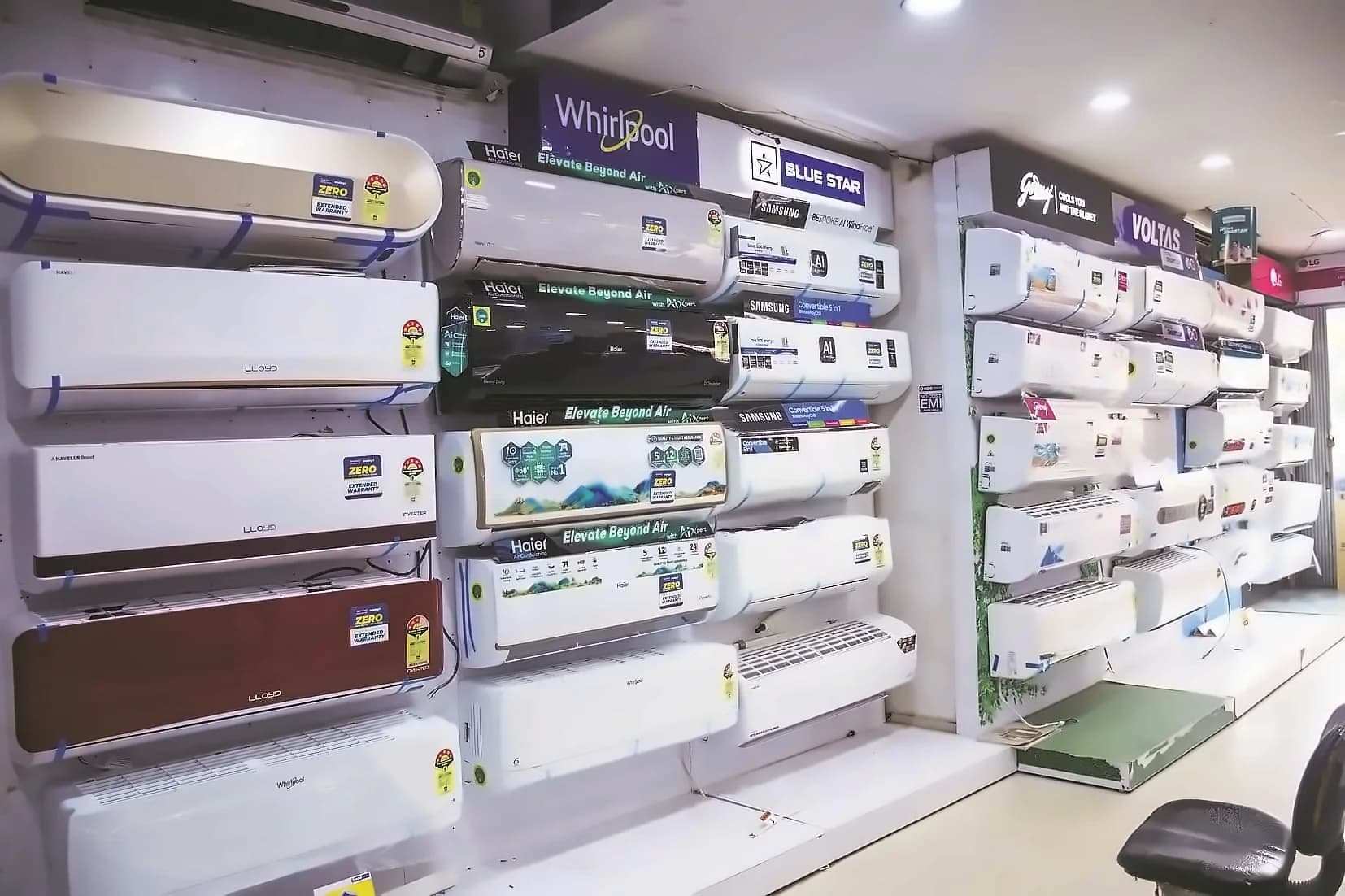
India's consumer durables market is projected to grow 8-10% annually and reach ₹30-32.5 trillion by 2030, according to a joint report by the Boston Consulting Group (BCG) and the Confederation of Indian Industry (CII). The report, titled 'Home Grown, World Ready: The Next Chapter for India's Consumer Durables Industry', indicates the market has substantial headroom for growth, with household penetration of major appliances remaining below that of regional markets. India is expected to remain one of the world's fastest-growing consumer durables markets over the next five years, driven by rising household penetration, growing nuclearisation of families, higher incomes, easier financing, wider distribution and increasing premiumisation.
The report reveals significant penetration gaps across major appliance categories. Only about two in 10 Indian households have a washing machine, compared with seven to 10 in 10 households across regional markets examined. Refrigerator penetration stands at 45-50%, television penetration at 70-75%, and room air-conditioner penetration at 10-15%. The share of affluent-plus households is projected to rise from about 21% to 26% by 2030, while approximately seven in 10 Indian households are expected to be nuclear by then. In comparison, China, the world's largest market, is expected to grow at 1-2% annually through 2030, while the US is projected to expand by 3% and Japan by 1-3%.
According to the report, loan origination value for consumer durables is projected to rise from about ₹15.7 trillion in FY25 to ₹34-36 trillion by FY30. Market growth is estimated to create an incremental ₹40,000-50,000 crore opportunity for domestic value addition over the next five years. India currently has about 50-55% of the domestic value-add potential in consumer durables, which could rise to 65-70% by 2030 as domestic component capacity increases. The report also estimates annual imports of about ₹19,400 crore across seven tracked HS codes for consumer durable components, with RACs accounting for about ₹16,300 crore of this value. Localisation of bill of materials currently ranges between 25-70% across categories, with televisions and air conditioners at the lower end and refrigerators and washing machines at the higher end, estimated to rise to 30-80% by 2030.
The report projects significant expansion across major categories. Room air-conditioners are expected to remain the fastest-growing major category, with the market projected to reach ₹7-7.5 trillion by 2030, up from ₹4-4.5 trillion in 2025. The refrigerator market is projected to reach ₹4.6-5.1 trillion by 2030, while the washing-machine market is expected to reach ₹4-4.5 trillion. Indian consumers are expected to remain price-sensitive, with real price declines of 8-13% across TVs, RACs, washing machines and refrigerators after adjusting for inflation. The report tracked prices of 23 specific consumer-durable models between September 2024 and September 2026 to confirm these price trends. Key components where localisation gaps persist include TV display panels, RAC compressors, refrigerator insulation and washing machine motors.
India currently accounts for less than 1% of global consumer durables trade, with exports growing at about 15% annually but remaining concentrated in regional markets. The global consumer durables market is projected to reach $900-950 billion by 2030. The report estimates that India faces a material cost disadvantage versus leading exporters, driven by scale, backward integration, technology and policy support gaps. India's consumer durables exports are concentrated in SAARC countries and the UAE, which account for more than 50% of India's exports. The report notes that India's consumer durables sector 'significantly lags global peers on R&D intensity', with less than 1% of revenue invested in R&D, compared with 1-4% globally. It cited Thailand as an example, noting that the country's share of global air conditioner exports rose from 16% to 22% between 2010 and 2025, making it the world's second-largest AC exporter. The report emphasizes that India will need a coordinated export ecosystem by developing manufacturing clusters linked to component suppliers, supporting joint ventures and technology acquisition, and creating shared testing and certification facilities.