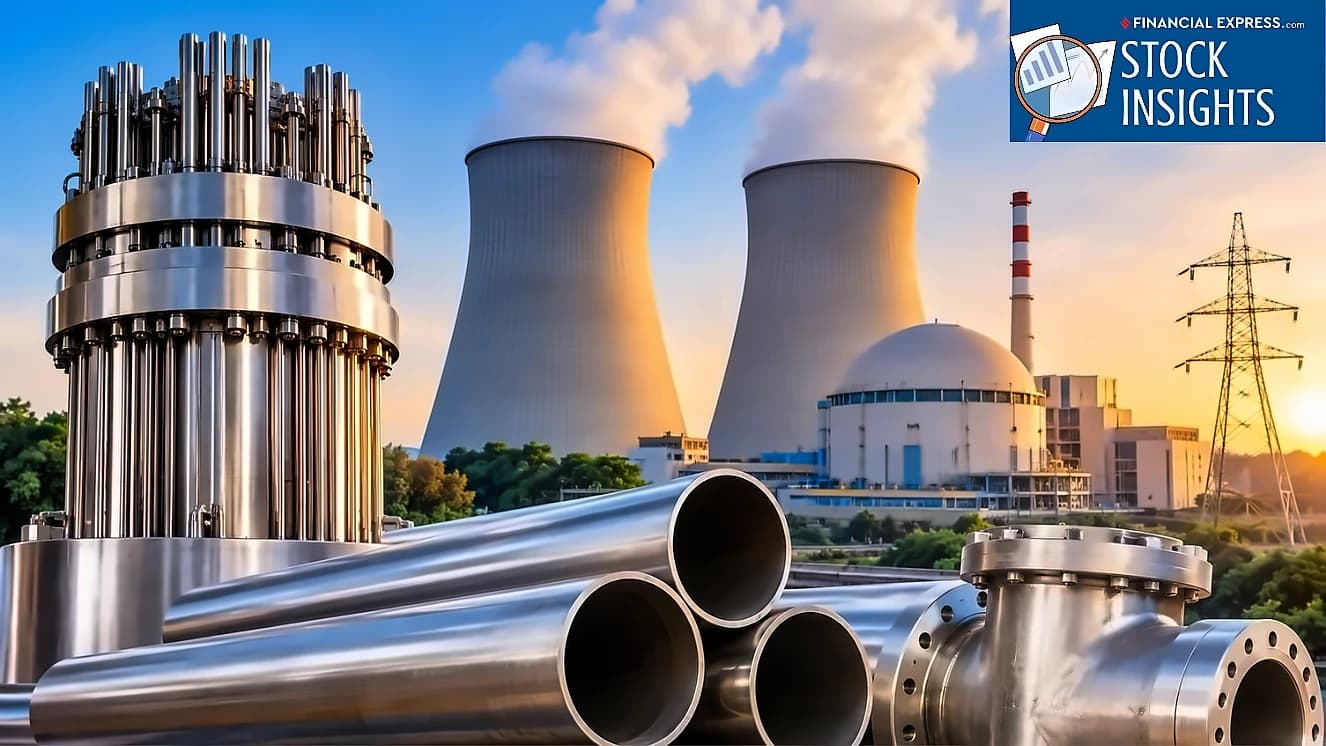
India's ambitious plan to increase nuclear power capacity from 9 GW to 100 GW by 2047 presents a massive market opportunity worth ₹20 lakh crore. According to reports from The Financial Express, this expansion will require an estimated construction cost of ₹18-22 crore per MW, translating to a total investment of ₹16.4-20 lakh crore over the next two decades. This translates to approximately ₹82,000 crore to ₹1 lakh crore annual investment, creating substantial long-term opportunities for companies in the nuclear supply chain. The expansion creates additional demand for 15,000 cubic metres of annual waste-handling capacity as every additional reactor increases the need for specialized radioactive waste infrastructure.
MTAR Technologies has established itself as a key player in India's nuclear sector, collaborating with the Nuclear Power Corporation of India (NPCIL) to manufacture over 15 specialized products for critical nuclear reactor functions. As reported by The Financial Express, MTAR's flagship product is the Fuel Machining Head, a complex assembly comprising over 700 individual precision components used directly in nuclear reactors for fuel bundle insertion and removal. The company's nuclear order book stands at ₹820 crore as of Q2 FY27, representing 13.7% of its total order book of ₹5,976.5 crore, with management expecting significant revenue growth from FY28 onwards.
Walchandnagar Industries (WIL) has demonstrated significant capabilities in nuclear waste management with three established projects including NPCIL's TAPP-3&4 Waste Management Plant at Tarapur, BARC's Spent Fuel Storage Facility at Kalpakkam, and BARC's Additional Waste Tank Farm at Trombay. The company has maintained four decades of association with NPCIL and BARC, with pre-qualification from all three organizations for supplying Class I nuclear components. In Q2 FY27, WIL reported revenue of ₹93.53 crore, up 81% year-on-year, though profit before tax remained modest at ₹47 lakh due to thin bottom-line margins. The company secured fresh orders worth ₹99.46 crore in Q2 FY27, including ₹38.13 crore from aerospace, though nuclear-specific revenue figures remain undisclosed.
Larsen & Toubro (L&T) brings substantial manufacturing capabilities to India's nuclear sector with market leadership exceeding 50% in steam generators and end shields, having manufactured more than 42 steam generators and delivered over 30 reactor heads for the Indian nuclear programme. The company's portfolio includes spent-fuel casks, high-level radioactive waste storage tanks, and equipment for fuel reprocessing facilities. In H1 FY27, L&T's Heavy Engineering segment recorded order inflows of ₹4,300 crore, more than double the previous year's ₹1,900 crore, though revenue declined 6% to ₹1,260 crore. The company's consolidated order book stands at ₹8,53,500 crore, registering 28% year-on-year growth, with shares trading at ₹4,159.20 and maintaining a P/E multiple of 30.2.
The nuclear expansion opportunity extends beyond reactor manufacturing to specialized waste infrastructure, with 15,000 cubic metres of annual waste-handling capacity required for a 100 GW fleet. However, project timelines present challenges as nuclear power projects have construction periods of 10-12 years, requiring technical evaluations, approvals, and commissioning processes. The SHANTI Act 2025 provides framework for private sector participation, though sensitive fuel-cycle activities remain reserved for government institutions. Investors should monitor fresh tenders for waste treatment plants, contract awards for spent-fuel casks, and orders linked to fuel reprocessing facilities to assess commercial traction for companies like WIL and L&T in India's expanding nuclear ecosystem.