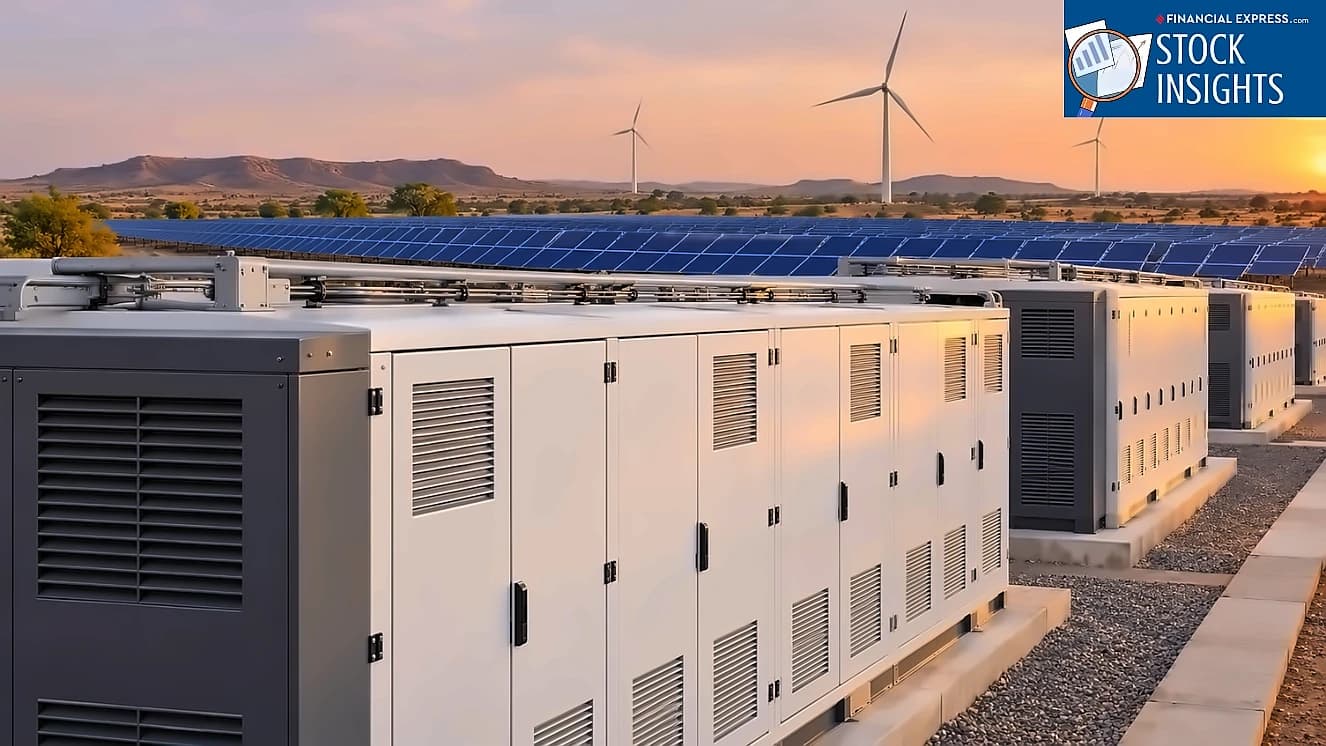
India's energy storage market is experiencing unprecedented growth as the country expands its renewable energy capacity. According to reports from The Financial Express, India needs 411 GWh of energy storage capacity by FY32, compared with just 5.3 GWh of operational battery storage as of October 2026. The government is addressing this gap through financial incentives, support for domestic manufacturing and new project allocations, including a ₹14,500 crore funding scheme to support 92 GWh of new storage capacity.
Reliance Industries is establishing its Battery Energy Storage System (BESS) giga-factory at the Dhirubhai Ambani Green Energy Giga Complex in Jamnagar, Gujarat. As reported by The Financial Express, the facility is designed to open with an annual capacity of 40 gigawatt-hours (GWh) and plans to scale total annual capacity to 100 GWh. Management expects the pack and container line to go live in H1CY2027, with battery cell production lines following later in 2027. The company is developing a renewable energy generation and transmission hub in Kutch, Gujarat, targeting 150 megawatt-hours of battery containers and 55 megawatt-peak of solar modules each day, aiming to meet 10% of India's electricity demand within a decade.
Adani Green commissioned 3 GWh of battery storage at the Khavda renewable energy site in Gujarat during Q2 FY27, raising its total operational BESS capacity to 6.6 GWh as of September 30. According to The Financial Express, the company expects to exceed 10 GWh of installed battery capacity by the end of FY27 and plans to build 40 to 50 GWh of battery storage by FY30. The storage pipeline is designed to operate alongside 45 GW of renewable capacity and 5 GW of pumped hydro storage, with management estimating that a 10 GWh battery system can absorb about 2 to 2.5 GW of peak solar power.
JSW Energy plans to reach 40 GWh of energy storage capacity by 2030, with 29.6 GWh of storage capacity already secured. As reported by The Financial Express, of this secured capacity, 26.4 GWh consists of pumped hydro storage and 3.2 GWh consists of battery energy storage systems. The company expects to commission 1.0 GWh of BESS capacity during FY27, with projects including a 0.5 GWh standalone battery project with viability gap funding at ₹4.41 lakh per MW per month and a 0.5 GWh battery project at ₹2.24 lakh per MW per month. Power curtailment across the company's operating assets reached about 4.8% in H1FY27, with management planning to use battery storage directly to address grid bottlenecks.
According to The Financial Express, Adani Green's Q2FY27 financials showed strong performance with consolidated net profit surging 16% to ₹747 crore. The company's EBITDA and revenue from power sales increased by 51% and 45% year-on-year respectively, reaching ₹3,835 crore and ₹4,019 crore. JSW Energy's Q2FY27 results showed total revenue growing 24% year-on-year to ₹6,658 crore with net profit surging 50% to ₹1,056 crore. The company's renewable segment revenue expanded 32% year-on-year to ₹2,532 crore with EBITDA increasing 31% to ₹2,195 crore. All three companies are trading at different valuations, with Reliance Industries at 9.4x EV/EBITDA, JSW Energy at 14.5x EV/EBITDA, and Adani Green at 25.3x EV/EBITDA.