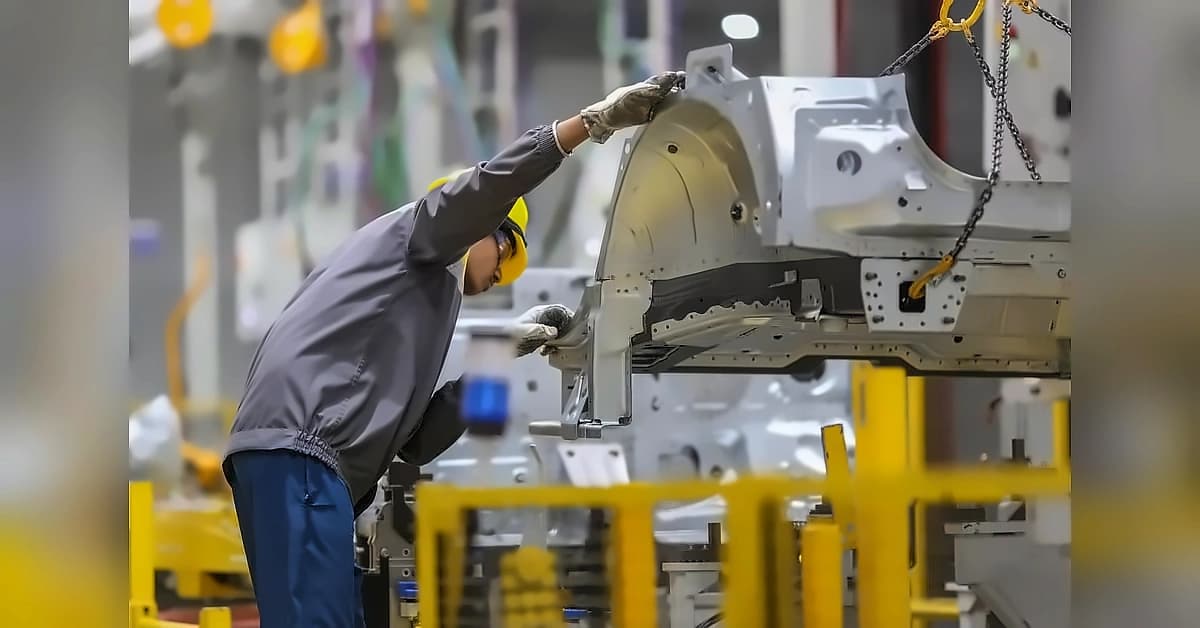
India could emerge as a $7 billion contract manufacturing hub for global medical device companies by 2035, according to a comprehensive report by Boston Consulting Group (BCG), the Association of Indian Medical Device Industry (AiMeD), and the Kalam Institute of Health Technology (KIHT). The report, titled 'Poised for Takeoff: MedTech in India', estimates that India's overall MedTech opportunity could expand more than fourfold to $83-89 billion by 2035 from around $20 billion currently, driven by rising domestic demand, exports, and contract manufacturing.
India's domestic manufacturing share in MedTech demand has already risen sharply from about 20 per cent in 2022 to nearly 45 per cent in 2025, reflecting accelerated import substitution across categories such as consumables, diagnostics, and hospital equipment. The report notes that India's MedTech contract development and manufacturing organisation (CDMO) opportunity remains "nascent" today but could scale to $6-7 billion by 2035 as global original equipment manufacturers (OEMs) look for alternative production bases.
The report highlighted significant cost advantages for Indian MedTech manufacturing, with India's labour costs being 60-80 per cent lower than those in the United States and 40-50 per cent below China. Additionally, ongoing free trade agreements with markets such as the UK, New Zealand, and Oman could improve export access. Currently, India accounts for only about $4 billion of global MedTech exports despite a global market estimated at $670-680 billion in 2025, with consumables continuing to dominate exports while higher-value segments such as implants, devices, and diagnostics are emerging as faster-growing areas.
Global MedTech outsourcing is increasingly shifting towards components, sub-assemblies, and value-added manufacturing services, opening opportunities for Indian firms in areas such as imaging systems, disposables, implants, and diagnostics. However, the report cautioned that India still faces structural bottlenecks, including import dependence for critical components and raw materials, fragmented testing infrastructure, regulatory complexity, and low R&D intensity. Indian MedTech firms spend only 2-4 per cent of revenue on research and development compared with 15-20 per cent in China.

The report recommended faster regulatory approvals, incentives linked to deeper value addition, expanded testing infrastructure, and targeted efforts to attract global MedTech OEMs and CDMOs to India. These measures are crucial for addressing the current structural challenges and capitalizing on the significant growth potential in India's MedTech sector.