According to the latest Global Business Travel Association (GBTA) forecast, global business travel spending is projected to reach USD 1.71 trillion in 2026, representing a 7.2% increase while trip volume rises only 1.3% to approximately 1.84 billion trips. This divergence between spending growth and volume expansion indicates that business travel is becoming more expensive, more selective and more economically concentrated rather than experiencing conventional demand growth. The GBTA analysis reveals that global expenditure is increasing more than five times faster than trip volume, making revenue expansion increasingly dependent on yield, pricing, trip complexity and traveller mix rather than passenger growth.
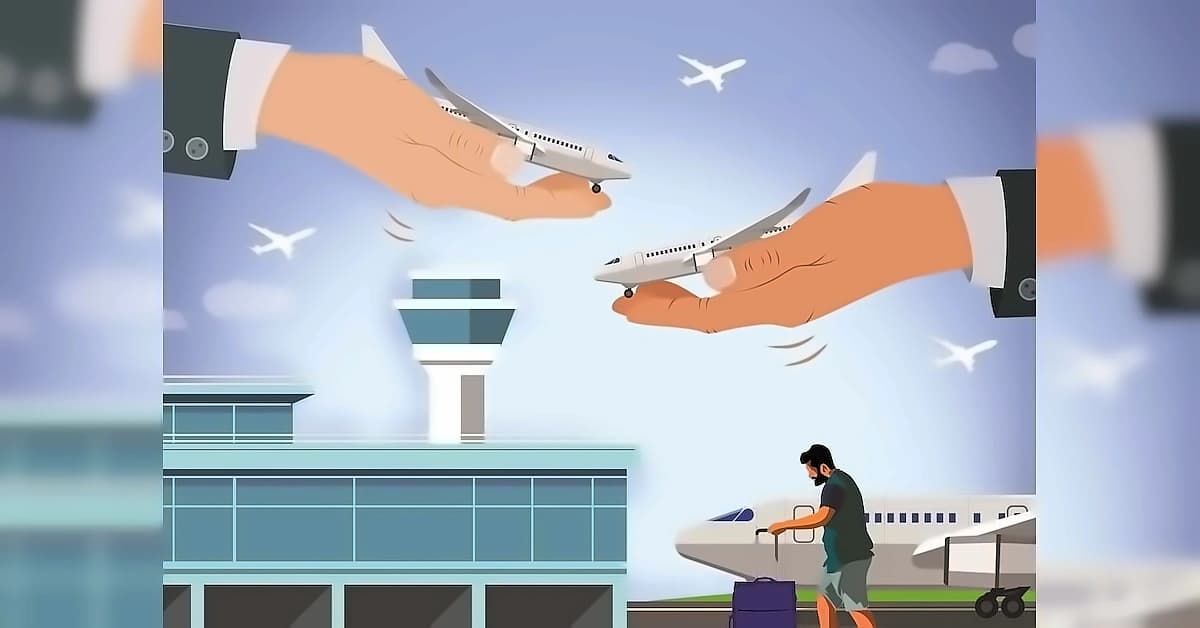
India's airline market is experiencing concerning concentration levels, with IndiGo holding a 66% market share when including sectors where it operates as the sole carrier. However, founder Rahul Bhatia clarifies that their real market is 44% when excluding these sole-operator sectors, highlighting the dominance of the airline's network reach. The airline currently operates 250 city pairs where no other airline flies, creating significant challenges for smaller airports and regional connectivity. This market concentration occurs against the backdrop of global business travel becoming more expensive, more selective and more economically concentrated, with corporate travel managers focusing on whether expected commercial returns justify travel costs rather than simply whether employees can travel.
The current market concentration represents a shift from the competitive period of 1993-2003 when multiple airlines operated in India. The editorial notes that this earlier era saw the birth and demise of numerous carriers, creating what felt like an 'opening up' of Indian skies. The contrast is stark with the current situation, where IndiGo's 250 exclusive routes create significant barriers for smaller airports and regional connectivity. The GBTA analysis reveals that the top 15 business travel markets are expected to account for approximately USD 1.43 trillion, or 84% of global spending in 2026, with the US and China alone representing roughly 48% of this concentrated economic value.
According to the analysis, small airports face particular challenges due to the current market structure, with limited flight frequencies and connectivity options. The report emphasizes the need for special stimulus measures to ensure these airports receive their requisite number of flights, as each airport and flight handled creates jobs for both skilled and semi-skilled workers. This infrastructure development is crucial for regional economic growth and connectivity, particularly as the GBTA forecasts that rail remains a significant competitor, with 72% of APAC business travellers reporting they use rail for business travel. The challenge becomes more acute as corporate travel is increasingly following capital expenditure rather than simply where businesses are headquartered, with new data-centre clusters and technology corridors generating more aviation demand than established corporate markets.
The GBTA analysis suggests that the next phase of business travel will be defined by value density rather than volume, with airlines needing to understand which journeys companies regard as indispensable rather than simply capturing more corporate passengers. The editorial calls for Air India to become a formidable national competition and for Akasa to make its mark in the sectors it operates. Recent developments show AAI advisor Nadiminti Venkata Subbarayudu advocating for extending the five-year airport tariff control period to seven or even 10 years, arguing that large airport investments in terminal buildings and runways cannot be recovered within such a short period. The analysis suggests that increased competition will create its own demand, similar to the marketing principle that supply creates its own demand, while maintaining affordable airfares and preventing the return to the luxury-only era of air travel that characterized the 1980s.