India has issued a Letter of Request (LoR) to France for a mega government-to-government deal worth around ₹3.25 lakh crore to purchase 114 Rafale fighter jets for the Indian Air Force, as reported by Business Standard. The deal would see 94 Rafale jets being manufactured in India by French manufacturer Dassault Aviation in partnership with an Indian company. The French side is expected to reply to the Indian Letter of Request within the next two to three months, with negotiations likely to conclude within the next year. This represents a significant expansion from the 62 Rafale planes already ordered by the Indian Air Force and Indian Navy, bringing the total to 176 aircraft. According to ANI, the Letter of Request was issued last month by the Acquisition Wing of the Defence Ministry to French government officials.
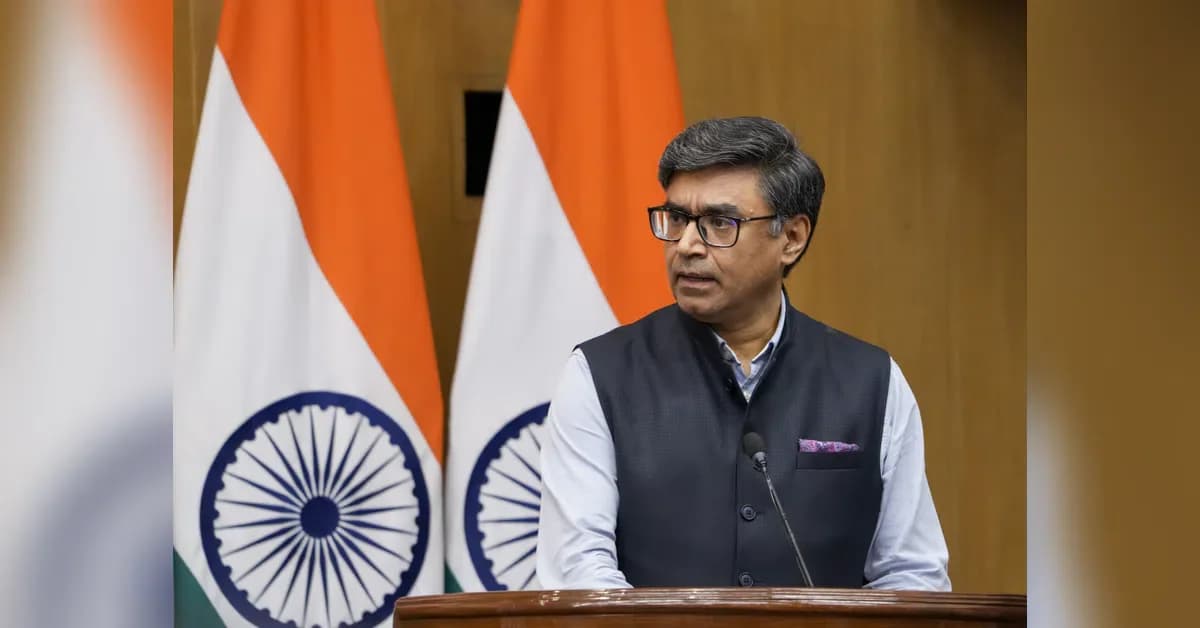
Foreign Secretary Vikram Misri confirmed that talks between India and France on the Rafale fighter jet programme have advanced, as reported by Business Standard. The announcement came following discussions between Prime Minister Narendra Modi and French President Emmanuel Macron during Modi's visit to France in Nice. According to Misri, the Rafale programme was among the key topics covered during the bilateral talks, with dialogue progressing between the governments and air forces of both nations. As per Firstpost, Misri noted that discussions during the Prime Minister's visit extended beyond the Rafale platform and covered a broad spectrum of defence cooperation between the two countries. "The PM, in all his meetings today, emphasised that we need greater focus on Make in India. We need co-development, co-production and co-manufacturing in India. We want more and more to be done in India; that is our preference," Misri stated, adding that discussions were not limited to Rafale jets but covered other defence platforms as well.
The Modi-Macron discussions encompassed the entire range of bilateral relations, including civil nuclear energy, defence, security, space, trade and investment, technology, innovation, education, mobility and people-to-people ties, according to Business Standard. Misri said the broader discussions between the two countries covered several issues beyond the Rafale programme, but the common objective remained increasing local manufacturing and domestic value addition in defence platforms. "They agreed to further intensify it with a focus on co-design, co-development and co-production of defence platforms and advanced technologies," the Ministry of External Affairs stated. As per Firstpost, Misri said discussions during Prime Minister's visit covered a wide range of defence cooperation issues and were not limited to the Rafale programme alone. "While today's discussions covered various topics beyond the Rafale, the underlying theme was that for any defence platform under consideration, we must proceed with the fundamental objective of maximising local content and local manufacturing; our cooperation should be structured with this in mind," Misri emphasized.
The ₹3.25 lakh crore deal will see Rafale aircraft manufactured outside France for the first time, with around 50 per cent localisation in India, as reported by Business Standard. This represents a significant milestone as it will be the first time ever that the Rafale aircraft will be manufactured outside France, with the agreement backed by government-to-government agreement, no intermediaries, full transparency in the project, significant levels of localisation, and full authority to integrate Indian weapons and Indian systems. The deal enables India to induct fighter aircraft relatively quickly, with the first of the Rafale Marines starting delivery in 2028, and the first Air Force Rafales expected within three-and-a-half years. As per ANI, the Defence Secretary noted that this would be the 'first time 'Make in India, Rafale outside France' with the highlights being G2G significant levels of localisation, full authority to integrate Indian weapons and Indian systems.
India and France have significantly expanded their bilateral cooperation beyond defence, with the two leaders unveiling an "Innovation Roadmap 2030" to provide long-term direction to their partnership. According to the Ministry of External Affairs, "They agreed to establish a high-level mechanism to double bilateral trade within five years" and called for the early implementation of the India-EU Free Trade Agreement. The countries also agreed to establish a joint AI working group to expand cooperation in artificial intelligence. Several Memorandums of Understanding were signed, including those for establishing a National Centre of Excellence for Skilling in Aeronautics and Allied Sectors at NSTI Kanpur, expanding the use of Unified Payments Interface (UPI) in France, incubating an additional 10 Indian startups, and setting up a Centre of Digital Sciences. Letters of Intent were exchanged between the Indian Council of Medical Research (ICMR) and France's Health Data Hub, and between ISRO and CNES for cooperation in microgravity research and human space exploration. The partnership also includes enhanced space situational awareness, civil nuclear energy cooperation under India's SHANTI Act, and expanded mobility of skilled professionals through mutual recognition of educational qualifications.