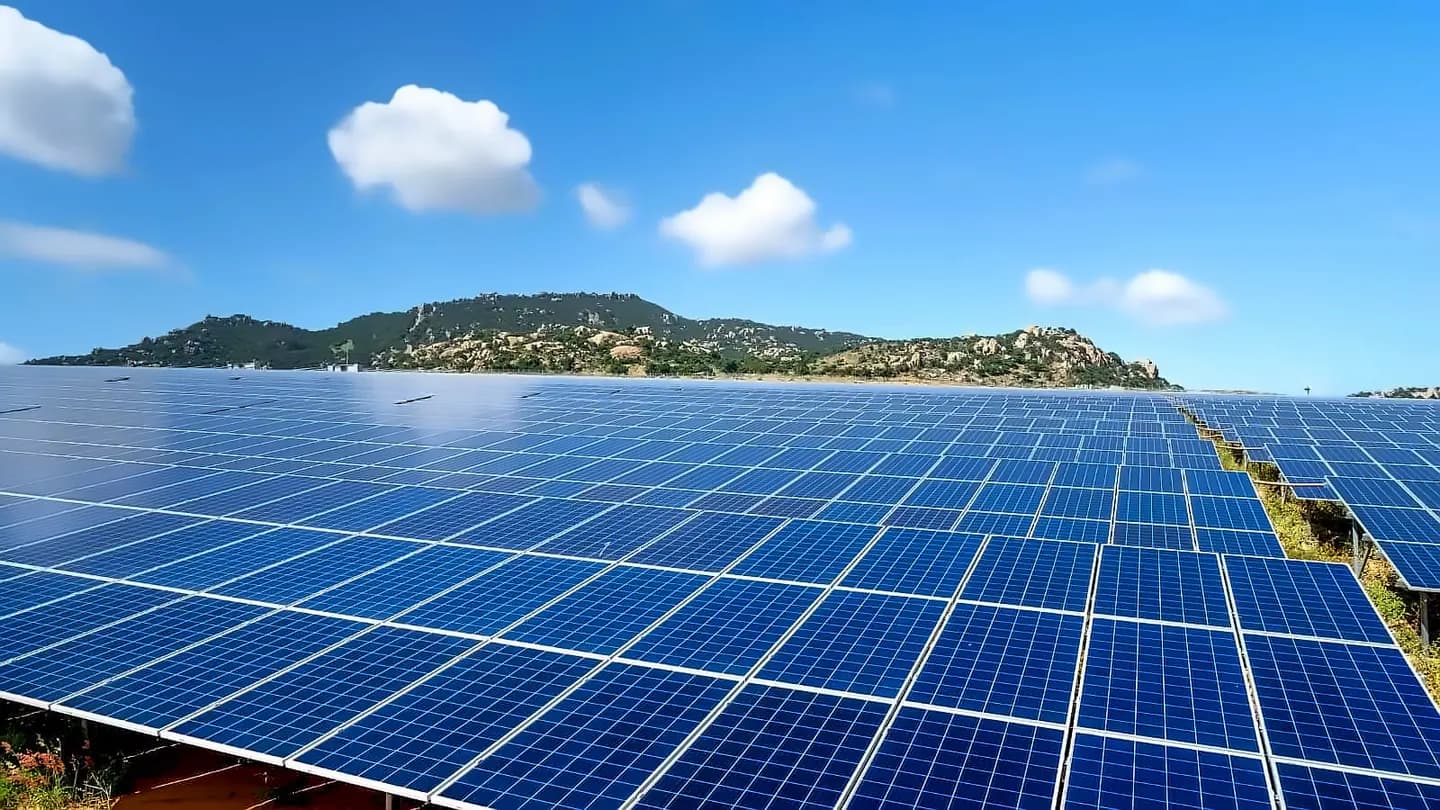
Gujarat Alkalies and Chemicals Limited (GACL), one of India's leading chemical manufacturing companies, has entered into a major renewable energy partnership with Clean Max Enviro Energy Solutions Limited to power its industrial operations in Gujarat. According to reports from Business Standard, this collaboration represents the single largest group captive deal for CleanMax, demonstrating how large manufacturing companies can successfully transition to renewable energy without compromising operational reliability. The agreement marks a significant step in GACL's efforts to reduce its carbon footprint while ensuring a reliable and sustainable energy supply for its manufacturing facilities located in Dahej and Vadodara. The project will supply renewable power to GACL's operations through a group captive arrangement, supporting the company's transition toward cleaner and more sustainable industrial operations while contributing to India's net-zero emissions goals.
The hybrid renewable energy project will supply power to GACL's manufacturing units at Dahej and Vadodara locations under a group captive structure. As reported by Business Standard, CleanMax will supply 75.90 MW wind capacity and 84.34 MWp solar capacity to GACL's operations. The project is being executed in two phases across multiple renewable energy sites in Gujarat, with Phase 1 comprising 16.50 MW wind and 21.701 MWp solar capacity, while Phase 2 includes 59.40 MW wind and 62.64 MWp solar capacity. 100% power generated from the facilities will be utilized by GACL, with the entire project expected to generate approximately 36.9 crore units of clean electricity annually. The initiative is anticipated to reduce CO2 emissions by approximately 2,64,204 tons per year, equivalent to the environmental benefit of planting nearly 15.27 million trees annually. Both phases will be commissioned according to the contractual timelines agreed between CleanMax and GACL, with the entire power generated from the facilities being consumed by GACL to help reduce dependence on conventional energy sources.
The strategic 160.24 MW renewable capacity addition addresses GACL's highest cost lever—electricity—directly impacting bottom-line sustainability. For a chemicals major like GACL, power accounts for nearly 40-60% of the cost of production for products like Caustic Soda. By locking in renewable rates through this partnership, GACL hedges against future energy price volatility and potential carbon taxes. The hybrid model ensures a more consistent power supply profile, with solar generating during the day while wind often peaks at night, providing a higher plant load factor (PLF) essential for continuous chemical manufacturing processes. The project is expected to reduce the levelized cost of energy (LCOE) compared to grid tariffs and improve operational margins through better energy cost visibility and enhanced competitiveness.
The project is being implemented across four of Clean Max's renewable energy sites in Gujarat, including Kalikanagar, Aji Dahisarda, Rajula and Ghuntu. Once operational, the project is expected to generate approximately 36.9 crore units of clean electricity annually. The initiative forms part of GACL's sustainability strategy as one of India's leading chemical manufacturers with over 36 products in its portfolio. Kuldeep Jain, founder and managing director of Clean Max Enviro Energy Solutions, described the agreement as the largest group captive transaction in the company's history, emphasizing that Gujarat remains a key market given its strong industrial base and favorable renewable energy resources. CleanMax has established a strong presence in Gujarat with approximately 844 MW of operational renewable energy capacity as of March 31, 2026, strengthening its ability to support leading industrial customers in their transition to cleaner energy.

Commenting on the collaboration, GACL Managing Director Avantika Singh emphasized that sustainability remains a key pillar of the company's long-term growth strategy, noting that the partnership would strengthen energy reliability while helping the company achieve its environmental commitments. The project demonstrates how large manufacturing companies can successfully transition to renewable energy without compromising operational reliability, while also advancing India's net-zero ambitions. The scale of this project suggests a long-term improvement in EBITDA margins for GACL's Gujarat operations, potentially attracting institutional ESG-focused capital. In the last 90 days, GACL has focused on commissioning its 10,000 TPA Hydrazine Hydrate plant and expanding its Purified Phosphoric Acid capacity, while reporting steady performance despite volatile raw material prices across its Dahej and Vadodara complexes.