Grasim Industries shares advanced 1.57% to ₹3,099 following the company's board approval of a ₹3,094 crore investment for expanding lyocell manufacturing capacity at Harihar, Karnataka. According to Business Standard, the positive market response reflects investor confidence in the strategic expansion that will position the company among the largest lyocell producers globally. The investment represents a significant milestone in Grasim's strategic expansion of advanced fibre capabilities, catering to the growing global demand for sustainable and high-performance textile materials.
Grasim Industries Ltd announced a ₹3,094 crore investment on June 8 to establish phase II of its lyocell manufacturing capacity at Harihar, Karnataka. The expansion will add 1.10 lakh tonnes per annum (TPA) of lyocell capacity through two production lines of 55,000 TPA each. As reported by CNBC TV18 and Business Standard, the first production line is expected to be commissioned by 2028, while the second line is scheduled for commissioning by 2030. The Board of Directors approved this capex in a meeting on Monday, with the investment to be financed through a mix of internal accrual and borrowed funds.
The new capacity will be integrated with the phase I lyocell plant of 55,000 TPA currently under construction at Harihar, which is expected to be commissioned by mid-2027. Upon completion of both phases, Grasim's total lyocell capacity will reach nearly 2.10 lakh TPA, making it one of the largest lyocell producers globally. The investment will take the company's overall cellulosic staple fibre capacity beyond one million TPA by 2030 and increase the share of specialty products to 35%. This additional capacity will complement the phase I plant and make Grasim one of the largest lyocell producers globally.
Kumar Mangalam Birla, Chairman of Aditya Birla Group, stated that the investment represents "a vote of confidence in the scale and promise of the Indian market, aligns closely with the aspirations of Make in India, and will help position India as a more competitive and resilient force in the global textile industry." According to CNBC TV18 and Business Standard, Birla emphasized that this fresh expansion will catapult Grasim's overall cellulosic fibres capacity beyond 1 million tonnes per annum, reinforcing its position as a global leader in sustainable man-made cellulosic fibres (MMCF). The expansion strengthens the company's position in the sustainable fibre segment and evolving MMCF landscape by scaling high-value, future-ready fibre segments.
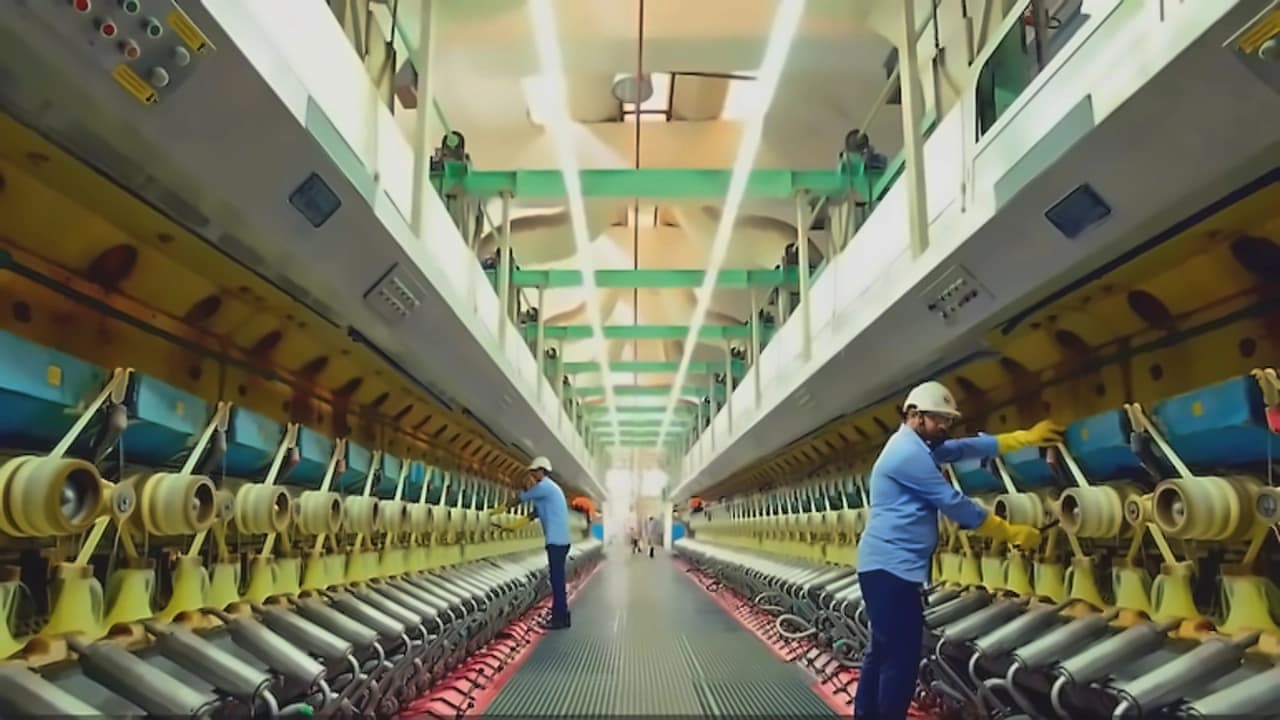
Lyocell is a versatile, next-generation fibre widely used across apparel, home textiles and technical textile applications. As reported by CNBC TV18 and Business Standard, lyocell is manufactured through a highly efficient closed-loop process, offering a compelling combination of durability, breathability, comfort, and lower environmental impact. Vadiraj Kulkarni, Business Head of Grasim Pulp & Fibre, emphasized that "by expanding Lyocell capacity, we are accelerating the shift towards high-performance fibres with a lower environmental impact. Lyocell enhances our product mix, supports premium applications, and aligns with our focus on delivering differentiated, sustainable solutions to global markets." The expansion is expected to enhance the company's product mix, support premium applications, and align with delivering differentiated, sustainable solutions to global markets.
Grasim Industries recently reported strong financial performance with a 30.87% jump in consolidated net profit to ₹1,957.74 crore on a 15.44% increase in revenue from operations to ₹51,101.11 crore in Q4 FY26 over Q4 FY25. According to Business Standard, the company is a flagship of the Aditya Birla Group and a leading diversified player with leadership presence across many sectors, including being a leading global producer of viscose staple fibre and viscose filament yarn, the largest chlor-alkali, advanced material, linen yarn and fabrics producer in India. The company recently entered the paints business and is setting up six plants across pan-India locations, demonstrating its continued strategic expansion across multiple sectors.