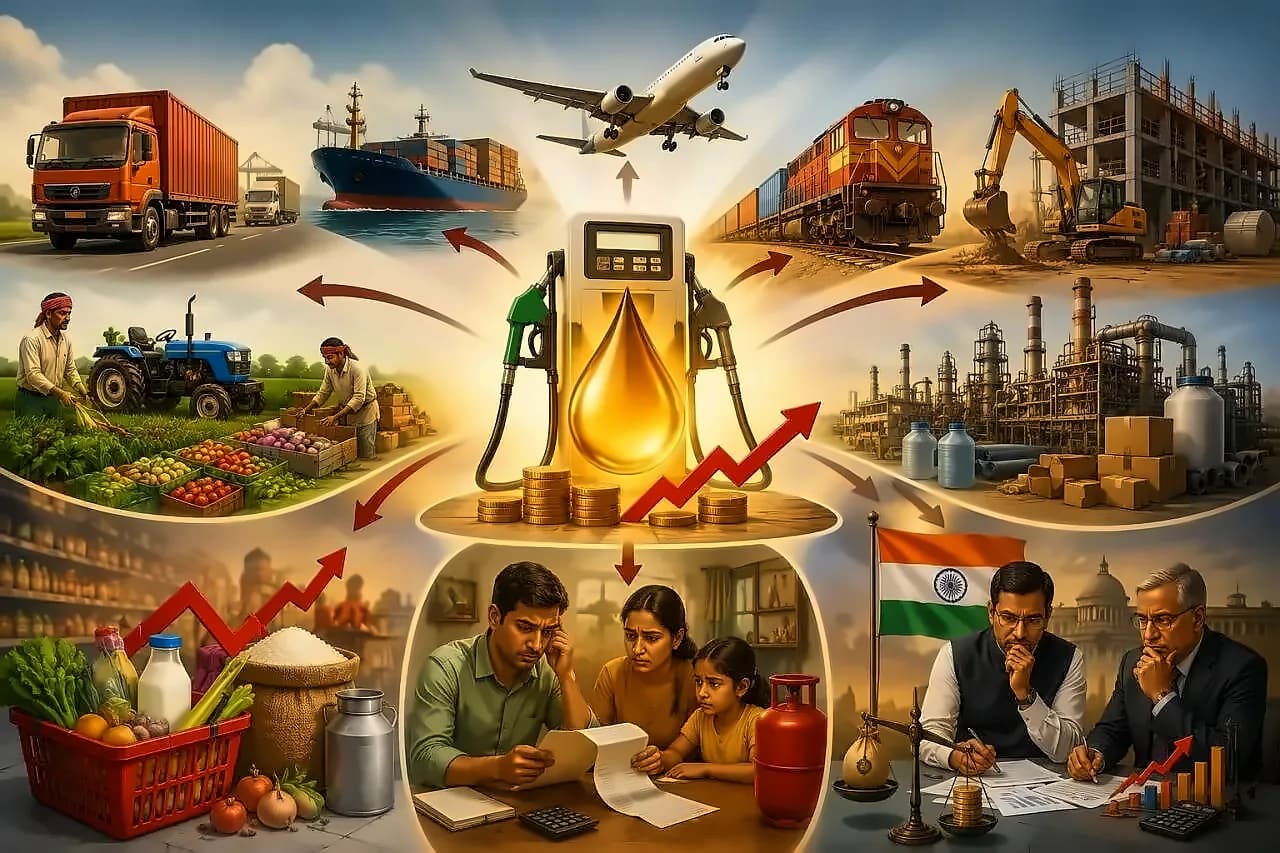
Telangana Chief Minister A Revanth Reddy has strongly criticized the Union Government's decision to increase petrol and diesel prices, calling the move "completely unjustifiable" and warning of negative economic impacts. In a social media post, Mr. Reddy stated that the fuel price hike under Prime Minister Narendra Modi's leadership would severely impact the common man and trigger a rise in essential commodity prices. The Chief Minister accused the Modi government of mismanaging the economy through "inefficient governance and ill-conceived policies" and claimed that the slogan of "Atmanirbhar Bharat" had remained only an election slogan and failed to deliver tangible economic results. He further alleged that the BJP-led government made false promises to voters ahead of recent Assembly elections in four States and one Union Territory, repeatedly assuring people before polls that petroleum prices would not be increased, but raised prices by more than ₹3 within days of election results. Calling the move a "breach of public trust," Mr. Reddy demanded that the Central Government immediately withdraw the hike in petrol and diesel prices.
The recent fuel price hike of around ₹3 per litre has significantly escalated household costs, with petrol in Delhi rising to nearly ₹97.77 per litre and diesel touching around ₹90.67 per litre. According to industry commentary, these price increases are expected to filter into everyday life, from kitchen shelves to monthly budgets, as fuel inflation often extends across sectors due to transportation being linked to nearly every stage of economic activity. Economists warn that households often respond by cutting discretionary spending and postponing purchases as essential expenses rise, with the impact eventually showing up in household budgets, grocery bills and everyday services. Chandigarh residents have expressed particular concern, with cab driver Rajesh Kumar noting that the hike would hit them hardest as they struggle with rising maintenance costs, while middle-class families face pressure from school fees, groceries and electricity bills.
The latest fuel price revision is being driven by rising crude oil prices triggered by the ongoing West Asia conflict, which is expected to increase shipping and production expenses for consumer goods companies. As per The Times of India, the conflict has created a cascading effect on logistics, distribution and raw material costs for fast-moving consumer goods (FMCG) companies already dealing with 8-10% inflationary pressures. Industry experts warn that prolonged crude oil volatility, rather than a one-time fuel increase, poses the larger risk for consumption demand, particularly in rural markets. Naveen Malpani, partner and consumer & retail industry leader at Grant Thornton Bharat, told the publication that if fuel prices remain elevated over multiple quarters, companies may eventually resort to calibrated price hikes or grammage reductions, which could weigh on consumption recovery. Mr. Reddy has accused the Centre of using the Iran-Israel conflict as a pretext to raise fuel prices, thereby placing an additional burden on the public.
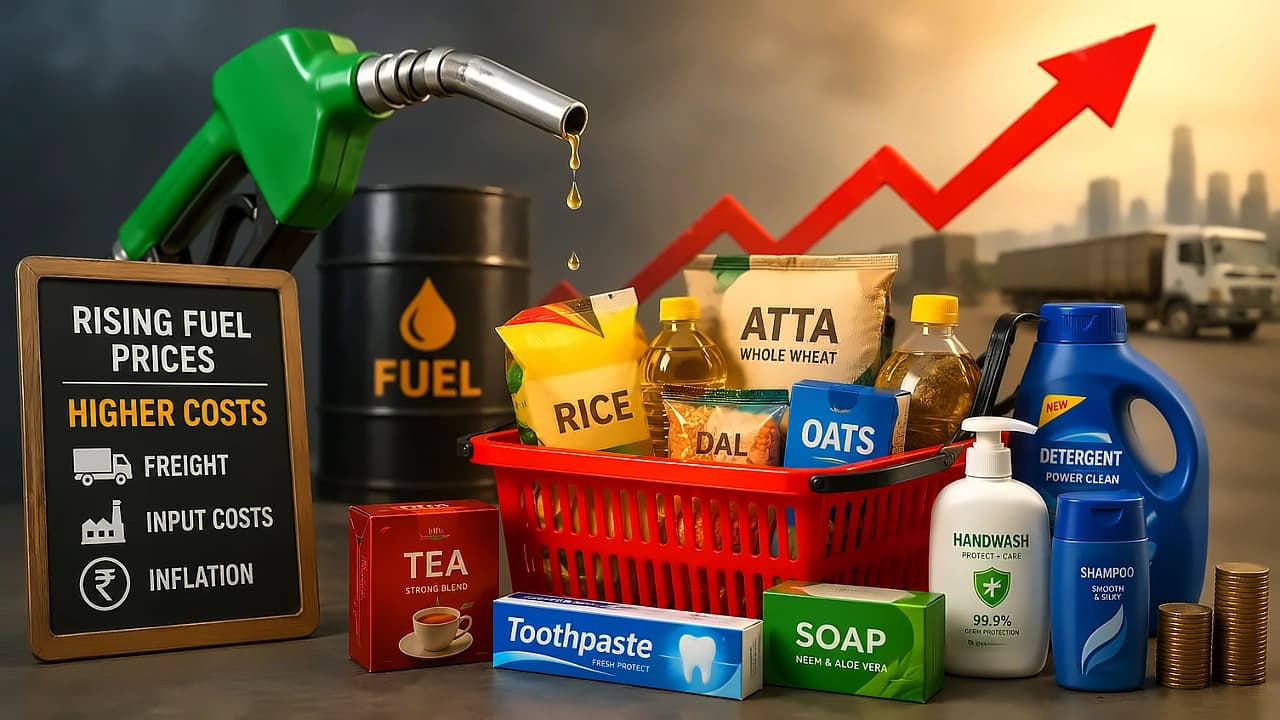
Companies including Hindustan Unilever, Marico and Dabur have undertaken calibrated price hikes of 2-5% to partly offset input cost inflation, with further increases being considered by Nestlé India and Hindustan Unilever. Dabur India Global CEO Mohit Malhotra stated that the company has already implemented a 4% price hike across different parts of the business and will have to look at another round of price increase going forward, citing 10% inflation hitting them this fiscal. Mayank Shah, chief marketing officer at Parle Products, indicated that "a price increase now appears imminent, though the quantum is still being evaluated." Manish Tiwary, managing director of Nestlé India, said the company is monitoring developments very closely, adding that "pricing is always our last lever." Industry executives have previously indicated that logistics make up nearly 6-10% of operating costs for many consumer businesses, making higher diesel prices particularly impactful.
The fuel price impact extends far beyond urban centers, affecting rural households and agricultural sectors significantly. Higher diesel costs raise farm operating expenses, with farmers relying heavily on diesel-powered equipment including tractors and irrigation systems. Over time, increased agricultural input costs can translate into higher prices for food products reaching consumers, as India's food supply chain depends significantly on road transportation where diesel is widely used in trucks carrying goods. Food delivery platforms, courier firms and online shopping companies operating on extensive transportation networks are also experiencing increased last-mile delivery expenses, with possible changes including additional convenience charges for consumers relying heavily on online grocery and food apps. Farmer leader Rajinder Singh Badheri has condemned the decision, noting that diesel prices have been increased four times in recent past and should be withdrawn immediately to reduce difficulties faced by common people. Mr. Reddy has also criticized the government's claims of making India the world's third-largest economy, questioning how the government could justify increasing fuel prices when citizens are already facing economic hardship.