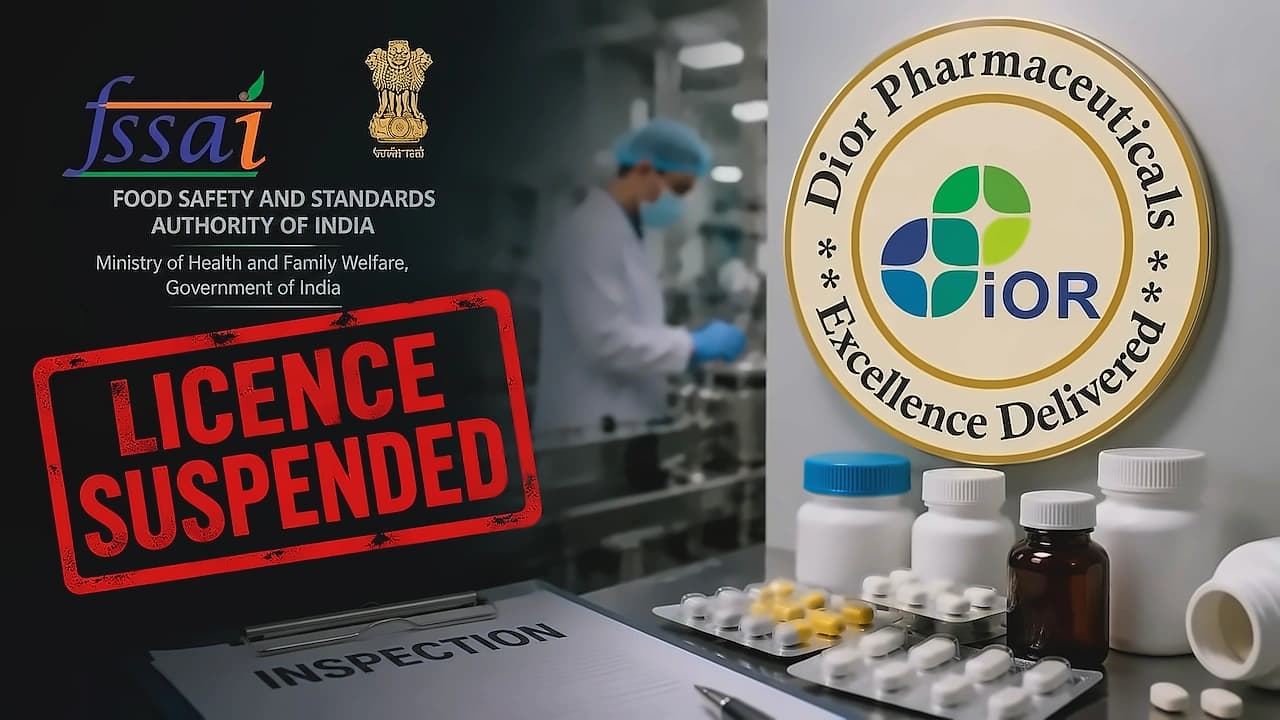
The Food Safety and Standards Authority of India (FSSAI) has suspended the nutraceutical licence of Dior Pharmaceuticals on 30 July 2026 following serious violations at its manufacturing unit in Punjab. According to reports from PTI, the regulator observed 'serious non-compliances' during the inspection of the manufacturing facility. The FSSAI has directed the food business operator to immediately cease all manufacturing activities until full compliance is established and verified by the regulator. In a social media post on Thursday, FSSAI confirmed that the nutraceutical manufacturing unit was found to be operating under severely deficient Good Manufacturing Practices (GMP), Good Hygiene Practices (GHP), and Food Safety Management Systems (FSMS). The FSSAI Licence has been suspended with immediate effect, with the food business operator directed to immediately cease all operations until all deficiencies are rectified and compliance is established to the satisfaction of the Competent Authority.
The inspection revealed severely deficient Good Manufacturing Practices (GMP), Good Hygiene Practices (GHP), and Food Safety Management Systems (FSMS) at the nutraceutical manufacturing unit. As reported by PTI, the regulatory non-compliances were related to infrastructure; sanitation and housekeeping; pest control; storage and handling practices; process controls; personnel hygiene; water quality monitoring; and maintenance of records. FSSAI stated there has been gross non-compliance with the FSS Act, 2006, with the deficiencies posing a significant risk to public health. The regulator further noted that there is a serious failure on the part of the company in ensuring the safety, quality and traceability of food products. Nutraceuticals, which are products derived from food sources and used as dietary supplements or functional foods, are regulated as food products under India's food safety framework. According to latest reports, the violations included poor infrastructure design, inadequate cleaning schedules, ineffective pest control measures, improper storage practices, and personnel hygiene failures. During the inspection, major and critical non-conformities were observed, violating core provisions of the FSS Act 2006. The shortcomings represent a serious risk to public health because the facility was involved in the production of nutraceuticals, which are classified as high-risk foods meant for human consumption.
This suspension is part of FSSAI's broader enforcement crackdown across multiple sectors in recent months. According to PTI, the regulator has been actively enforcing compliance against energy drink and alcoholic beverage companies for misleading claims and labelling. FSSAI has also issued notices to many e-commerce platforms as part of its enforcement activities. These actions are based on consumer complaints, suo motu cognisance, and regular enforcement activities of food safety officers, with updates being posted through social media platforms including Instagram. The enforcement actions demonstrate FSSAI's commitment to maintaining food safety standards across all sectors of the food industry.
The Dior case highlights broader compliance challenges in India's food industry. In Maharashtra, food licences of five of Mumbai's elite clubs were suspended after the FDA found severe hygiene and structural issues in their kitchens. According to PTI, almost all five clubs had issues such as pest infestation, unhygienic storage, structural decay like deteriorated walls and ceilings, and a lack of proper food handler hygiene. This enforcement action demonstrates that FSSAI's compliance crackdown extends beyond manufacturing units to high-profile establishments serving the public. The suspension order carries real weight with Dior unable to resume operations until FSSAI confirms compliance, with the regulator stating that "FSSAI doesn't play games. When they find violations, they act fast."