Bisleri International has disputed FSSAI's findings regarding the safety of its packaged drinking water, claiming that independent laboratory tests found bromate levels within prescribed limits. According to the company's latest statement, Bisleri maintains it has received no formal notice from FSSAI regarding the recent recall of its packaged drinking water batches. The company stated it understood the matter to be closed after submitting independent laboratory results to FSSAI's Western Regional Office through a formal letter dated February 2, 2026. To date, Bisleri has received no notice by email or in hard copy format and has been unable to locate the reported notice on FSSAI's website. The company emphasized that it maintains its water is safe and says it has cooperated fully with FSSAI throughout the investigation, reiterating its commitment to drinking water safety.
The Food Safety and Standards Authority of India (FSSAI) has sanctioned prosecution against Bisleri International Pvt Ltd under the Food Safety and Standards Act, 2006, following laboratory findings that declared a regulatory sample of its packaged drinking water unsafe. According to FSSAI's official announcement, the regulatory action was initiated after a sample of 'Packaged Drinking Water (other than Mineral Water)' from Bisleri's premises was found non-compliant with prescribed bromate limits and subsequently declared unsafe under the FSS Act, 2006. The findings establish violations relating to unsafe food under the Act, though the prosecution process will determine legal liability in accordance with the law. FSSAI stated it has granted sanction to launch prosecution under the FSS Act, 2006, against Bisleri International Pvt Ltd following the laboratory's declaration of the sample as unsafe.
Bisleri said FSSAI's action was limited to one batch manufactured in September 2025, which is no longer in circulation, and that subsequent bromate testing found levels within permissible limits. According to the company's latest statement, all its 143 manufacturing plants remain operational and compliant with FSSAI regulations, with the Goa facility also continuing operations without any suspension order from the regulator. The company stated that "Bisleri produces more than 50,000 batches annually. FSSAI's sale prohibition applies only to one Batch GO 270, manufactured in Goa on 27 September 2025. There are no stocks of this batch in the market currently." The company emphasized that FSSAI has categorically and conclusively clarified on 23rd November 2026 that bromates were found below the permissible limit on re-testing of the batch sample, establishing that the regulatory action was confined to a single, outdated production run.
The matter dates back approximately 14 months to a batch manufactured in September 2025 at Bisleri's Goa facility, one of 143 plants in its network. As reported by FSSAI, FSSAI collected six samples from the Goa manufacturing facility on September 30, 2025, with initial testing finding that five samples met all applicable standards. However, the sixth sample recorded a bromate concentration of 12 micrograms per litre against the prescribed limit of 10 micrograms per litre. Following Bisleri's appeal dated November 22, 2025, FSSAI sent the sample to a referral food laboratory, which found bromate levels within the prescribed limit but separately flagged polynuclear aromatic hydrocarbons (PAHs). Bisleri subsequently arranged for the same sample to be independently tested at an FSSAI-approved laboratory, which found bromate within the prescribed limit. The company did not disclose a PAH result from that test in its latest statement, though FSSAI noted that upon appeal by the company, the sample was referred to the Referral Food Laboratory, which also declared it unsafe due to the detection of PAHs. Bisleri acknowledged that one of six samples tested had reported the presence of polycyclic aromatic hydrocarbons (PAHs) at 0.144 micrograms per litre, while another sample from the same batch cleared all parameters. "Bisleri highlighted the discrepancies and requested PAH retesting in February 2026. Since then, there has been no adverse incidents of PAHs found in any sample tested by FSSAI across Bisleri plants," the company said.
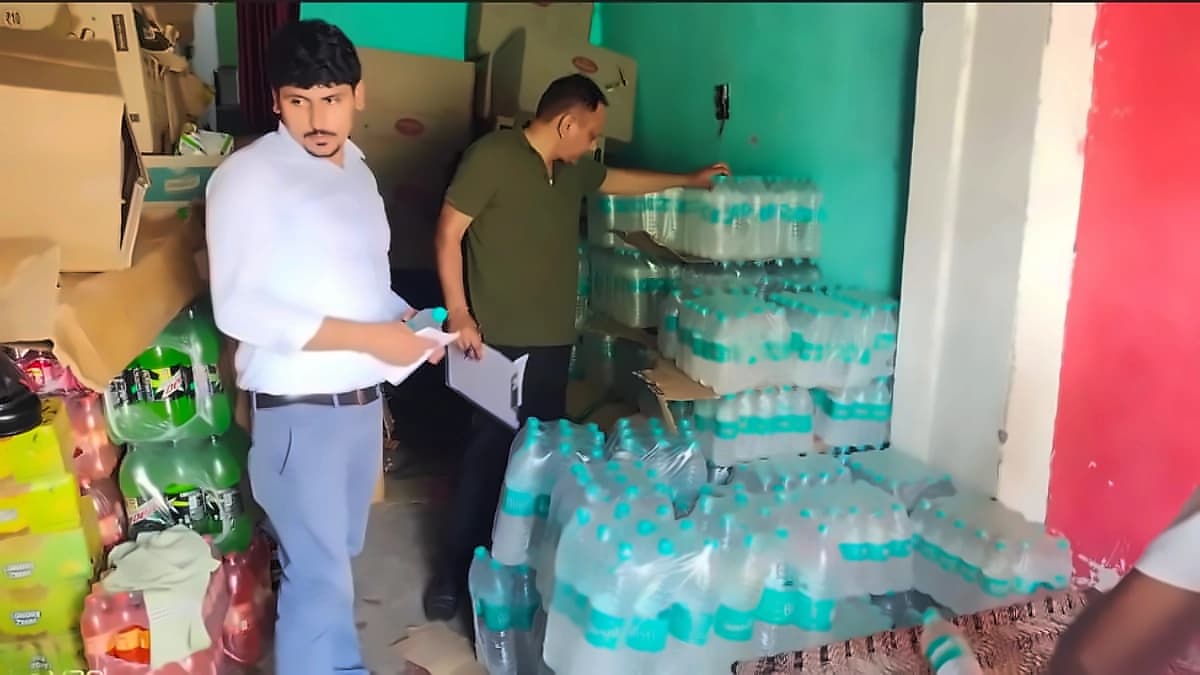
Reiterating its commitment to drinking water safety, Bisleri maintains it has stringent quality controls involving more than 90 tests across its 10-step manufacturing process. According to the company's latest statement, drinking water safety remains a priority for Bisleri and it will continue cooperating with FSSAI through the appropriate regulatory process. The company emphasized that it will cooperate with the regulator to address the matter through the appropriate process and has arranged for the same sample to be tested independently at an FSSAI-approved laboratory to ensure compliance with food safety standards. Bisleri said it had flagged discrepancies in the PAH findings and sought a retest in February 2026, adding that no subsequent samples tested by FSSAI across its plants had reported adverse PAH findings. The company stated it welcomes the regulator's clarification and urged consumers to rely on verified information, maintaining its position despite the regulatory action while defending its brand reputation against what it described as false and misleading claims.