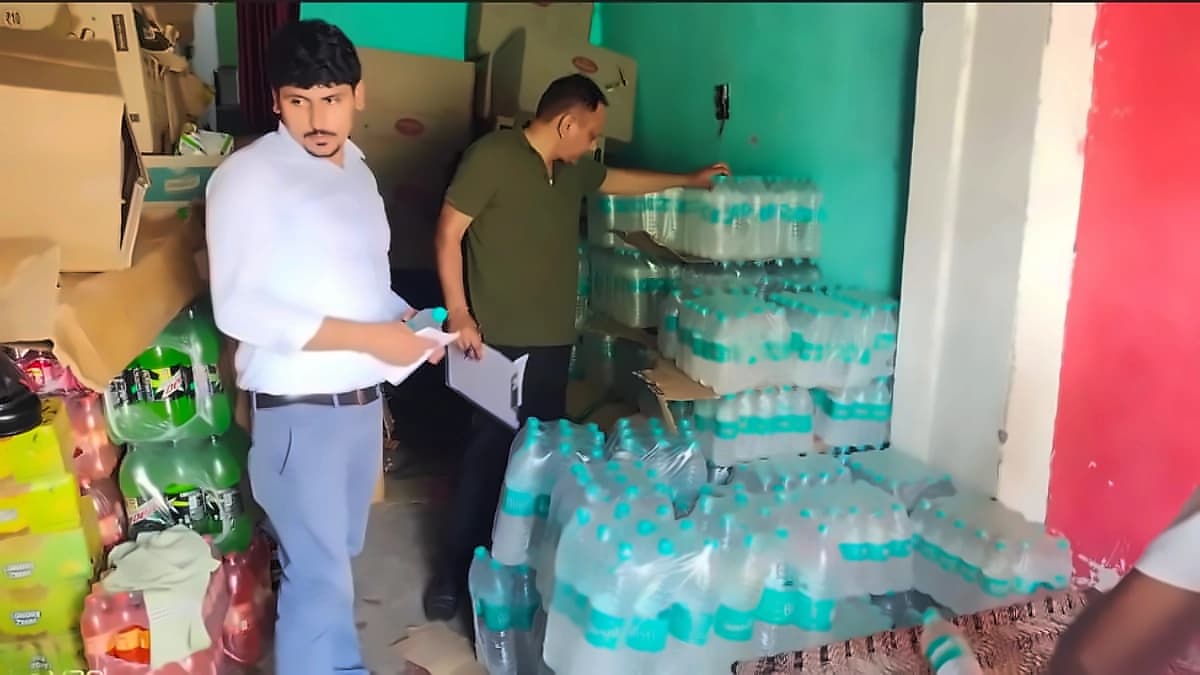
The Food Safety and Standards Authority of India (FSSAI) has significantly expanded its quality checks of packaged drinking water brands, bringing all brands under its scanner following the controversy involving Bisleri International. According to the latest reports, the regulator has collected random samples from different packaged water brands as part of its expanded inspection drive, with reports of the tests expected soon. The development has put the country's bottled drinking water industry under intense scrutiny, with FSSAI planning to test additional samples from Bisleri as well as products manufactured by competing brands.
The action follows laboratory findings involving bromate and polynuclear aromatic hydrocarbons (PAHs) in a regulatory sample collected from Bisleri's facility. As reported by Essential Business Intelligence, bromate can form as a by-product during certain water disinfection processes, particularly those involving ozone treatment. Certain PAH compounds are associated with serious health risks, including cancer. On November 22, FSSAI announced that it had sanctioned prosecution against Bisleri International after a sample collected from its premises failed to meet prescribed safety requirements. The expanded checks come amid the row over Bisleri after FSSAI sanctioned prosecution against the company over a sample of its packaged drinking water being declared unsafe in laboratory tests.
Responding to the regulatory action, Bisleri said in a statement that the matter is related to a single batch manufactured at its Goa facility in September 2025. According to the company's statement, FSSAI collected six samples from the facility on September 30, 2025. Five met all applicable standards in initial testing, while the sixth recorded a bromate level of 12 micrograms per litre against the prescribed limit of 10 micrograms per litre. Following an appeal filed on November 22, 2025, the referral laboratory found bromate within the prescribed limit but flagged PAHs in the sample. The company maintained that it conducts more than 90 quality tests across its 10-step manufacturing process and would continue to cooperate with the regulator.
The Bisleri controversy emerges against a backdrop of broader quality concerns in India's packaged water industry. Government data presented in Parliament in February 2025 showed that of 1,300 enforcement samples of packaged drinking water analysed in 2023–24, 333 were non-conforming. In 2022–23, 650 of 1,776 samples failed to conform to prescribed standards. India's regulatory framework has also undergone significant changes, with the government removing the mandatory BIS certification requirement for packaged drinking water and mineral water in October 2024. FSSAI subsequently introduced a testing scheme for packaged drinking water and mineral water, effective January 1, 2026, to strengthen compliance and monitoring.
As per the current status, no competing brand has been publicly identified as having failed the proposed nationwide checks. According to reports from Essential Business Intelligence, laboratory findings about Bisleri's bottled water has triggered an inspection of other packaged drinking water brands in the country. The expanded checks come as FSSAI is also keeping a watch on brands using names and labels that closely resemble those of established packaged water companies, with the regulator expected to take action against companies found using misleading or lookalike names and labelling. Bisleri maintained that its products remain safe for consumption and said it would cooperate with FSSAI, subsequently arranging independent testing at an FSSAI-approved laboratory and submitting its findings to the regulator's Western Regional Office on February 2, 2026.