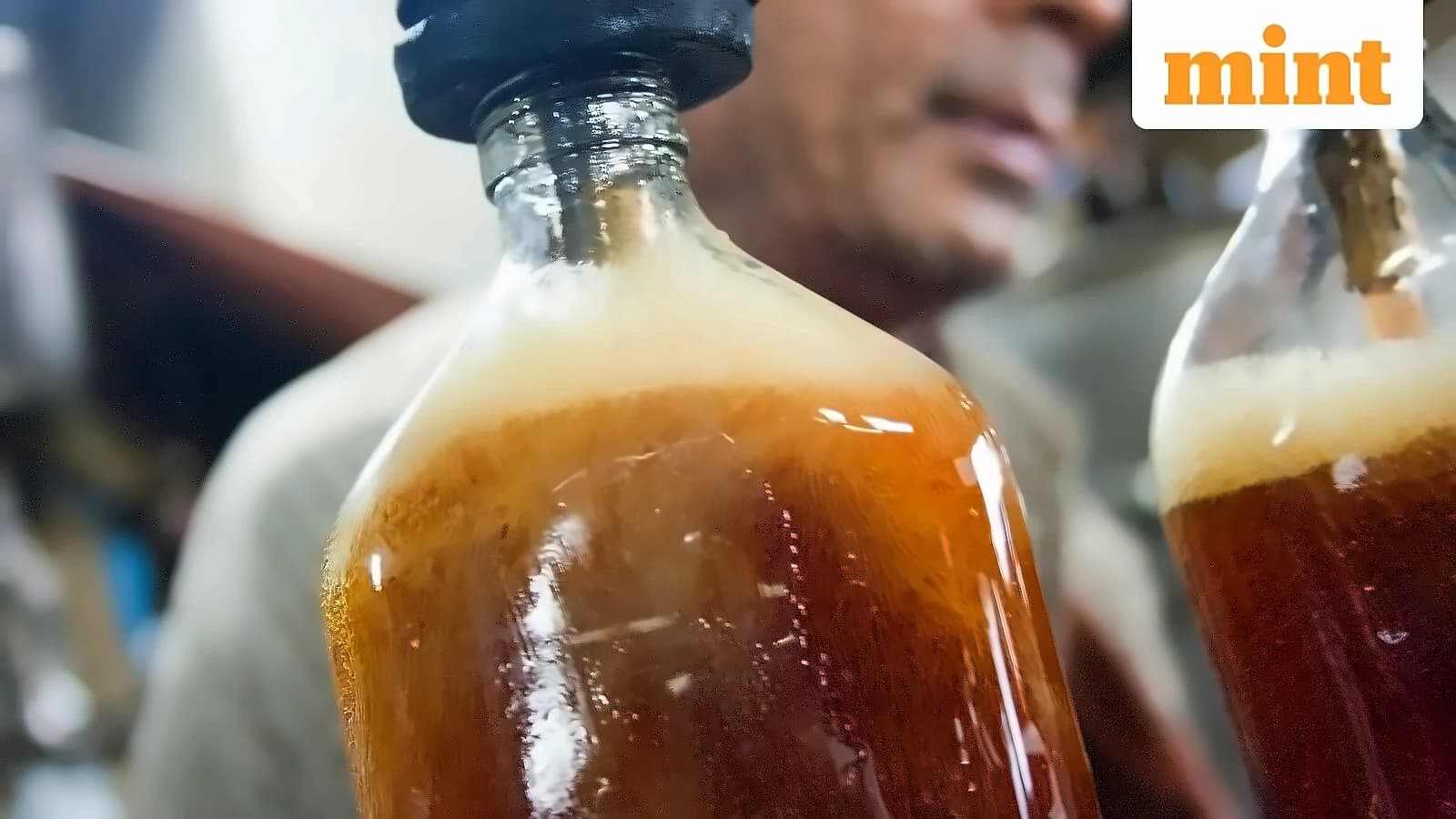
The Food Safety and Standards Authority of India's (FSSAI) regulatory crackdown is creating significant financial losses across multiple sectors. Mohan Rocky Springwater Pvt Ltd, the manufacturer of Old Monk, told the Bombay High Court that the sales restriction has cost it over ₹500 crore, as a dispute with FSSAI over rum flavouring and labelling remains unresolved. The company also revealed that the sales restriction has cost the state government around ₹350 crore in excise revenue. According to Bar and Bench, Senior advocate Venkatesh Dhond, appearing for Mohan Rocky Springwater, told the Division Bench that the sales restriction had resulted in losses exceeding ₹500 crore for the company. The court is scheduled to hear the matter next on October 23, with the manufacturer challenging a prohibition order issued by FSSAI over the formulation and labelling of the popular rum brand.
The Food Safety and Standards Authority India (FSSAI) is preparing tighter rules for quick delivery online platforms including Blinkit, Swiggy's Instamart and Amazon Now as part of its intensified nationwide crackdown on unsafe practices across India's $80 billion online retail industry. According to Bloomberg, FSSAI CEO Rajit Punhani stated the regulator is trying to tighten and make them accountable, with the food regulator looking to tackle unsafe practices across the world's largest consumer market. The new rules will require online listings to display manufacturing and expiry dates and batch numbers of food products, and hold platforms accountable for misleading claims by manufacturers. FSSAI is also considering rules mandating photographs and addresses of dark kitchens, along with stricter checks on dark stores to ensure proper storage conditions, including frozen items. Over the past few months, major e-commerce platforms including Eternal Ltd.'s Blinkit, Swiggy Instamart, Walmart Inc.-owned Flipkart and Amazon.com Inc.'s India unit have faced regulatory action for violations ranging from misbranding and sale of prohibited items to invalid licenses. Instamart confirmed in July that it was reviewing listings flagged by FSSAI and is in touch with authorities to resolve issues, while Amazon stated it removes non-compliant products and confirmed that violating products are no longer available on their marketplace.
The dispute stems from an inspection of Mohan Rocky Springwater's Khopoli plant in Maharashtra, after which FSSAI objected to the product's composition and labelling. The regulator took issue with the use of added rum flavouring in spirits sold under the standard product name, as well as descriptions such as '7 years old blended' and 'very old vatted'. According to Business Standard, the regulator's objection centres on whether a spirit made using neutral alcohol and added rum flavouring can be marketed simply as rum. FSSAI has maintained that artificial or nature-identical rum flavouring can mask the spirit's natural characteristics and alter its identity, such products should be identified as flavoured spirits rather than sold under a standard category name without adequate disclosure. The manufacturer contended that regulations permit the use of approved additives in neutral spirits and alleged that competing brands using similar processes have not faced action. Additional Solicitor General Anil Singh, appearing for the authorities, reiterated that sales would be permitted if the manufacturer agreed to change the product description from 'rum' to 'rum-like'. The broader FSSAI crackdown has also extended to energy drinks, with the regulator issuing notices to PepsiCo, Reliance's Campa, and Monster Energy, directing them to drop the term 'energy drink' for certain products, with the Delhi High Court issuing an interim order barring companies from manufacturing additional stock under that label.
The Food Safety and Standards Authority India (FSSAI) issued notices to Dr Reddy's, Nestle Health Science Limited, Tirupati Wellness Pvt Ltd, Flipkart India Pvt Ltd, Amazon Seller Services Pvt Ltd and Netmeds Healthcare Ltd regarding non-compliant advertising and claims for 'Celevida GLP+' on e-commerce platforms. According to FSSAI, the product was advertised as 'High Protein Support for Lean Muscle Preservation during GLP-1/GIP Therapies,' with claims associating its consumption with GLP-1/GIP therapies and preservation of lean muscle. The regulator stated that the 'Celevida GLP+' brand name along with GLP-1/GIP therapy-related claims created a misleading association between the product and such therapies. As per FSSAI, the companies must show cause as to why action should not be initiated against them under the Food Safety and Standards Act, 2006 (FSS Act), and the Rules and Regulations made thereunder. According to The Times of India, FSSAI also flagged claims such as 'helps maintain lean muscle', 'supports muscle strength' and 'preserve lean mass' and questioned the use of descriptions including 'complete daily nourishment' and 'dependable nutrition in every serving', which could portray the product as a complete nutrition product or meal replacement. The compliance burden is creating a new filter for assessing consumer companies, not just brand strength and distribution, but also compliance capability. FSSAI is also stepping up scrutiny of India's fast-growing supplements and nutraceuticals industry, particularly products sold online, with the regulator reviewing approvals granted as far back as three to five years ago to check whether companies are making claims they weren't cleared to use.
The regulatory crackdown is creating significant changes across consumer sectors and has intensified significantly. Amway India, Emami, Bonn Biscuits and Apis India have withdrawn or modified '100%' claims after regulatory intervention, while Dabur, Ferns N Petals and Lotte India have taken corrective measures after receiving notices related to product classification, ingredient disclosure and comparative or vegan claims. According to The Economic Times, the withdrawal of claims points more to a tightening interpretation of existing rules than to widespread product-safety failures, limiting the risk of recalls or production shutdowns. However, the long-term impact could be more consequential for brand strategy, with more conservative claims potentially diluting marketing narratives built around terms such as 'natural', '100%' and 'premium'. Companies may also have to spend more on legal reviews, testing, packaging changes and compliance systems before products reach consumers. Karan Taurani, Executive Vice President at Elara Capital, noted that D2C brands could be better placed than larger FMCG companies because they can respond faster through changes in distribution and product strategy, while changing ingredients and formulations at scale is not easy for large players. The broader FSSAI crackdown has also extended to food manufacturers, hotels and restaurants, with companies including Nestle India Ltd., PepsiCo, Dabur India Ltd., and hotel operators including JW Marriott being pulled up for violations. Prosecution involving e-commerce companies has risen at least five- to sixfold over the past year, with regulatory bodies conducting about 700,000 inspections between April and September, almost double the number from a year earlier. Major food companies including PepsiCo Inc., Reliance Consumer Products Ltd. and Monster Beverage Corp. have challenged FSSAI notices in court, creating additional hurdles to implementation, though FSSAI remains confident of winning against large foodmakers with consumer support.