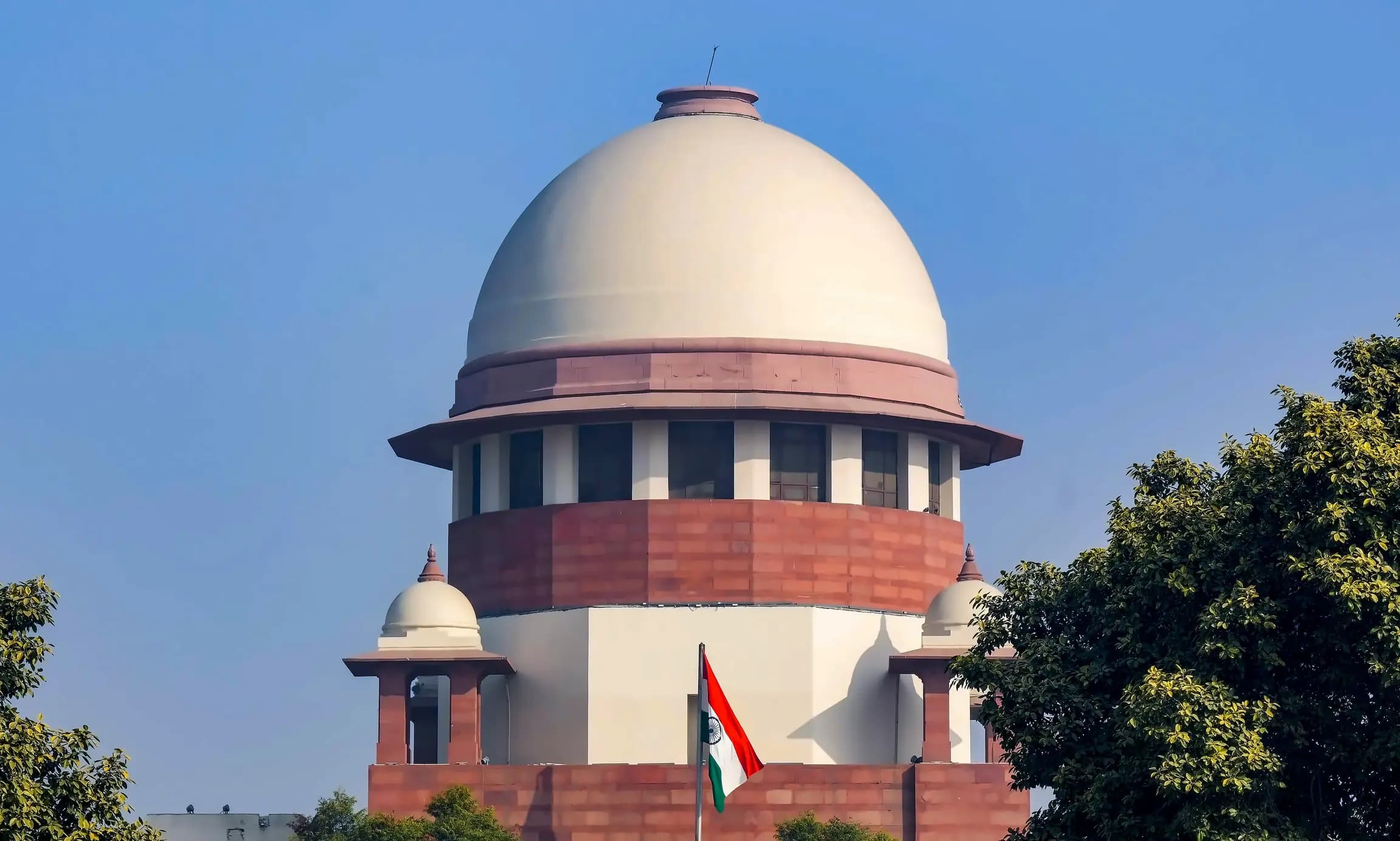
Fortis Healthcare has escalated the legal battle by filing a Special Leave Petition with the Supreme Court on September 16, 2026, challenging the Delhi High Court's forensic audit order from August 31, 2026. According to InGovern, the company argues it was neither a party to the original arbitration nor a judgment debtor or garnishee, and that the High Court effectively treated Fortis as an extension of its former promoters before establishing any legal or factual basis. The petition specifically challenges the High Court's reliance on 'reverse piercing' of the corporate veil, a doctrine Fortis claims Indian courts have not recognized, and warns that applying it to a listed company with roughly 2.5 lakh public shareholders would have significant consequences for parties uninvolved in the underlying dispute.
The Delhi High Court ordered a forensic audit of Fortis Healthcare on August 31, 2026, in connection with enforcement of a Singapore arbitration award held by Daiichi Sankyo against the Singh brothers, former promoters of Fortis, in their personal capacity. According to reports from InGovern, the matter is next listed on April 1, 2027. The audit, which dates back to conduct from May 2016, covers pledges, transfers, sales and the use of consideration connected to the erstwhile promoters' Fortis shareholding and specifically brings the 2018 change-of-control transaction within its scope. That transaction had cleared board and shareholder approval, CCI clearance, and a SEBI-sanctioned open offer.

InGovern emphasized that the case tests fundamental principles of company law, stating that 'a company is legally separate from those who own or run it.' The proxy advisory firm argued that the order effectively treats Fortis and the Singh Brothers as one and the same, while also noting it has not pierced the corporate veil. As reported by InGovern, this position sits uneasily with settled Supreme Court jurisprudence, with the firm warning that 'if a court can collapse the distinction between a public company and its former promoters without a full trial or a finding of fraud, the foundational architecture of Indian corporate law could come into question.' The firm also flagged a separate-legal-personality concern, noting that the order treats Fortis and the Singh brothers 'as the same' while stopping short of formally piercing the corporate veil.
According to InGovern, if the reasoning is upheld, any listed company in India could potentially be pulled into enforcement proceedings arising from the personal liabilities of its owners. The proxy advisory firm noted that board members and compliance officers could then be expected to monitor and enforce personal undertakings and liabilities of promoter-shareholders, even though no existing Indian law or regulation imposes such a duty on them. Indian companies have long operated on the understanding that a company is not a guarantor of its promoter's private affairs, and InGovern warned this order threatens to rewrite that understanding overnight. The firm pointed to the roughly 69% of Fortis held by public shareholders, who bear the disclosure overhang and reputational cost of the audit regardless of whether liability is ultimately found.
The audit has been described as a fact-finding exercise, and InGovern stressed that the audit does not by itself establish wrongdoing or liability, with the matter remaining sub judice. However, the broader concern is whether listed companies can be drawn into disputes arising from the personal debts of promoters or former promoters. As reported by InGovern, such a reading could create uncertainty for boards and compliance teams, with the burden on listed entities potentially widening beyond what current company law, securities law and listing regulations require. The firm urged Sebi, the Ministry of Corporate Affairs and, if required, Parliament to frame clear thresholds for when a listed company that was not a party to a dispute may be drawn into execution proceedings against its former promoters. According to InGovern, the remedy should come from institutions rather than courts alone, noting that clarity is needed because the issue could affect not just Fortis but the larger listed-company framework in India.