India's battery energy storage systems market is experiencing unprecedented growth, with 45-50 GWh of capacity expected to be commissioned over the current and next financial year, according to Crisil. This represents a dramatic increase from just 1 GWh as of last fiscal, marking a fundamental shift in the country's energy infrastructure. The growth is attributed to a strong pipeline of projects under implementation and continued policy support, though 8-9 GWh of awarded capacity faces higher risk of delay, moderating the overall deployment outlook. The analysis covers bids awarded between FY24 and FY26 across 100 renewable energy developers, highlighting the scale of this transformation in India's energy landscape.
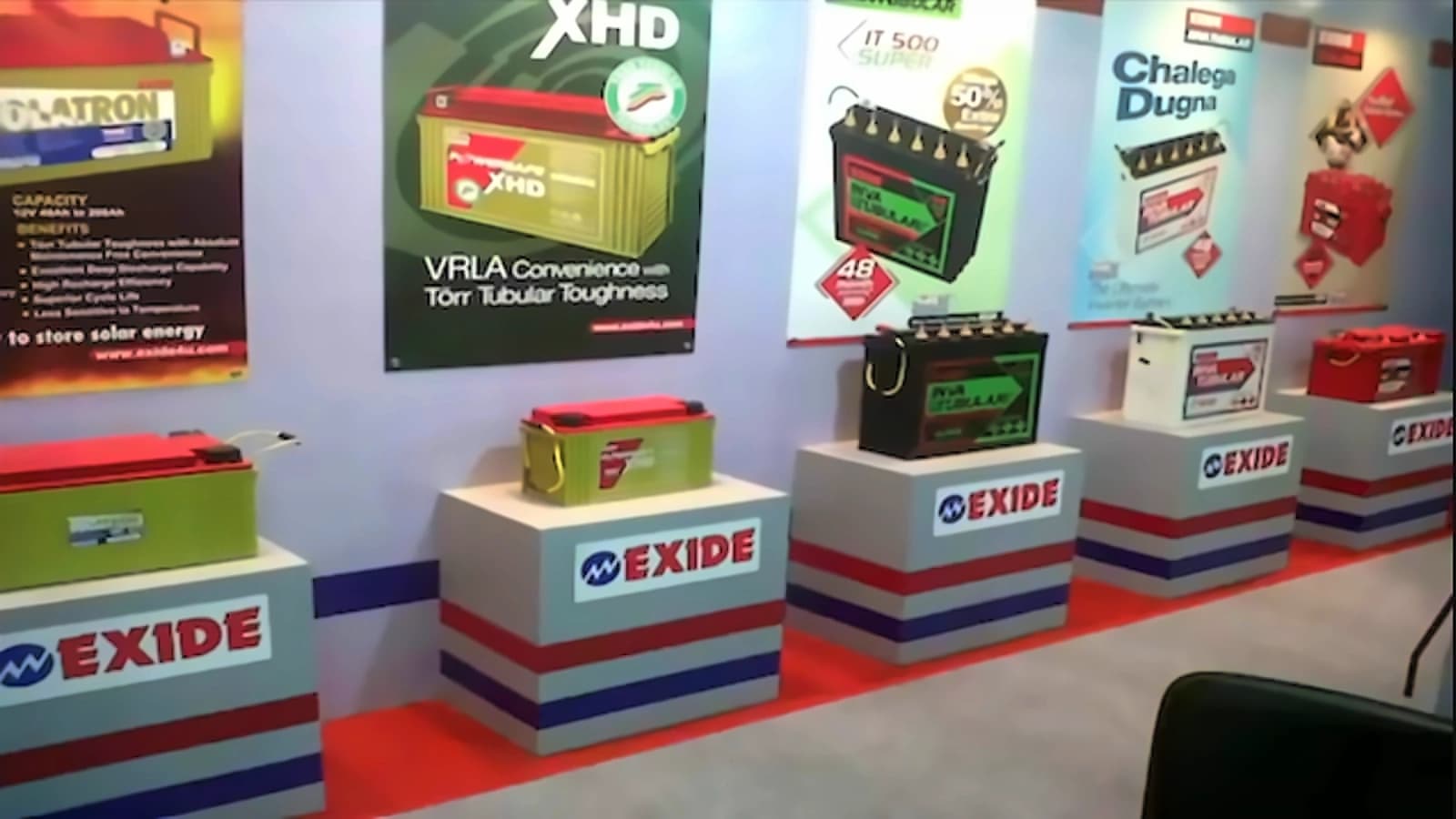
According to reports from CNBC TV18, Exide Industries Ltd announced on Wednesday that its material subsidiary Exide Energy Solutions Ltd (EESL) has completed the commissioning of Phase-I of its 6 GWh lithium-ion cell manufacturing facility in Devanahalli, Bengaluru, Karnataka. The facility was commissioned on September 23, 2026, marking a significant milestone in the company's battery manufacturing capabilities. Building on this foundation, Exide Energy Solutions is now expanding to 12 GWh capacity to capitalize on soaring demand for battery cells at the heart of every BESS system. The Bengaluru plant will manufacture advanced lithium-ion cells across multiple chemistries and form factors, enabling the company to serve both electric vehicle and stationary energy storage applications.
The surge in battery storage deployment is directly linked to government policy initiatives, with projects incorporating BESS accounting for nearly 40% of total auctioned capacity in FY26, up sharply from about 5% in FY24 and FY25, as reported by Crisil. This acceleration reflects the government's objective of integrating a larger share of renewable energy into the national power grid in a sustainable manner. The growing need for storage stems from renewable energy's rising share to 39% of India's installed power generation capacity and 15% of energy generated last fiscal. As renewable energy generation is intermittent, it has increased the need for firm and peak-hour power supply, particularly acute for solar projects where electricity demand peaks in the evening when solar generation is negligible.
The battery storage sector faces significant pricing pressures that are impacting project economics. As per Crisil, 21% of under-construction BESS capacity, equivalent to about 12 GWh, faces weak return potential due to battery price increases in 2026. Battery prices have rebounded from the lows witnessed in 2025, with developers typically procuring batteries about a year after securing project bids, making most projects awarded in 2025 exposed to higher battery prices. At prevailing levels, project returns may be insufficient to achieve the typical target internal rate of return of 12-14%, potentially leading to deferred implementation. The economics present challenges, with Indian manufacturers producing at around $80/kWh against Chinese imports at $50-60/kWh, due to immature supply chains and thin vendor ecosystems.
As reported by CNBC TV18, Exide Industries' consolidated net profit rose 28% year-on-year to ₹351.3 crore from ₹274.6 crore, driven by healthy revenue growth despite pressure on its margins. Revenue from operations increased 17.8% to ₹5,528.4 crore during the quarter, compared with ₹4,695.1 crore a year earlier. Earnings Before Interest, Tax, Depreciation and Amortisation (EBITDA) rose 15.5% to ₹621 crore from ₹538 crore, while EBITDA margin eased to 11.2% from 11.5% in the year-ago period. The company implemented calibrated price increases alongside cost-efficiency and supply chain initiatives to maintain healthy profitability despite higher raw material costs. According to the report, shares of Exide Industries Ltd ended at ₹425.95, down by 0.87%, on the NSE on Wednesday, despite the positive developments being announced after market hours, though the stock has demonstrated strong momentum with 17% gains on a year-to-date basis.
Looking ahead, 50-55 GWh of BESS capacity is scheduled for commissioning across FY27 and FY28, with around 40 GWh awarded through government-led auctions where distribution utilities are the offtakers, while the remaining 10-15 GWh is expected to serve commercial and industrial consumers directly or be deployed in the merchant market, as reported by Crisil. However, implementation faces challenges with 8-9 GWh out of 12 GWh of planned capacity exposed to additional challenges including limited implementation experience among project sponsors and continued dependence on overseas suppliers for batteries and critical components. Despite these headwinds, the battery storage revolution is clearly accelerating, with companies like Amara Raja Energy & Mobility planning 10 GWh capacity and Waaree Group targeting 20 GWh capacity within five years.