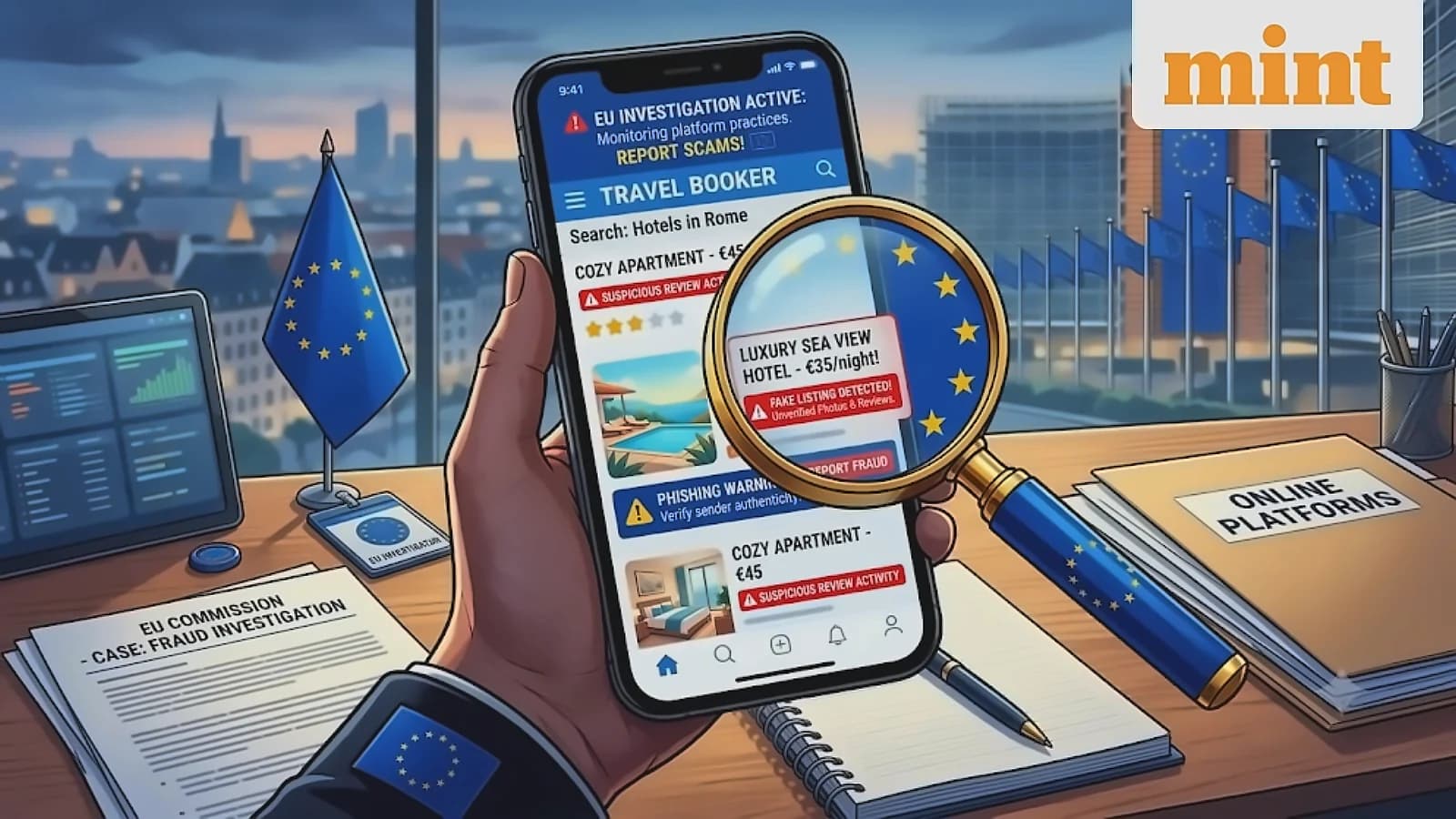
The European Commission has opened a formal investigation into online accommodation booking platform Booking.com amid concerns that it is not protecting consumers from fraudulent accommodation listings and phishing scams. According to reports from Livemint and VTV.vn, this marks the first investigation into Booking.com under the Digital Services Act (DSA) - a landmark online content law that covers social media and digital marketplaces. An EU Commission official stated that Booking.com needed to improve its efforts to identify risks and prevent fraud under the DSA, describing the current measures as 'substandard' and calling for more solid systems to prevent fraud. Henna Virkkunen, the Commission's executive vice-president for tech sovereignty, security and democracy, emphasized that "Europeans should be able to book their holidays without fear of being scammed." The investigation will examine whether the company is complying with the DSA's stricter rules, with fines potentially reaching up to six percent of global turnover or even a ban for serious and repeated breaches.
As reported by Livemint, Booking.com accounts for 66% of online hotel reservations in Europe, making it a dominant player in the accommodation booking market. The platform has experienced a 500% rise in scams between 2022 and 2024, highlighting the growing threat of fraudulent activities. The company operates with 28 million accommodation listings worldwide and is headquartered in Amsterdam. The investigation comes after UK consumer group Which? highlighted security concerns, with researchers creating a fake listing offering a stay at 10 Downing Street and successfully accepting payments through the platform. The proceedings will allow the Commission to investigate the concerns further and determine whether the platform has breached EU rules.
According to VTV.vn, the European Commission's investigation will specifically focus on instances of posting listings for non-existent properties, impersonating homeowners to rent out properties, or using inaccurate images and descriptions. The agency will also examine how Booking.com protects booking data and prevents fraudsters from sending fake messages to steal customers' personal information. A senior EU official was particularly critical, stating that "we suspect that Booking is not sufficiently protecting the data of... private users and business users, and (this) makes the system vulnerable for this kind of phishing." The Commission will assess how reservation and guest data is shared with accommodation providers and whether the platform has put in place "sufficient safeguards to prevent data from being misused."
According to Livemint, the investigation will specifically examine how Booking.com labels paid listings to ensure clear user information when accommodation providers pay to appear higher in search results. The Commission will assess whether the company has clearly identified listings that pay for higher positions in search results, allowing customers to distinguish advertisements from organic search results. Under the DSA, platforms must take appropriate steps to assess and reduce certain risks associated with their services. Clear advertising labels are also intended to help users understand when commercial payments influence what they see online, ensuring transparency in the booking process. This regulatory scrutiny comes as online booking scams and fraudulent accommodation listings remain a concern for travelers, particularly those searching for holiday rentals and making payments online.
As reported by Livemint and VTV.vn, Booking.com has stated it is cooperating fully with the European Commission as part of the investigation. A company spokesperson emphasized that security, trust and protection of personal information are top priorities at Booking.com, and the company remains committed to working with relevant governments, regulators, law enforcement and industry partners to combat cybercrime and online fraud. The company's commitment extends to protecting travellers and partners, with Booking.com maintaining its focus on combating fraudulent activities across its platform. There is no legal deadline for the completion of the probe, but the targeted company can offer commitments to address the European Commission's concerns. Agustín Reyna, director general of BEUC, a pan-European consumer group, welcomed the Commission's decision, describing it as a positive step to investigate a systemic problem.