Several major platform companies have moved the Karnataka High Court challenging the constitutional validity of the Karnataka Platform Based Gig Workers (Social Security and Welfare) Act, 2025. According to Bar and Bench, the writ petition filed by the Internet and Mobile Association of India (IAMAI) along with Eternal Ltd, Zepto, Swiggy, Urban Company and Valmo Transportation seeks to strike down the state legislation and associated rules. The petitioners argue that the Karnataka legislation directly conflicts with the Code on Social Security, 2020 (CoSS), a central law enacted by Parliament to create a uniform national framework governing social security for gig and platform workers. The companies contend that Parliament intended to occupy the entire legislative field through the Code by providing a uniform statutory framework covering gig worker identification, welfare schemes, aggregator contributions, and implementation. As reported by Bar and Bench, the Karnataka law is among the first state-level legislations in India specifically aimed at providing social security and welfare protections for app-based gig workers such as delivery partners, ride-hailing drivers and home service professionals.
The petition seeks to quash the Karnataka Platform Based Gig Workers (Social Security and Welfare) Act, 2025, the Rules 2025, the notification constituting the Karnataka Gig Workers Welfare Board, and the Government Order dated February 12, 2026. As reported by Bar and Bench, the companies have also challenged notices dated May 21, 2026, which directed them to constitute Internal Dispute Resolution Committees (IDRCs) under Section 22 of the Act read with Rule 26, and welfare fee notices dated June 22, 2026, which required payment under Section 20 of the Act and demanded proof of payment by July 5, 2026. The petitioners have specifically targeted show-cause notices alleging non-cooperation in implementation of the Act, including failure to constitute IDRCs, failure to respond to communications relating to onboarding and use of software for payment of welfare fees, and failure to furnish information sought by authorities. The companies have requested the court to declare that the Karnataka law and its associated rules are unconstitutional, setting aside subsequent government actions taken under the Act.
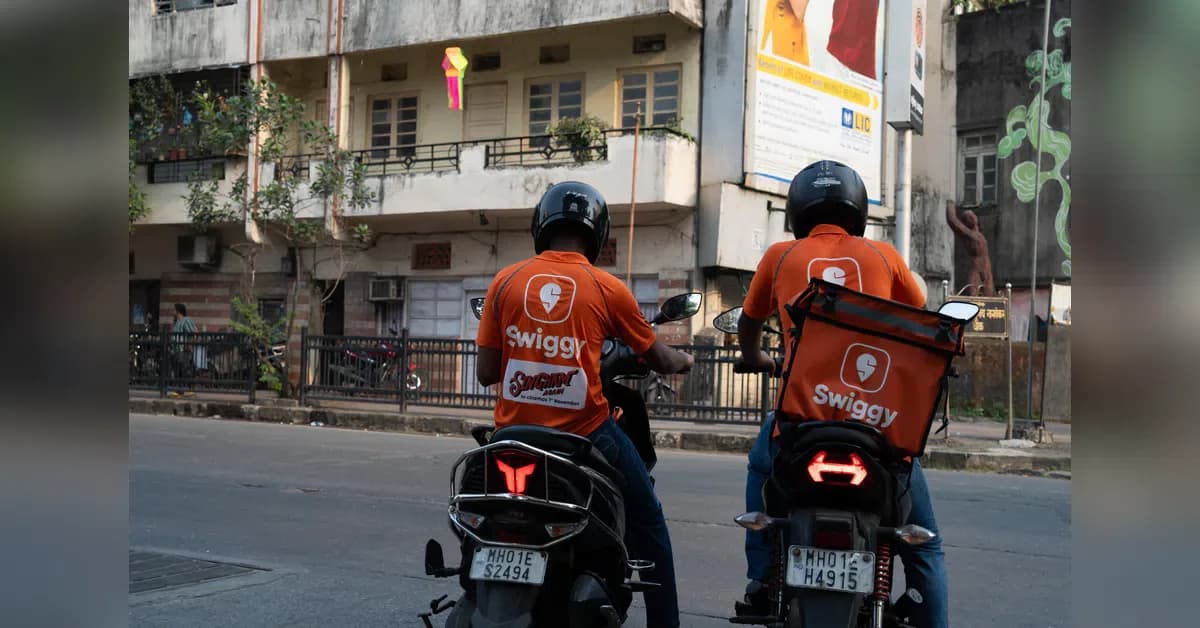
Gig worker unions have strongly criticized platform companies for challenging the constitutional validity of Karnataka's gig worker welfare law. The Indian Federation of App-Based Transport Workers (IFAT), Telangana Gig and Platform Workers Union (TGPWU) and Karnataka App-Based Workers Union (KAWU) have strongly criticized platform companies, including Swiggy and Zepto, for challenging the constitutional validity of the Karnataka Platform Based Gig Workers (Social Security and Welfare) Act, 2025, before the Karnataka High Court. According to Storyboard18, Shaik Salauddin, Co-Founder and National General Secretary of IFAT and Founder President of TGPWU, stated that the legal challenge is an "unfortunate attempt to deny millions of gig and platform workers their basic rights to social security, welfare, and dignified working conditions." The unions termed the legal challenge an attempt to deny gig workers access to social security, welfare benefits and fair working conditions.
The petitioners argue that the Karnataka legislation conflicts with the Code on Social Security, 2020 (CoSS), a central law enacted by Parliament to create a uniform national framework governing social security for gig and platform workers. However, Shaik Salauddin from IFAT has responded that the Karnataka legislation "only supplements and does not replace the CoSS." As reported by Storyboard18, Salauddin argued that "the reality is that gig workers across India continue to remain without adequate social protection despite years of promises. States have both the constitutional authority and moral responsibility to protect workers from exploitation and fill these gaps." The companies contend that Parliament intended to occupy the entire legislative field through the Code by providing a uniform statutory framework covering gig worker identification, welfare schemes, aggregator contributions, and implementation. The petitioners argue that "Once Parliament has occupied the legislative field relating to social security for gig workers, the State cannot establish an inconsistent parallel statutory regime," citing the doctrine of repugnancy under Article 254 of the Constitution. The aggregators have also argued that the Act is arbitrary and violates Article 14 of the Constitution, which guarantees equality before the law, and infringes upon other fundamental rights protected under Part III of the Constitution.
As reported by Business Standard, companies have approached the court as a group to ensure ease of doing business, with sources noting that if there are different laws governing the same subject, it can increase the compliance burden on platforms. The matter is yet to be listed for hearing before the Karnataka High Court, with the case expected to test the balance between the Centre's social security framework for gig workers and states' powers to introduce their own welfare legislation. The companies have argued that separate legal requirements would force aggregators to make contributions twice or more, while also balancing different compliance mechanisms. The petitioners have pointed out that the Karnataka government had gone ahead anyway despite the central legislation, creating additional administrative and financial burdens for platform companies. For investors, the case carries real financial stakes as several petitioners, including Eternal Ltd and Swiggy, are listed companies whose unit economics are closely watched by the market. Additional compliance costs, welfare fee obligations and the administrative burden of running parallel regulatory systems have the potential to pressure margins at a time when profitability remains a key investor concern. If the Karnataka law were to survive legal scrutiny, it could embolden other states to enact similar legislation, creating a fragmented, state-by-state regulatory landscape that would make cost forecasting and operational planning significantly harder for platform businesses across the country.