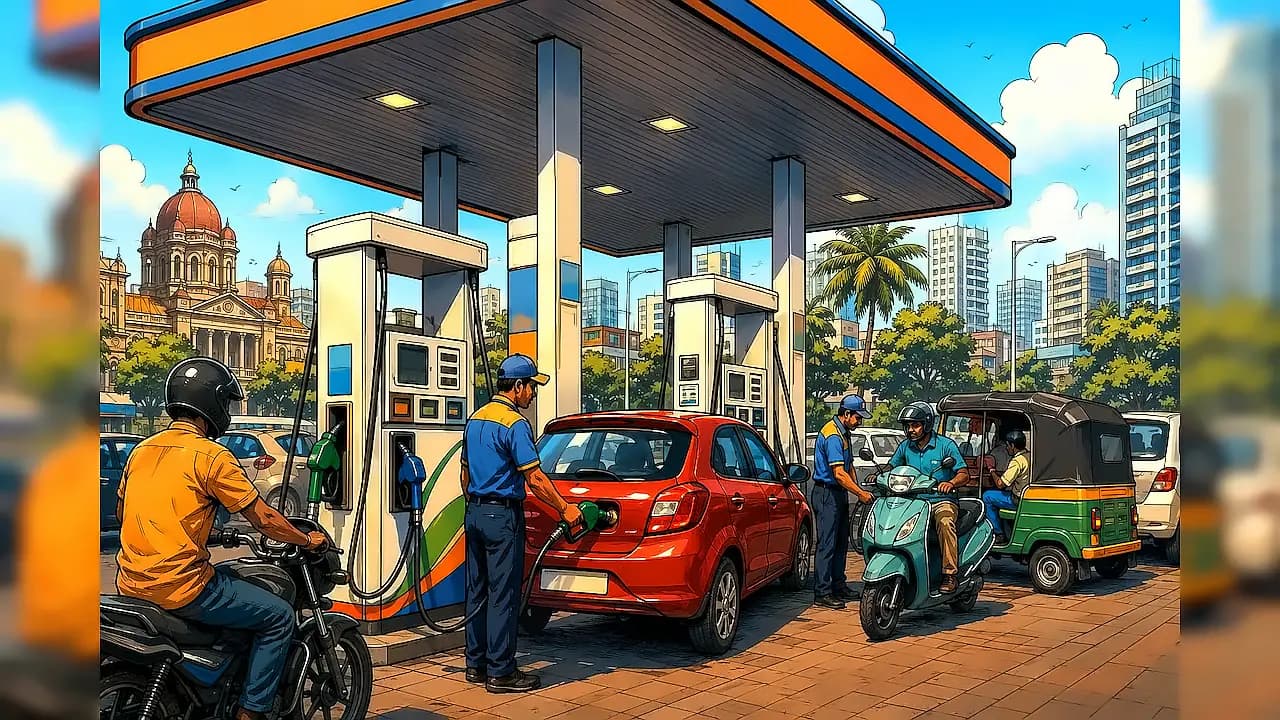
Indraprastha Gas Limited (IGL) has raised CNG prices by ₹1 per kg, bringing the new rate in Delhi to ₹80.09 per kg. According to reports from Zee News, Bhaskar English, and Etnow, this marks the second price increase within just two days, delivering another shock to daily commuters and transport operators. The latest hike follows an earlier increase of ₹2 per kg that had pushed rates from ₹77.09 to ₹79.09 per kg. In Noida and Ghaziabad, consumers will now pay ₹88.70 per kg, as reported by The Times of India. The price revision took effect from Saturday, 17 May, 2026, as confirmed by Bhaskar English updates. The domestic price adjustments are directly linked to geopolitical tensions and disruption at the Strait of Hormuz, a vital global oil and gas route.
The cumulative price increase represents a total of ₹3 per kg within 48 hours, as reported by Zee News. The pricing structure shows the mathematical progression: ₹77.09 + ₹2 + ₹1 = ₹80.09 per kg in Delhi, while Noida and Ghaziabad consumers face ₹88.70 per kg. This rapid escalation in CNG costs is creating additional financial pressure on commuters and transport operators who rely on compressed natural gas for their daily operations. The repeated increases are expected to impact auto-rickshaw fares, taxi services, and logistics costs across the National Capital Region. Despite the price hikes, CNG currently offers a significant cost advantage, averaging approximately ₹2.5-2.8 per kilometer compared to petrol's roughly ₹5 per kilometer.
The latest CNG increase comes alongside India's first major retail fuel hike in over four years, with petrol and diesel prices increased by ₹3 per litre, according to official_info7890 on Instagram. This marks the end of a long period where state-owned oil companies absorbed losses during global crude spikes. The broader fuel price increases are attributed to rising global energy costs linked to the ongoing Iran conflict and concerns around supply routes in West Asia. Coordinated airstrikes on Iran in late February 2026 led to the closure of the Strait of Hormuz, causing India's crude oil basket to nearly double between February and March 2026, peaking at $157 per barrel. This supply shock has significantly impacted international energy markets, with India, heavily reliant on imports, facing heightened vulnerability.
Indraprastha Gas Limited's stock has faced negative market sentiment, declining by over 25% year-to-date and approximately 8.48% in the week of May 11-15, 2026, significantly underperforming the benchmark Sensex. Adding to investor caution, MarketsMOJO downgraded IGL to a 'Sell' rating on May 12, 2026, citing concerns over valuation. The firm shifted its view from 'attractive' to 'fair,' with a P/E of 13.25. Mahanagar Gas Limited (MGL) trades at a slightly lower P/E of around 12.0, while Gujarat Gas Limited (GG) carries a notably higher P/E ratio of approximately 22.0. Analyst sentiment appears divided, with some reports suggesting a consensus 'Hold' rating with an average 12-month price target around ₹165.00, while others have issued higher price targets, with one report noting a consensus target of ₹208.93.
While CNG prices have increased significantly, Piped Natural Gas (PNG) prices remain stable at ₹49.59 per SCM in the national capital, as reported by Bhaskar English. The pricing structure shows: NCT of Delhi ₹49.59/- per SCM, Greater Noida ₹49.46/- per SCM, Ghaziabad ₹49.46/- per SCM, and Gurugram ₹48.40/- per SCM. This contrast between CNG and PNG pricing reflects the different supply chains and distribution mechanisms for natural gas in the region.