Dalmia Bharat shares fell 7.2% to touch an intra-day low of ₹1,507.70 on Tuesday, hitting an over four-year low after disappointing September quarter results triggered widespread earnings downgrades. The cement manufacturing company shares opened at ₹1,545 on NSE and fell 7.2% to touch an intra-day low of ₹1,507.70, with the stock trading 5.49% lower at ₹1,536.50 around 12.50 pm. The sharp decline reflects investor concerns over the company's weak Q2FY27 performance, with the stock significantly underperforming the benchmark BSE Sensex which was trading 0.07% lower at 73,555 levels. Dalmia lagged the industry's estimated 9-10% growth, pointing to market share loss, with volumes rising 3% year-on-year to 7.1 million tonnes, impacted by muted demand in the east and northeast regions.
Dalmia Bharat reported a consolidated net loss of ₹205 crore for Q2FY27, representing a 14% decline from the ₹239 crore net profit in the corresponding quarter of the previous year. The company's revenue from operations increased 4.27% year-on-year to ₹3,563 crore from ₹3,417 crore in Q2FY26, though this came in below the CNBC-TV18 poll estimate of ₹3,646 crore. The company's profit before exceptional items and tax stood at ₹46 crore, down 85.53% year-on-year from ₹318 crore in the previous period. Exceptional expenses of ₹339 crore during the quarter were related to the acquisition of Jaiprakash Associates Ltd's cement business, impairment of assets and a voluntary separation scheme for employees. The company recognised an impairment loss of ₹282 crore on three captive power plants and incurred a one-time charge of ₹57 crore for implementing a separation scheme for eligible employees at select units.
Multiple brokerages downgraded Dalmia Bharat following the weak Q2FY27 results, with HSBC downgrading to 'Hold' from 'Add' and cutting the target price to ₹1,820 from ₹2,150, citing muted volume growth, large cost increases and asset impairment as key factors. According to Moneycontrol, Morgan Stanley maintained its 'Underweight' rating with a target price of ₹1,640, describing the September-quarter results as very weak. Citi retained its 'Buy' rating but trimmed the target price to ₹1,900 from ₹2,150, noting that Q2 EBITDA fell 29% YoY to around ₹490 crore, approximately 3% below estimates. CLSA maintained its 'Outperform' call but lowered the target price to ₹2,000, expecting near-term profitability to improve on cement price hikes but noting that benefits could be partly offset by higher fuel costs. Jefferies maintained its 'Buy' rating but reduced the target price to ₹2,125, cutting EBITDA estimates by 7-11% to account for near-term weakness.
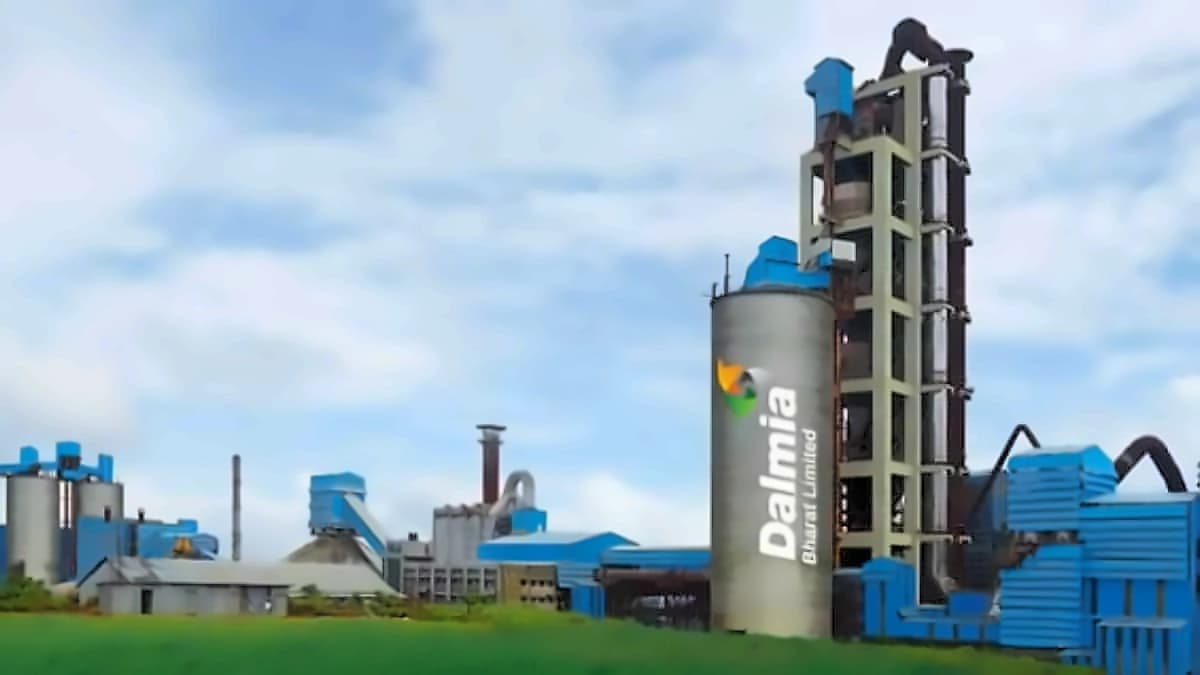
Prabhudas Lilladher has maintained its 'Buy' rating on Dalmia Bharat with a revised target price of ₹1,970 per share, as reported in their research report dated October 27, 2026. The brokerage has revised its target price down from ₹2,015 per share, valuing the stock at 11x EV of September 2028 EBITDA. The recommendation comes despite the company's weak Q2FY27 performance, with Prabhudas projecting an 11% EBITDA CAGR over FY26-29E and expecting EBITDA/tonne to potentially recover to ~₹1,000 in Q3FY27, provided recent price hikes of ~₹15/bag sustain alongside operational improvements. The brokerage attributed the weak quarterly results to heavy rainfall and floods that disrupted demand across eastern and northeastern India, while targeted cost savings of around ₹75 per tonne in FY27 provide additional leverage to mitigate cost pressures.
Power and fuel costs rose 22% year-on-year to ₹874 crore, significantly impacting the company's profitability, as reported by The Economic Times. Total expenses increased around 13% to ₹3,563 crore, with demand challenges in few of our key markets along with macro-economic cost headwinds impacting EBITDA for the quarter, according to CFO Yatin Malhotra. The integration of central assets also weighed on the quarter's performance. Net sales realisation (NSR) increased 1% year-on-year but declined 1% sequentially, as reported by CNBC TV18. Despite cost pressures, Dalmia Bharat demonstrated strong operational performance with sales volume increasing 3% to 7.1 million tonnes from 6.9 million tonnes in the previous year. The company's share of renewable power in total power consumption rose to 52%, reflecting its commitment to sustainable operations. Management has indicated a further fuel-cost impact of ₹75-80 per tonne in Q3FY27, along with additional costs of ₹100-125 per tonne associated with ramping up the acquired JPA cement assets.
JM Financial has trimmed FY27–29E EBITDA by 10–12% and cut the EV/EBITDA target multiple by one notch to 11x, modelling in Q2FY27 performance along with initial profitability dilution from the ramp-up of acquired JPA cement assets. However, the brokerage noted that Dalmia Bharat remains on track to increase its cement capacity to 67mt by FY28E from the current 55mt. The company announced positive operational developments, revealing that a trial run began at 3.6 MnTPA Belgaum clinker line in October 2026, ahead of schedule. Puneet Dalmia, managing director and CEO, expressed confidence in the industry's long-term prospects, stating that "India continues to demonstrate remarkable resilience despite global headwinds. Robust economic activity, supported by sustained public spending, drove broad-based growth. Cement demand too recorded healthy growth during the quarter." Of the FY27 capital expenditure target of ₹3,200-3,400 crore, ₹1,420 crore was spent in H1. Net debt rose to ₹5,722 crore, taking net-debt/EBITDA to 2x from 1.5x in Q1, though the company is committed to maintaining net-debt/EBITDA below 2x on a sustainable basis.