Cummins India's March-quarter (Q4FY26) earnings drove the stock to a record high of ₹6,100 on Friday, though it was trading around ₹5,750 on Monday. According to reports from Stock Market News, the company's total operating revenue rose 23% year-on-year to ₹3,000 crore in Q4FY26, while net profit increased at a similar pace to ₹650 crore. However, the stock's valuation at 57x FY27 earnings based on consensus Bloomberg estimates appears increasingly demanding after gaining more than 70% over the past year. As per Business Standard, FY26 revenue grew 18% year-on-year to ₹12,140 crore, with gross margins expanding 60 basis points Y-o-Y to 36.8% despite Q4 margin contraction.
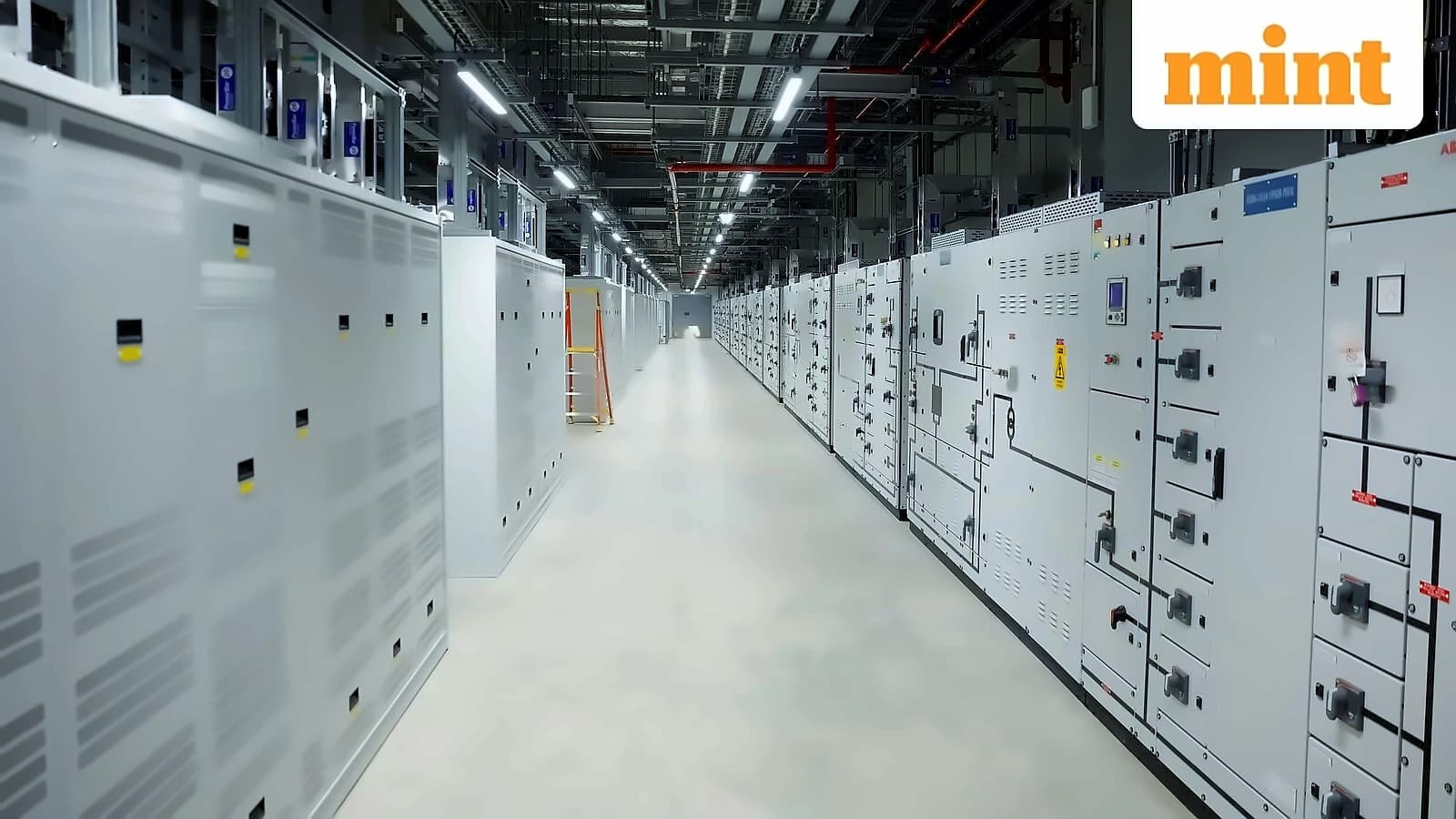
A key development from management commentary was the growing contribution of data centres, which require reliable backup power systems and are creating a long-term demand tailwind for Cummins' high-horsepower generator business. As reported by Stock Market News, data centres accounted for 30-35% of domestic power-generation revenue in FY26 and about 35% in Q4FY26. Enquiry momentum has accelerated sharply since October, driven by strong demand from both hyperscalers and colocation operators, resulting in power-generation revenue jumping 48% year-on-year. The data centre boom is particularly significant as India's committed investments since 2019 have crossed $95 billion, with $30 billion pledged in 2025 alone, positioning Cummins as a key beneficiary of this infrastructure expansion. According to Business Standard, hyperscaler deliveries were around ₹250 crore during Q4FY26, with data centres now contributing 35% of revenues during the quarter.
The company remains well positioned to benefit from India's infrastructure and digitalization push with capacity utilization at around 70%, providing room to grow without significant capital expenditure. According to Stock Market News, growth was supported by demand from pharmaceutical facilities, luxury housing projects, railways and mining, as well as booming themes such as solar-cells and quick-commerce warehouses. The distribution business continued to perform strongly, with revenue rising 21% year-on-year in the quarter, aided by predictive maintenance contracts, retrofits and extended-warranty programmes. As reported by Business Standard, railways and mining are key growth drivers, while the compressor segment business is expected to enter a cyclical downtrend. The distribution outlook is supported by a rising installed base, predictive maintenance offerings and CPCB IV+ products moving out of warranty.
Despite strong domestic performance, export revenue fell 6% year-on-year and nearly 5% sequentially to ₹450 crore, with geopolitical uncertainty in West Asia continuing to cloud export prospects. As reported by Stock Market News, management's FY27 guidance was notably measured with industrial revenue remaining flat year-on-year. According to Business Standard, exports were muted, falling 6% due to geopolitical developments, with Europe and Asia-Pacific showing moderate demand growth, but the Middle East remaining subdued. The compressor segment business is expected to enter a cyclical downtrend, while high-HP products were the growth driver in FY26, growing 20% year-on-year. However, recent developments show new mining tenders and a few other pockets of industrial segment have shown signs of recovery, indicating that industrial revenues could improve gradually over the coming quarters.
The company's Ebitda margin held steady at 21.3% in Q4FY26, underscoring the company's ability to protect profitability despite higher raw material costs and competitive pressures. According to Stock Market News, labour shortages at supplier facilities, rising fuel costs and commodity inflation are emerging as headwinds, with previously booked orders facing margin pressure and lead times for new orders stretching to 3-6 months. As reported by Business Standard, gross margin pressure is visible due to commodity cost increases, though Ebitda margins have expanded despite the gross-margin decline with operating leverage improving. The company's strong positioning in India's data centre ecosystem, where India's Digital Personal Data Protection Act mandates that critical personal and financial data of Indian citizens must be stored physically within India's borders, provides additional growth opportunities as global tech giants build campuses here rather than serving India remotely. Current overall capacity utilisation is 70%, with no major greenfield capex plans on the table, allowing the company to defer expansion while maintaining operational flexibility.