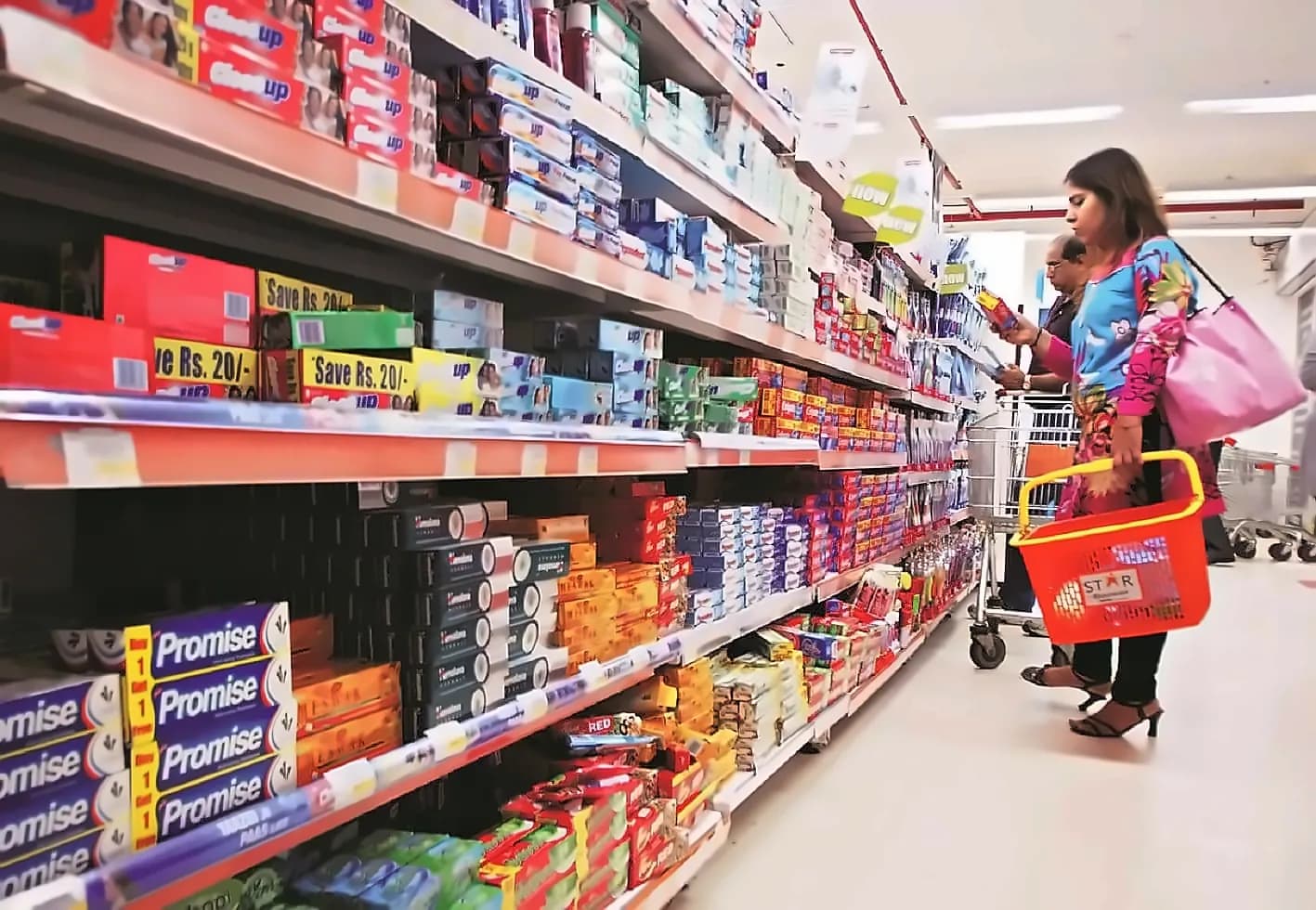
Companies are implementing measured price increases while sacrificing margins to boost volume growth during the crucial festive period. According to The Times of India, CEOs acknowledge that measured price increases have to be taken amid persistent commodity inflation but margins also need to be sacrificed to support demand. Festive sales targets have not been slashed, with companies hopeful that a longer festive window (Diwali is in November this year against October last year) alongside premiumisation will support demand. The challenge lies in balancing price increases with consumer affordability, particularly as the mass market faces pressure.
The biggest challenge stems from commodity cost volatility and intermittent disruption in supplies that have disrupted traditional festive planning. As reported by The Times of India, crude oil has returned to $100 per barrel while copper has hit new all-time highs amid the flare-up in West Asia. Sugar has moved up sharply, and dry fruits, which sit at the very heart of the sweets business, are at an all-time high. According to Umesh Kumar Agarwal, director at Haldiram Marketing, prices are moving on sentiment as much as on fundamentals, with a rate quoted this fortnight looking different the next. Nuvama Institutional Equities reports that most companies will see a double-digit kind of inflation, say 10 to 15%, with paint companies and Pidilite taking double-digit price hikes, while HUL has implemented almost 7% price increases.
Brands are implementing several cost reduction measures including localisation, using alternatives wherever feasible, and removing non-essential product features to cut production costs. According to The Times of India, wherever possible, brands are considering alternatives, for instance using aluminium instead of copper. Sanjay Chitkara, director and co-CSMO at LG India, stated that the first focus will be on localisation, productivity, sourcing and operational efficiencies before passing the entire cost increase to consumers. Kishan Jain, director at Goldmedal Electricals, confirmed the company will look to absorb further increase in commodity costs rather than pass on to consumers. Nuvama notes that if I see on the EBITDA margin, the pressure will be 50 to 150 basis points because ad spends will be cut.
The retail sector faces significant challenges with input costs for retailers across segments having risen by about 20% since the start of the war, of that only half has been passed on to consumers, hurting margins. As reported by The Times of India, Kumar Rajagopalan, executive director & CEO at Retailers Association of India (RAI), noted that getting shipping containers has often been an issue. Some executives also highlighted that rural demand is a bit uneven amid deficient monsoons, adding complexity to the festive planning process. Last week, the BSE benchmark Sensex tumbled 1,733.67 points, or 2.26 per cent, and the NSE Nifty declined 499.6 points, or 2 per cent, extending the Nifty-50's weekly losing streak to five consecutive weeks.
Despite challenges, companies are banking on premiumisation and consumer desire for product upgrades to support festive demand. According to The Times of India, Godrej Appliances is banking on premiumisation and consumer desire for product upgrades to support festive demand, targeting over 40% growth for the season. Kamal Nandi, business head at appliances business, Godrej Enterprises Group, emphasised that festivals continue to be an important purchase window for appliance categories, with pricing calibrated to protect consumers. However, HyFun Foods remains positive about the festive season but expects the market to remain fairly value-conscious, with the entry-level consumer being naturally more sensitive to price movements. The current environment could create opportunities for larger FMCG companies to gain market share, as local and smaller players may find it harder to absorb sharp increases in commodity prices.