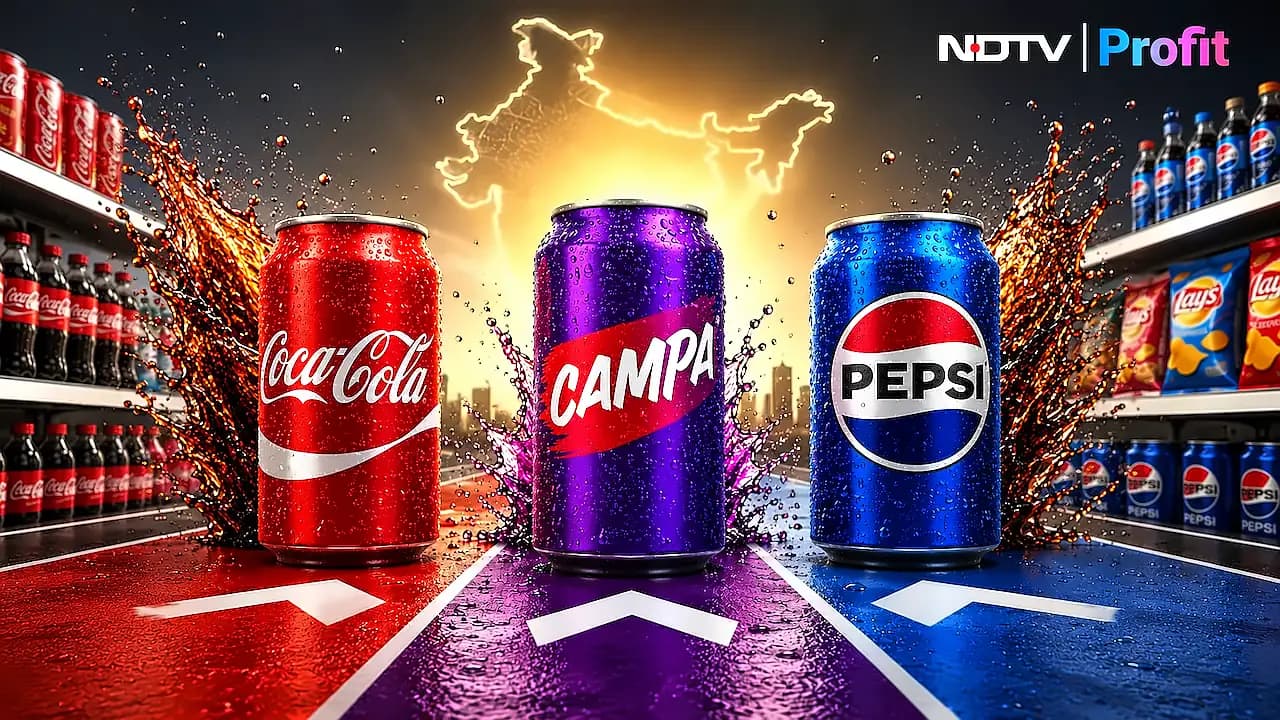
India's carbonated soft drinks market is witnessing an intensifying structural shift as the traditional cola duopoly faces unprecedented challenges. According to industry estimates, Coca-Cola commands a 40-42% share of India's carbonated beverages market, followed by PepsiCo with 28-30%. However, the competitive landscape is fundamentally changing as Reliance Consumer Products' Campa and ITC's Coconut Cola are collectively reshaping how growth, value, and premium positioning are defined in India's soft drinks market. This represents a significant departure from the rigid, two-player script that has dominated India's cola story for nearly three decades.
Campa has quickly expanded its presence to capture an estimated 7-8% market share within a short period of its relaunch in March 2023. As reported by industry experts, Campa has gained market share from both Coca-Cola and PepsiCo, although the impact appears to be more pronounced on PepsiCo. The company has positioned the brand as a value-for-money alternative by introducing a highly aggressive ₹10 price point for its 200-ml PET bottle, completely dismantling the traditional industry price architecture. This value-led disruption has forced multinational incumbents to immediately protect their turf with lower pack prices and intensified retail promotions, with the margin squeeze rapidly spilling over into juices and other ready-to-drink beverage categories.
ITC's new offering, Coconut Cola, launched under the established B Natural beverage portfolio, represents a completely different approach to market disruption. The product is a zero-sugar carbonated drink engineered with real tender coconut water, commanding a telling ₹60 price point for a 250-ml can. This premium positioning signals that ITC is refusing to enter a race to the bottom on price while testing a premium niche where consumer indulgence is paired with a distinct "better-for-you" halo and experimental flavour profile. The product is initially piloted exclusively on quick-commerce platforms, targeting digitally native, highly experimental urban buyers who are seeking functional benefits without compromising taste.
Campa recorded approximately ₹2,900 crore in sales during the first quarter of FY27, underscoring the rapid scale-up of the business. Analysts estimate Campa contributes roughly 20-22% of Reliance Consumer Products' overall revenue, making it one of the company's fastest-growing segments. The operational numbers underscore the sheer scale of this value-led disruption, representing classic category disruption where a value-led insurgent resets the floor price and forces market leaders to defend their share with defensive, tactical responses. This value play is only the first act, with a far more complex second act now unfolding at the ultra-premium end of the spectrum.
Beyond the corporate might of Reliance and ITC, the carbonated drinks ecosystem is witnessing the rise of a dense, localized challenger bench. Independent brands like Lahori Zeera and various regional, flavour-focused operators are successfully carving out defensive micro-niches by combining ethnic flavor profiles, local nostalgia, and highly differentiated brand positioning. The "cola market" has effectively broken apart into a complex portfolio of overlapping sub-categories, with consumer behavior fragmenting simultaneously: some consumers are trading down to value, others are trading across to regional nostalgia, and an affluent segment is trading up to premiumized wellness. This structural shift extends beyond traditional cola wars to encompass price disruption, health consciousness, premiumization, and local flavours all colliding simultaneously. The immediate risk for Coca-Cola and PepsiCo is not that new challengers will suddenly dismantle their staggering advantages in distribution scale and manufacturing infrastructure, but rather their ability to design resilient beverage portfolios capable of monetizing simultaneous shocks across multiple dimensions.