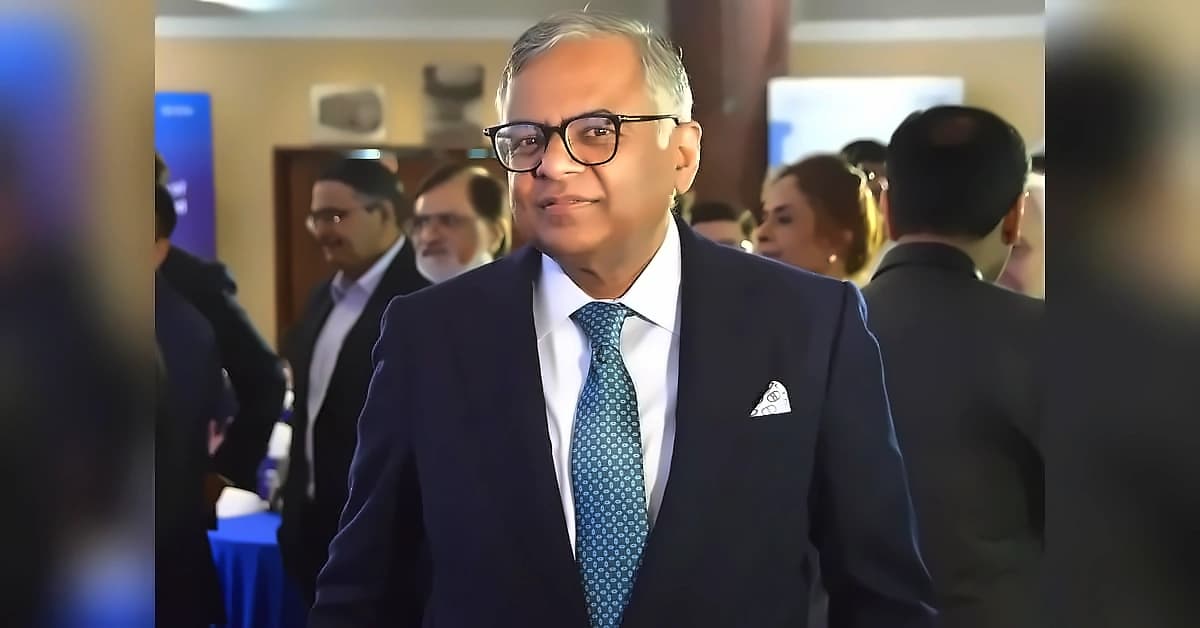
Senior Indian government officials were briefed by Tata Sons chairman N Chandrasekaran and Tata Trusts chairman Noel Tata about tensions within the conglomerate before Chandrasekaran announced his exit last week, according to The Times of India report. The discussions covered differences between Chandrasekaran and Tata Trusts Chairman Noel Tata over strategy and governance, the direction of new businesses and uncertainty over Chandrasekaran's reappointment. The outreach is notable because direct government involvement in the internal affairs of a private-sector conglomerate is unusual in the absence of a financial crisis or insolvency. Government officials heard the concerns but did not take sides, as reported by The Times of India.
N Chandrasekaran's decision to step down as Tata Sons chairman comes at a critical juncture for Air India, with the airline itself preparing for a change at the top and still in the middle of a costly, multi-year transformation. According to reports from Moneycontrol, Chandrasekaran said on Wednesday that he will not seek reappointment as chairman of Tata Sons when his current term ends in February 20, 2027. The announcement came eight days before the Tata Sons annual general meeting scheduled for August 18, catching Noel Tata and most of the Tata Trusts trustees off guard. His position as chairman is linked to his membership of the Tata Sons board, and he will continue as chairman until then, giving the group roughly six months to finalise a successor and ensure an orderly transition.
The leadership transition comes amid reported differences between Tata Sons leadership and Tata Trusts, which control about 66% of Tata Sons. The disagreements have reportedly centred on board representation, strategic direction, investments and the group's long-term roadmap. As per Firstpost, Chandrasekaran said the Sir Dorabji Tata Trust and Sir Ratan Tata Trust had unanimously recommended extending his tenure for another five years. The proposal was subsequently recorded and recommended by the Tata Sons Nomination and Remuneration Committee and the board. However, when the resolution was placed before the Tata Sons board on February 24, 2026, it did not go through as one board member did not support it. "In the absence of unanimous support, I chose to defer the decision," Chandrasekaran stated, adding that six months had passed since that board meeting without a resolution being reached. He has explicitly urged the Tata Sons board to identify his successor soon, indicating that the transition process should begin well before his term ends.
The exit comes as Tata Group faces twin challenges from AI-led disruption at TCS and mounting losses at Air India. At TCS, the group's biggest source of equity capital, Chandrasekaran earlier this year acknowledged that AI-led automation will slow hiring, with the company potentially having as many AI agents as employees within three years. The challenge is strategic as much as operational, as AI-native competitors threaten traditional IT service revenues. TCS's adjusted net profit rose only 8.3% in FY26, while its market capitalisation fell 34.6%, marking its weakest annual performance in at least 15 years. Its dividend payout also declined, potentially squeezing Tata Sons' ability to fund new and loss-making ventures.
The incoming chairman faces significant challenges from three major cash-draining businesses - Air India, semiconductor and electronics manufacturing, and Tata Digital - that have collectively reported losses of almost ₹29,000 crore last year. These are businesses that came into the Tata Group fold during Chandrasekaran's tenure. The government is treating the 158-year-old conglomerate as a strategic partner in developing India as a hub for military aircraft, drones, and rocket launch systems. With military aircraft being developed in the private sector for the first time and drones and other rocket launch systems in the works, the government is closely watching developments at Bombay House. However, the government has maintained a clear distance so far, leaving the group to navigate these strategic sectors independently.
The financial performance of the Air India group remains a major challenge, with the airline reporting a net loss of ₹22,238 crore in FY26, more than double the ₹10,859 crore loss reported a year earlier. As reported by Moneycontrol, Air India alone reported a loss of ₹15,268 crore, while Air India Express reported a loss of ₹6,767 crore. Since the Tata Group took control in January 2022, the group has accumulated losses of about ₹47,821 crore. The ambitious "Vihaan.AI" transformation envisaged profitability after 2027, but Chandrasekaran now says the turnaround could take 5-10 years, pushing profitability beyond 2032. Aircraft-supply disruptions, legacy systems, fleet renewal, organisational culture and talent shortages have slowed the overhaul, while operational lapses have added pressure.
The Sir Dorabji Tata Trust, one of Tata Sons' key shareholders, said on Thursday that its trustees had resolved to begin setting up a selection committee to recommend a successor. The trust said the committee would be constituted in accordance with Tata Sons' articles of association and would recommend a candidate for appointment as chairman. Chandrasekaran, 63, said his decision followed a six-month impasse over his reappointment. He said the Sir Dorabji Tata Trust and Sir Ratan Tata Trust, which together hold 51.54% of Tata Sons, had unanimously recommended another five-year term, and that the recommendation had been backed by the Tata Sons board's nomination and remuneration committee and board. The succession dispute follows differences between Tata Sons management and Tata Trusts over the group's five-year strategic roadmap, board representation and capital allocation, with the long-running question of whether Tata Sons should eventually be listed also emerging as a fault line.