The Central Consumer Protection Authority (CCPA) has imposed a ₹1 lakh penalty on Britannia Industries for misleading advertising regarding its '100% Whole Wheat Bread' packaging claims. Led by Chief Commissioner Nidhi Khare and Commissioner Anupam Mishra, the authority ruled that the prominent '100%' declaration conveyed total product composition to consumers, whereas whole wheat flour actually comprised approximately 62.5% of the finished bread alongside water, yeast, wheat bran, and other permitted additives. The CCPA ordered Britannia to immediately withdraw the misleading advertisements across print, broadcast, and social media platforms, directing the FMCG major to submit a formal compliance report within 15 days. The order was issued following an investigation into the company's packaging and promotional claims, with the authority noting that the prominently displayed statement did not accurately represent the composition of the product. As per the latest CCPA order, the product admittedly contains only 62% whole wheat, while the remaining 38% comprises other ingredients, including rice bran and other constituents.
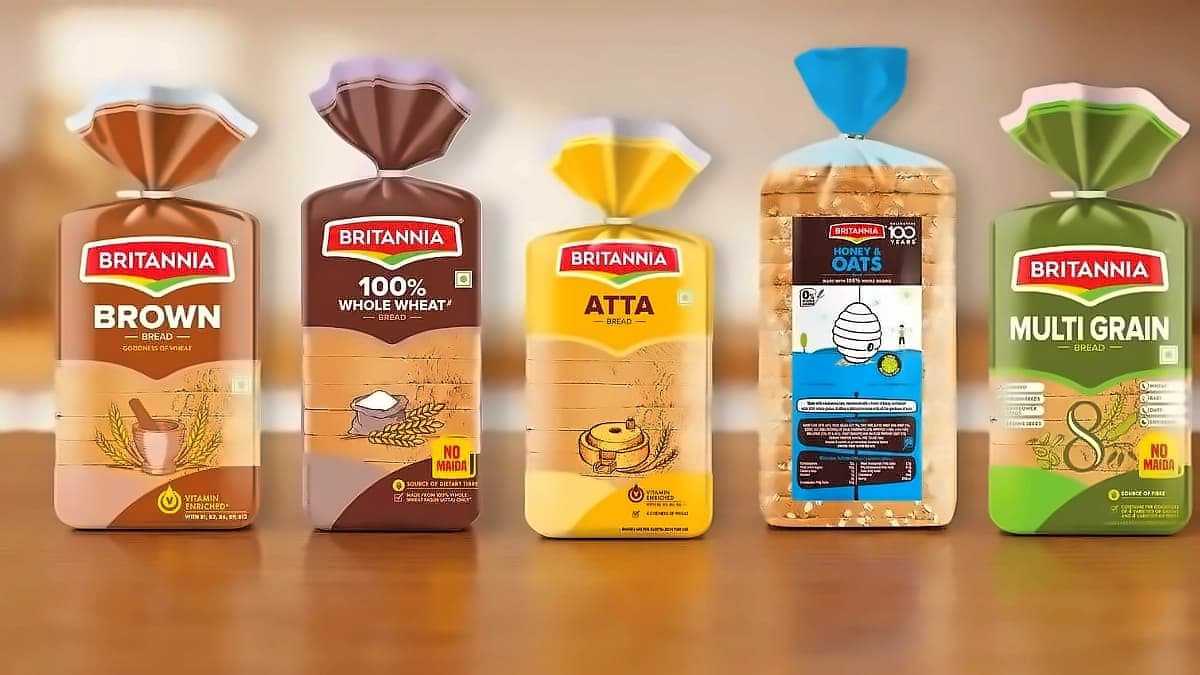
Britannia defended its packaging by arguing that ''100%'' referred exclusively to the flour component rather than the total finished weight, pointing to a fine-print disclaimer reading ''Made From 100% Whole Wheat Flour. On Flour Basis'' and the absence of refined wheat flour (maida). However, during the investigation, the company accepted that its '100% whole wheat bread' contained only 62% wheat flour (atta). As reported by The Economic Times, the company told the CCPA that ''100%'' described the flour component rather than every ingredient in the loaf, making the claim justified when calculated on a flour basis. However, the CCPA rejected this defense, finding that the qualification appeared in a considerably smaller font than the prominent '100% Whole Wheat' claim and was insufficient to correct the impression created by the prominent wording. The authority observed that 'The expression '100%' conveys the totality of composition and not selective exclusivity of a single category of ingredient'. During a hearing on October 12, 2026, the company reiterated that the wording was intended to convey the absence of maida and argued that an FSSAI advisory against using '100%' on food labels was advisory rather than mandatory.
The investigation drew on Food Safety and Standards Authority of India (FSSAI) observations that the claim was misleading, ambiguous and open to misinterpretation. According to The Economic Times, FSSAI issued an advisory on May 28, 2025 asking food business operators to stop using '100%' on labels, packaging and promotional material, followed by an improvement notice on July 30, 2026 directing Britannia to remove descriptions such as '100% Atta' and '100% Whole Wheat'. The CCPA acknowledged that Britannia had begun removing the claim and started renaming the product 'Zero Maida Whole Wheat Bread' in some places, but found that the disputed claim had continued to appear on the company's website and other promotional platforms despite regulatory intervention. The company informed the food regulator that it had initiated corrective measures, but the CCPA noted that partial changes did not remove liability for the period during which the disputed claims stayed in use.
The CCPA made an important distinction regarding product composition under FSSAI's bread-labelling regulations, noting that whole wheat flour must account for at least 75% of the flour used for a product to be described as 'Whole Wheat Bread'. FSSAI's assessment found that Britannia's product met this requirement on a flour basis because its flour component consisted entirely of whole wheat flour. However, the CCPA questioned the use of the 'Whole Wheat Bread' nomenclature by comparing the 62% whole-wheat content of the finished product with the 75% threshold, as the two percentages use different bases of calculation. The regulator also examined the accompanying '0% Maida' claim, finding that its placement alongside '100% Whole Wheat Bread' reinforced the impression that the finished product consisted entirely of whole wheat flour. The CCPA emphasized that 'The use of such a precise and absolute numerical qualifier is neither incidental nor innocuous, rather, it is calculated to convey to consumers a clear and unequivocal impression and absence of any dilution or admixture'. The authority also pointed out that **'The Food Safety and Standards (Advertising and Claims) Regulations, 2018, make no provision for using the prefix '100%' before the term 'whole wheat'****, making falsely claiming a product to be '100% whole wheat' misleading under the Consumer Protection Act, 2019.
The penalty of ₹1 lakh falls under Section 21 of the Consumer Protection Act, 2019, which allows the CCPA to impose penalties of up to ₹10 lakh for a first contravention and up to ₹50 lakh for subsequent ones. The CCPA directed Britannia to discontinue the misleading advertisements immediately across print, electronic and social media, pay the penalty and submit a compliance report within 15 days of the order. The authority emphasized that food labels and advertisements must provide clear, accurate information so consumers can make informed purchasing decisions, noting that a prominent claim on the front of a package cannot be corrected by a qualification printed in small, difficult-to-read text. The CCPA also scrutinized Britannia's claim that the bread 'pairs perfectly well with a healthy diet', stating it could create an impression about the product's nutritional attributes and dietary suitability, particularly when set alongside comparisons with roti. The proceedings also highlighted that of the six claims initially examined, three were dropped from further consideration, with the remaining three involving the use of '100%' being examined in detail before the CCPA concluded that the representations amounted to misleading advertisements and unfair trade practices.