According to ETElectronicsWorld, Cadence Design Systems is leveraging AI agents to transform chip design workflows, with Vice President Kripa Venkatachalam highlighting that the company's agents work on reducing hallucinations by design through deeper integration with chip design flows. As reported by ETElectronicsWorld, Venkatachalam explained that Cadence's agents have deeper hooks into tools beyond just outputs, allowing more thorough responses compared to non-domain-specific tools. The company is actively engaging with tier-1 semiconductor majors to implement these AI-enhanced solutions across the industry. At Semicon 2026, industry executives confirmed that AI is helping shorten chip-verification cycles, improve hardware-software co-design, detect wafer defects and reduce learning time for engineers. As AMD's Prakash Raghavendra noted, AI enables hardware-software co-design where semiconductor companies never previously talked to software guys, with AI optimizing both software and providing feedback for hardware redesign.
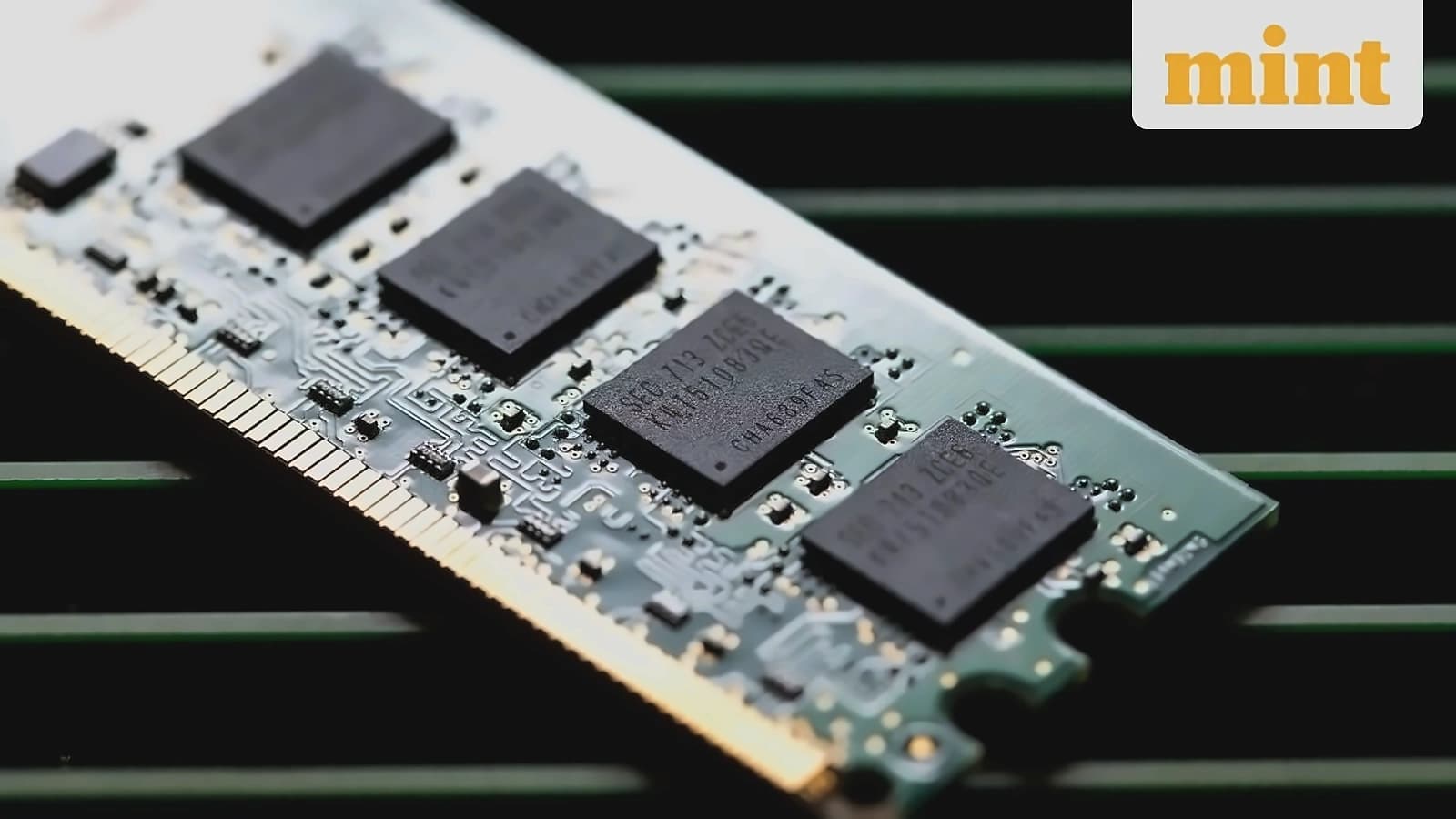
According to reports from Mint, Tata Electronics' planned semiconductor fab in Dholera is expected to start operations by 2028, as confirmed by IT minister Ashwini Vaishnaw in March. The facility will provide fabrication support to chip startups for design tape-outs, significantly reducing the current reliance on overseas foundries. As reported by Mint, Jayashankar Narayanankutty, group director at Cadence Design Systems in India, stated that when the Tata fab comes online, the company expects to see growth driven by increased chip-design activity in India. The opportunity cost of AI-driven first-time design and verification can save hundreds of millions of dollars in delays, as emphasized by Marvell's Navin Bishnoi at Semicon 2026.
According to Micron's Shisheer Kotha, the company has implemented machine-learning techniques along with data centralisation to develop live solutions across semiconductor sites, with AI detecting patterns and defects more effectively than traditional systems. Machine learning is detecting new defect patterns and existing defects with huge differences in accuracy compared to conventional methods. Wipro's Ritesh Tyagi highlighted that AI learning agents are shortening learning cycles for newer engineers and democratizing design knowledge through a repository of agents. The company has created many learning agents in the last couple of years, with these AI initiatives actually democratizing the learning class.
According to Mobility Foresights market research, India's EDA tools market is projected to grow from ₹28,450 crore ($3.45 billion) in 2025 to ₹64,820 crore ($7.82 billion) by 2031. As reported by Mint, this growth is driven by demand for advanced semiconductor design, particularly in artificial intelligence (AI) accelerators, autonomous vehicles and 5G chipsets. The opportunity comes as India's chip-design ecosystem expands, with local manufacturing capabilities providing Indian companies with direct access to foundry services.
According to Mint, Cadence's global revenue rose 14% to $5.3 billion in 2025, while net profit increased 5.1% to $1.1 billion. The company follows a January-December financial year. Narayanankutty explained that having a local commercial fab reduces entry barriers for Indian companies, improving scheduling and slot access as global foundry process lines are heavily congested.
As reported by ETElectronicsWorld, Cadence acknowledges that AI is addressing a critical talent gap in the semiconductor industry, with Venkatachalam noting that chip design is a massive exercise requiring highly talented engineers that the industry cannot hire fast enough. The executive emphasized that agentic AI allows expansion into bigger teams than what companies actually are, bridging the talent shortage. However, Venkatachalam stressed that AI remains a probabilistic system requiring continuous human judgment, stating that engineers should develop stronger domain skills as knowledge outside traditional systems becomes critical for end-to-end design challenges. Micron's Kotha confirmed that enterprise data would remain central to how semiconductor companies build and improve AI models, with 80% of model algorithms evolving over internal enterprise data and only 20% using public data.