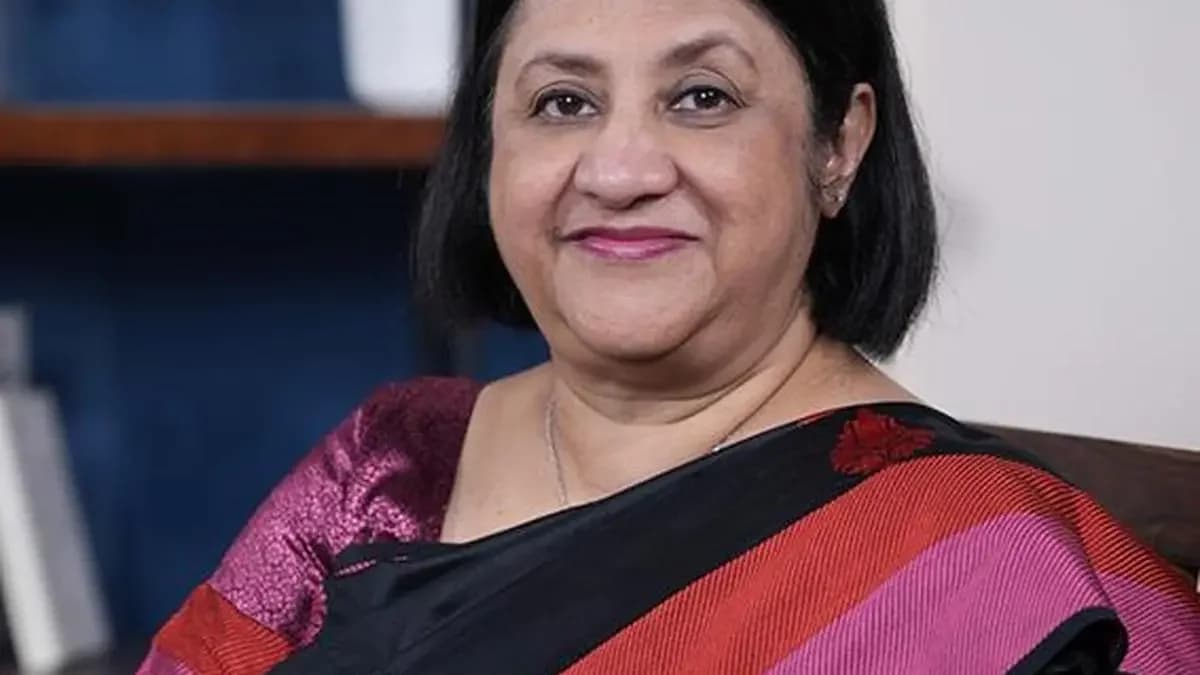
At the 'Dharmam Chara' programme at BSE, Padma Shri awardee Arundhati Bhattacharya, CEO of Salesforce South Asia, presented a grounded perspective on corporate governance. According to reports from The Hindu BusinessLine, she emphasized that governance is not just a set of rules but a reflection of choices made within organizations. "Values are not posters on walls. They are the decisions you make when no one's watching," she stated, drawing a direct link between ethical intent and organizational behavior.
Bhattacharya illustrated her philosophy through concrete examples from her tenure as chairperson of State Bank of India. As reported by The Hindu BusinessLine, she highlighted moving from a six-day work week to two Saturdays off each month and introducing a two-year sabbatical policy. These governance interventions, she explained, addressed childcare and eldercare challenges to remove structural barriers that often force employees, particularly women, out of the workforce. The underlying principle is that governance frameworks are meaningful only when they translate into enabling systems for employees.
The discussion extended to corporate social responsibility, with Bhattacharya contrasting traditional CSR with more embedded approaches. According to The Hindu BusinessLine, she described governance as aligning capital, products and employee time with community outcomes, citing Salesforce's '1-1-1 model'. "When you practice dharma consistently, you don't pick and choose who deserves to be enabled. You enable everyone," she said, emphasizing that dharma is weaving the act of enabling into the fabric of daily operations.
R Shankar Raman, whole-time director and CFO of Larsen & Toubro, provided an operational perspective on the approach. As reported by The Hindu BusinessLine, he explained that the company's CSR efforts are anchored around communities near project sites, factories and offices. "It was a perfect example of mutuality and interdependence," he said, noting that the approach not only taps into neighboring community resources but also promotes local livelihoods.
M Damodaran, former chairman of the Securities and Exchange Board of India, emphasized that governance must extend beyond balance sheets. According to The Hindu BusinessLine, he cautioned against equating development solely with physical infrastructure, stating that "far more important is social infrastructure, better education, healthcare and all that improves the quality of life." The Shankaracharya of Kanchi Kamakoti Peetam, Shri Shankara Vijayendra Saraswathi Swamigal, noted that while business can embody dharma, it should not reduce it to a transaction, emphasizing that independence would be meaningful only if dharma is safeguarded.