
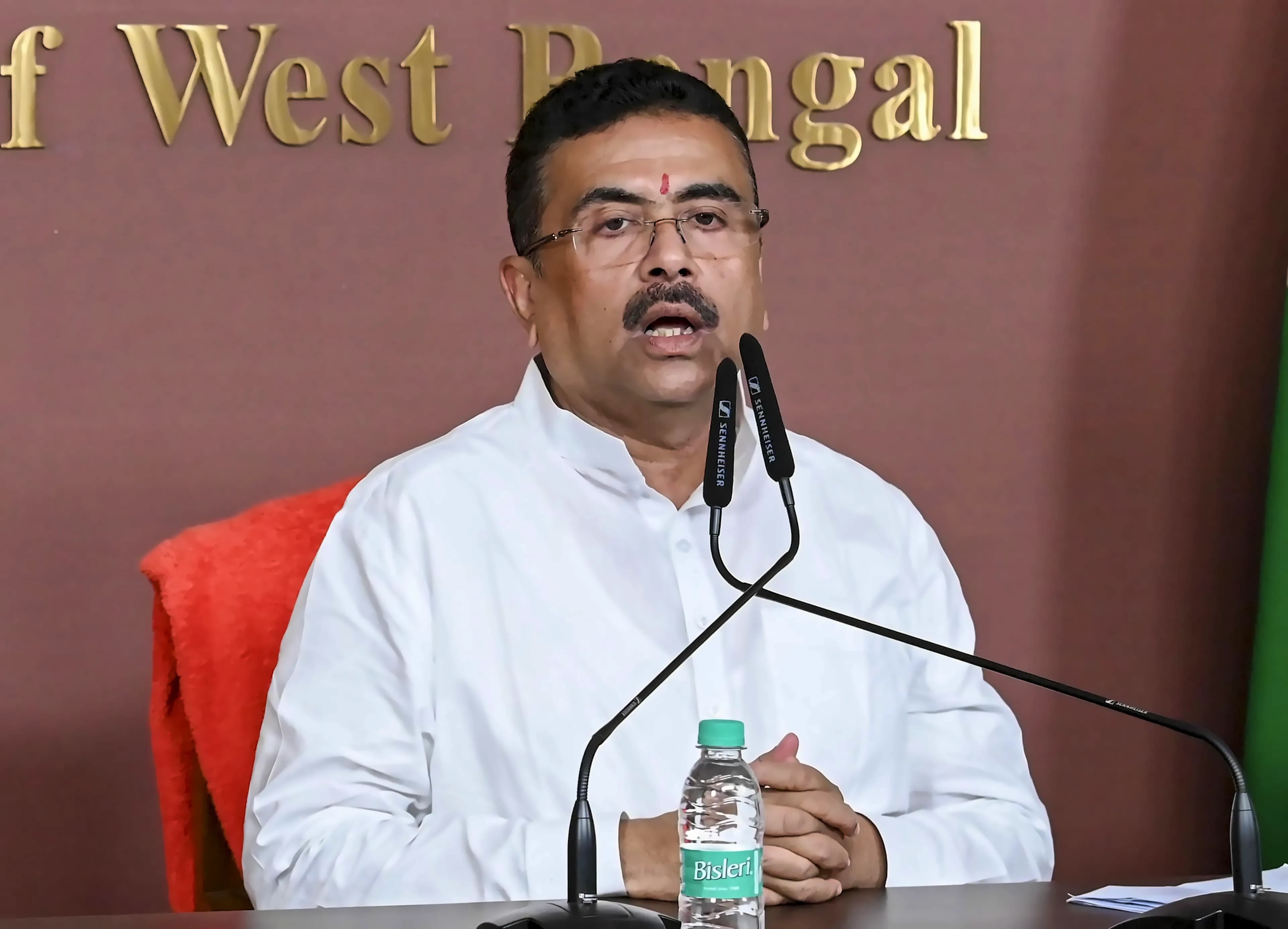
West Bengal Chief Minister Suvendu Adhikari announced that the state's new industrial policy will be unveiled before Diwali, with the Group of Ministers (GoM) having already submitted the industrial policy that encompasses everything from land policy to power tariffs. According to The Hindu, Adhikari stated that "We have started working. Within a year, Bengal will be the destination for investors and industrialists. They will all say let us go to Bengal." The policy will include a new land policy and investment incentives for industries, marking a significant shift from the previous administration's approach. Adhikari described his government as "pro-people and pro-industry" and criticized the previous government's policies, stating that "In the last 15 years (under Mamata Banerjee's rule) no new industries came to Bengal because of its flawed land policy and withdrawal of incentives and syndicate raj." He claimed that more than 50,000 industrial units had shut during the Left Front years and emphasized the need to move beyond dependence on welfare benefits to build an Atmanirbhar Bangla. As reported by The Hindu, Adhikari emphasized that the BJP government will come out of the policy of militant trade unionism of the 34-year-old Left Front government and the withdrawal of incentives to industry of the Trinamool Congress government.
The policy announcement came during the inauguration of an ₹6,000 crore phenol and acetone manufacturing plant in Haldia, with Chief Minister Suvendu Adhikari declaring an end to the country's dependence on imports of these industrial chemicals. As reported by The Hindu, the facility was inaugurated by Haldia Petrochemicals Limited (HPL) and AdPerMa Private Limited, a wholly owned subsidiary of Haldia Petrochemicals Limited, with the chief minister noting that "Today, the material that we had to import from abroad will no longer need to be imported." The plant has an annual capacity of 345,000 tonnes of phenol and 215,000 tonnes of acetone, making it the largest facility of its kind in India. The facility will provide direct employment to 400 people and indirect employment to 1,000, with Adhikari noting that "This plant is one step closer to 'Antmanirbhar Bharat'" and projecting that further ₹10,000 crore in investment is in the pipeline. According to The Hindu, the facility developed under HPL's subsidiary Adperma Private Limited will house two firsts for India — the country's first on-purpose propylene plant based on olefin conversion technology and the country's largest phenol production unit.
West Bengal Chief Secretary Manoj Agarwal urged investors to either use or surrender unused land to make it available for industrial projects. According to reports from Business Standard, Agarari stated that with investors from India and abroad keen to invest in West Bengal, land is set to become a scarce resource. He revealed that the chief minister had taken a cabinet decision that where no scheme or project was in place and no funding had been secured, the land would be taken back and made available for industrialisation and other good projects. The state has already allocated 98 acres to a Pepsi manufacturing plant in Haldia, with the Haldia Development Authority having provided the land and the state Cabinet set to approve the project. Additionally, 50 acres would be allotted to Truviss for a medical equipment manufacturing unit, with Adhikari announcing that "After Durga Puja, we will participate in the bhoomi pujan of a project of Reliance Industries in Bengal."
Navanit Narayan, managing director and CEO of HPL, projected that the phenol and acetone plant would generate annual revenues of more than ₹5,000 crore from next year. As reported by Business Standard, the facility strengthens India's drive towards import substitution, self-reliance, and value-added manufacturing in chemicals essential to pharmaceuticals, laminates, adhesives, agrochemicals, coatings, and several other industries. The government aims to accelerate industrial growth in Haldia within a year through further proposals involving Indian Oil Corporation and Haldia Energy, with Adhikari emphasizing that "We must move beyond dependence on welfare benefits and build an Atmanirbhar Bangla."
Purnendu Chatterjee of TCG emphasized the importance of creating employment across skill sets from low-tech to medium-tech, with help from HPL and MCPI in poly parks or textile parks. According to Business Standard, he proposed that the state draw up a visionary master plan for 2047 to create a permanent capital fund to fund activities in AI, data centres, robotics, quantum and other deep tech areas. Chatterjee explained that participating in the profit pool from these sectors would generate revenue for the state to address its debt and fund welfare programs. Adhikari announced that he would request Chatterjee to open a data centre in Bengal, stating that "He met me twice after I became CM and we discussed industry possibilities. Our government is open to proposals and advice from people like him." He also stressed the need to match industrial expansion with local skills, proposing closer coordination between companies and technical institutions including CIPET and Durgachak ITI to train fitters, welders, fire-safety personnel and other skilled workers.

