The Bajaj Group, celebrating its 100th anniversary, is launching its first major diversification into healthcare through Bajaj Integrated Health Systems (BIHS). According to reports from The Economic Times, this marks the end of the group's 100-year policy of saying no to diversification across sectors including four-wheelers, real estate, telecom, and retail. The decision was made after 64 industry sectors were analyzed over six months before healthcare emerged as the preferred option, with the family council meeting roughly every six weeks to deliberate on allocation decisions. The founding philosophy, traced to Jamnalal Bajaj—the merchant prince Mahatma Gandhi called his fifth son—was one of purposeful restraint: common good over personal gain, and building only what can be built with excellence.
The group's ₹13.5 trillion combined market capitalization makes it the fifth largest family-owned business house in India, with the fastest market capitalization growth rate of 23.7% annually between 2010 and 2026. As reported by The Economic Times, the ₹5,800 crore annual dividend pool generated by three listed entities - Bajaj FinServ, Bajaj Auto, and Bajaj Holdings - will fund the healthcare venture through the family's private holding companies. The group maintains 54-58% family ownership in each listed entity and has never sold a single share in more than 30 years. Niraj Bajaj, who has managed the family's holding companies for 35 years, recalls that Rahul Bajaj resisted all advice to diversify, saying "there are hundreds of thousands of shareholders trusting the Bajaj name. If we are diversified, it doesn't hurt us if one company doesn't do well. But if all our eggs are in one basket, we will spend sleepless nights."
Nirav Bajaj, son of Bajaj Auto chairman Niraj Bajaj, will lead the healthcare venture with a ₹2,000-2,500 crore planned capital expenditure for the first phase in Pune alone. According to The Economic Times, the model will focus on a tiered approach: clinic, ambulatory services, home care and hospital, targeting 70-80% of healthcare needs that can be handled outside hospitals. The first clinic is scheduled to launch in Pune this year, with plans to expand to seven-eight cities over the next decade. The healthcare decision was made after considering a staggering 64 industry sectors over six months, with three filters keeping the list trimmed: the opportunity had to be of national importance, genuinely scalable, and there had to be a family member available and willing to take responsibility for it. The healthcare venture is not without risk, as India's hospital sector is intensely competitive, capital-hungry and operationally complex in ways that neither motorcycle manufacturing nor financial services quite prepares you for.
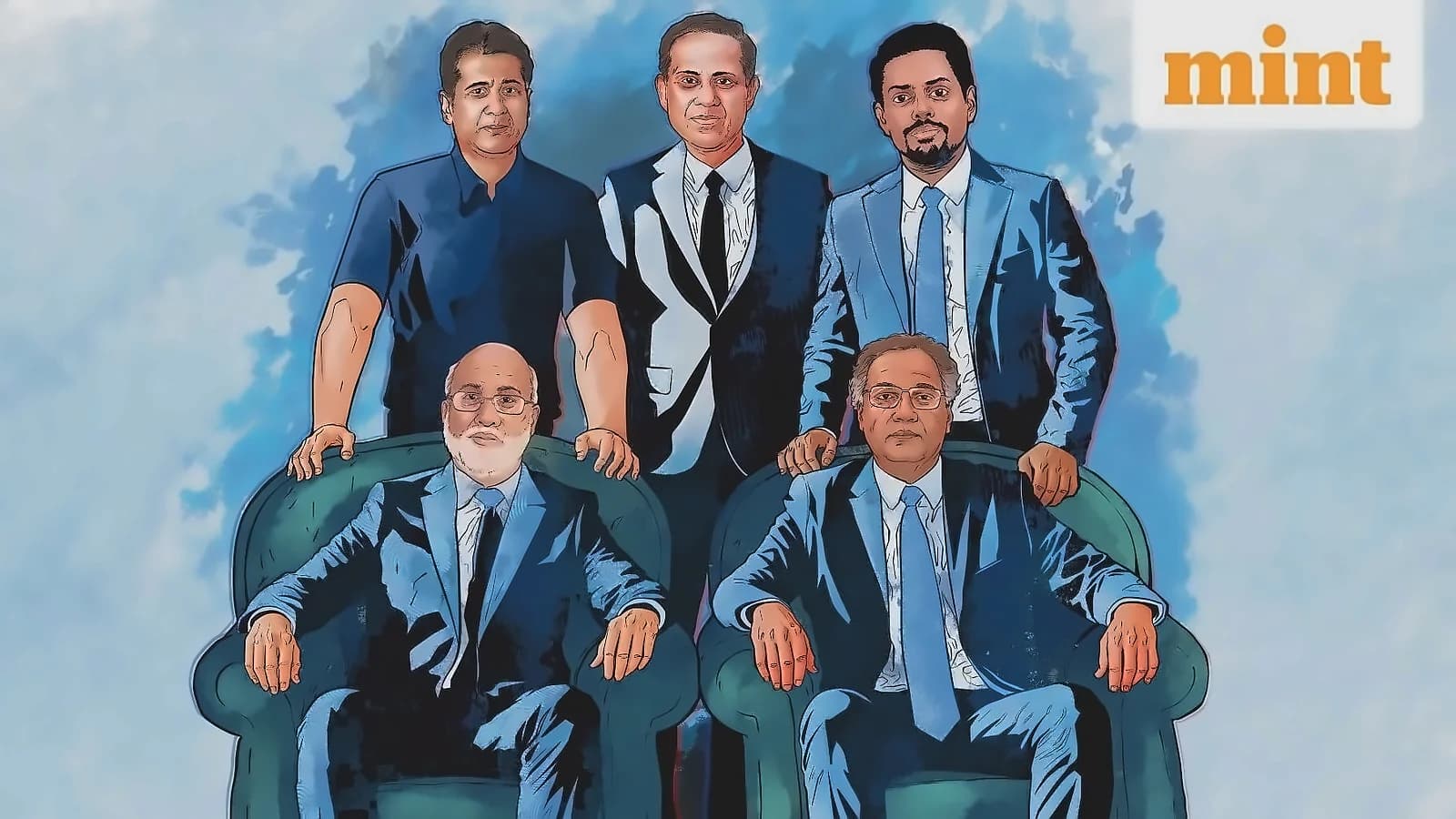
The family council, comprising five members including Sanjiv, Niraj, Rajiv, Shekhar, and Nirav Bajaj, meets regularly to make strategic decisions. As reported by The Economic Times, the group maintains clear succession planning with Rishab (Rajiv's son) in Bajaj Auto's EV strategy, Siddhant (Sanjiv's son) in Bajaj Finance, and Sanjali (Sanjiv's daughter) leading alternative investments. The family has consciously expanded women's leadership roles, with women holding positions including Pooja on Bajaj Electricals board and Shefali overseeing social responsibility initiatives. Sanjiv Bajaj acknowledges the family's small number but emphasizes direction clarity: "Whether you're a boy or a girl, your opportunity is the same. You must have the capability, the hard work and the drive." The council's harmonious image deserves a footnote—it was born not from serenity but from rupture in 2001, when Shishir Bajaj demanded separation, alleging Rahul was grooming only his own sons. Eventually, Shishir and his son Kushagra broke away, taking Bajaj Hindusthan Sugar and Bajaj Consumer Care with them.
The healthcare venture faces significant challenges in India's intensely competitive hospital sector, where established players like Apollo Hospitals, Max Healthcare, Fortis, and Narayana Health have decades of institutional expertise. According to The Economic Times, the group's success will depend on whether the Bajaj name can replicate its two-wheeler and financial services success in healthcare. The family's principled refusal to enter government-connected businesses continues to guide their expansion strategy, with Shekhar Bajaj noting their preference for straightforward business operations regardless of political changes. Monish G. Chatrath from MGC Global Risk Advisory highlights the group's ability to institutionalize continuity across generations without visible fragmentation, while S. Raghunath from IIM Bangalore notes the absence of a patriarch improving performance, with the data showing the model's honesty in not bailing out underperformers with group capital.