India's automobile industry began FY27 with record-breaking results, as the Society of Indian Automobile Manufacturers (Siam) reports passenger vehicle dispatches reached their highest-ever level of 4,37,312 units in April, registering a 25.4% year-on-year growth over 3,48,847 units sold in April 2025. The strong performance reflects continued momentum from the second half of FY26, with the industry maintaining healthy demand despite ongoing market challenges and concerns over rising commodity prices linked to tensions in West Asia, as noted by Siam director Rajesh Menon. Total vehicle production across all segments rose 26% year-on-year to 29.22 lakh units in April, demonstrating robust manufacturing capabilities. The Nifty Auto index has responded positively to these strong results, gaining about 16% since early April, reflecting investor optimism about sustained demand conditions.
Sport utility vehicles continued to dominate the passenger vehicles market, with utility vehicle dispatches climbing 21.5% to 2,44,280 units during the month, highlighting sustained consumer preference for SUVs. Among automakers, Maruti Suzuki India retained its leadership position in the passenger vehicle segment, with domestic sales rising to 1,87,704 units in April from 1,38,704 units a year earlier, setting a new record for monthly domestic PV sales with 35.33% growth. Tata Motors recorded strong domestic PV sales of 59,000 units, up 30.5%, with its electric vehicle (EV) division holding a leading 70% market share. Mahindra & Mahindra reported sales of 56,331 units, up from 44,374 units in April 2025, while Hyundai's sales increased to 51,902 units from 52,330 units in April last year. Passenger car sales demonstrated even stronger growth, rising 32.7% year-on-year to 1,20,945 units, indicating broad-based consumer demand across different segments of the automotive market.
The two-wheeler segment posted particularly strong growth in April, with overall dispatches rising 28.4% year-on-year to 18,72,691 units, compared with 14,58,784 units in the corresponding month last year. Hero MotoCorp led the market with domestic sales surging to 5,32,433 units from 2,88,524 units in April 2025, while Honda Motorcycle & Scooter India recorded sales of 4,84,972 units, up from 4,22,931 units year ago. Motorcycle sales increased 30.6% to 11,38,452 units, while scooter dispatches grew 26.2% to 6,91,993 units, according to Siam data. Three-wheeler sales also maintained a strong trajectory, rising 32.8% from a year earlier to 65,668 units during the month, with TVS Motor Company and Royal Enfield also posting strong growth figures. The strong performance was driven by robust demand across both motorcycles and scooters, with rural markets continuing to grow faster than urban centers, as rural PV sales jumped 20.4% compared to 7.11% growth in urban areas.
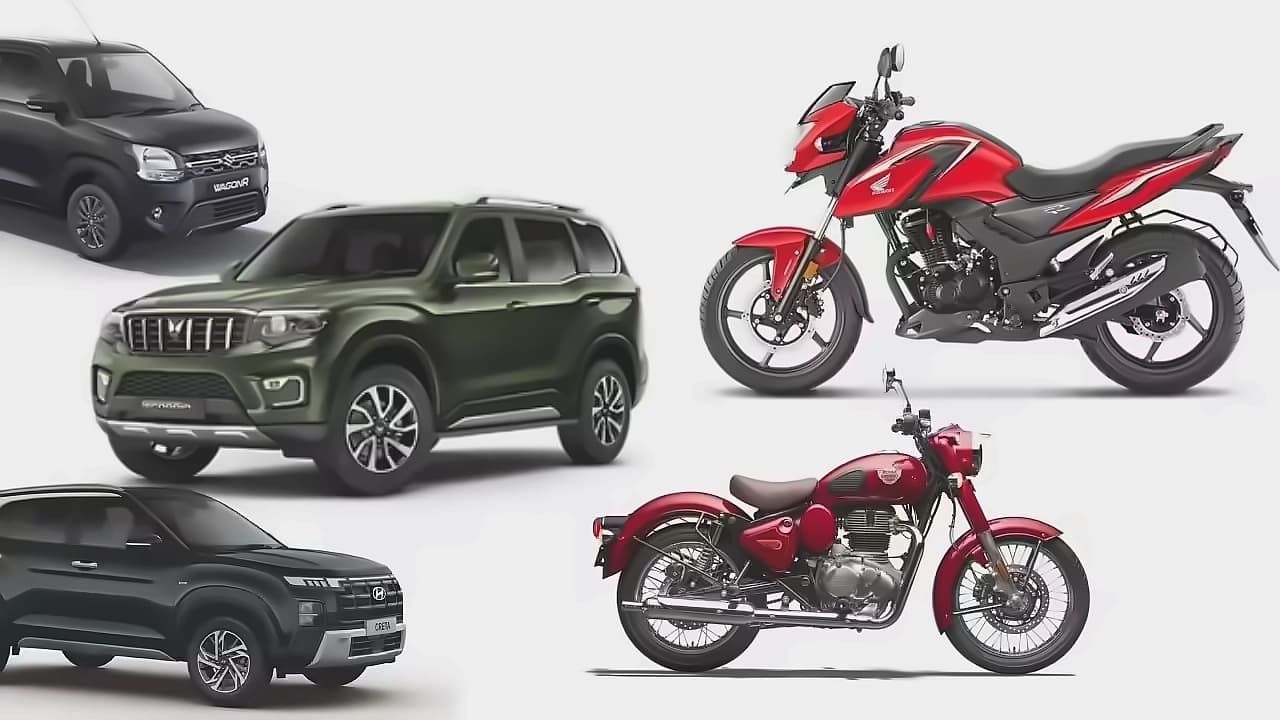
The strong wholesale performance was supported by robust retail demand, with Passenger Vehicle (PV) retail sales rising 12.21% year-on-year to a record 4,07,355 units in April 2026, according to data released by the Federation of Automobile Dealers Associations (FADA). SIAM Director General Rajesh Menon noted that the industry had sustained the momentum witnessed in the second half of FY26 into the new financial year, with passenger vehicles recording their highest-ever sales of 4.37 lakh units and three-wheelers also posting their highest-ever sales of 0.66 lakh units. Despite ongoing concerns over rising commodity prices caused by disruptions in West Asia, demand conditions remained resilient throughout April. The industry has successfully carried forward the momentum seen in the second half of FY26, achieving strong double-digit growth across passenger vehicles, two-wheelers and three-wheelers. However, analysts predict sales growth will slow to around 3.6% for FY2027 after recent high double-digit increases, meaning growth may ease from current record levels. The Nifty Auto index currently trades at a P/E ratio of around 29, which is higher than the 3-year average P/E of 25.5, suggesting the market might be expecting continued strong growth but indicating the sector might be somewhat expensive compared to its historical averages.