India's leading automakers and auto component manufacturers are increasingly relying on temporary workers, with non-permanent workers making up nearly 90% of the total workforce at several companies. According to a Mint review of annual reports, the share of temporary workers has risen sharply over the past four fiscal years as companies expanded production, added shifts and increased factory capacity to capitalise on growth in the Indian market. The trend is visible across major automakers, with temporary workers accounting for 83-92% of the workforce at Maruti Suzuki, Mahindra & Mahindra, Tata Motors, Hyundai Motor India and Hero MotoCorp, as well as homegrown component makers Samvardhana Motherson and Sona Comstar.
Maruti Suzuki, India's largest carmaker, saw the share of temporary workers rise from 71% at the end of fiscal year 2023 (FY23) to 87% in FY26, as it expanded its factory operations. The company added nearly 30,000 non-permanent workers during the period, with the increase also reflecting the amalgamation of Suzuki Motor Gujarat (SMG) with Maruti Suzuki in FY26. Mahindra & Mahindra increased its temporary workforce share from 77% in FY23 to 86% in FY26, with the company adding nearly 30,000 workers and almost doubling its temporary workforce. Tata Motors' passenger vehicle business reported a temporary workforce share of 85% in FY26, while Hyundai Motor India was at 83%.
The growing reliance on temporary workers comes as labor shortages and wage-related protests have disrupted industrial activity in parts of Haryana and Uttar Pradesh this year. Workers' demands have included higher wages and permanent employment contracts, bringing greater attention to the increasing share of non-permanent workers in auto manufacturing. In July, Mahindra & Mahindra management said some of its suppliers had been affected by labor shortages, curtailing production of some models. As reported by Mahindra & Mahindra's Rajesh Jejurikar, executive director and chief executive (auto and farm sector), at least three or four suppliers were impacted by labor shortages due to gas shortage issues, elections, and migration of labor to areas where wage rates had gone up.
The shift towards a predominantly temporary workforce gives companies greater flexibility in managing costs and adjusting staffing levels to production cycles, but exposes them to risks related to labor availability, workforce continuity and potential disruptions from wage disputes and protests. According to Vinay Piparsania, founder of MillenStrat Advisory and Research, when 85-90% of the shopfloor is non-permanent, maintaining continuity of skills, experience, productivity and shopfloor discipline becomes much harder. The workers include those involved in production on manufacturing lines as well as employees in non-production roles within factory premises, including logistics, maintenance, sales and dispatch.
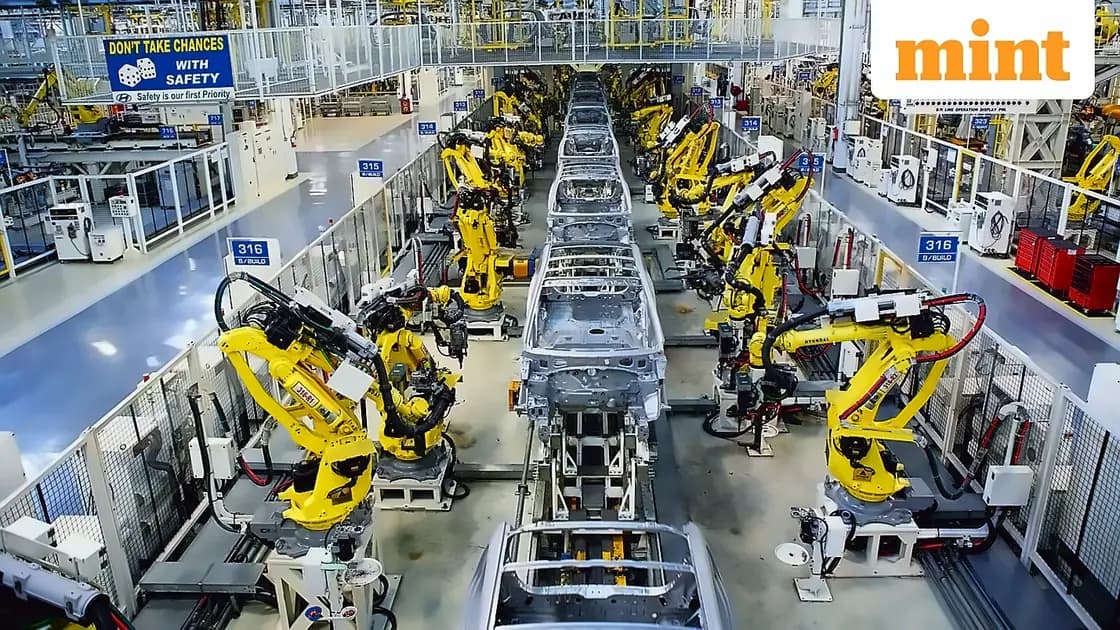
Auto manufacturing hubs had already witnessed protests over higher inflation amid the West Asia war and demands for higher minimum wages, prompting the Haryana and Uttar Pradesh governments to raise minimum wage levels. According to Ashim Sharma, senior partner at Nomura Research Institute, automobile companies could have invested in automating lines as seen globally for enhancing output per employee. As reported by Sharma, although leading amongst industries in India, automation at Indian automotive factories remains low when compared to other global markets, which has driven the rising share of the contractual workforce. Companies could gain a higher competitive advantage in global value chains through investment in automation and robotics.