Indian markets experienced their best day in 9 months on Tuesday following the India-US trade deal announcement, with the Nifty 500 gaining 2.67% and Nifty rising 2.75% according to latest market data. The sharp rally was driven by renewed risk appetite as investors responded positively to the trade pact that has removed a major overhang from Indian equities. As per multiple market reports, the deal has provided fresh momentum to Indian markets, which had struggled through January with the Nifty losing over 1,000 points at its worst amid foreign portfolio investor outflows. The collateral benefit of this deal is expected to give fresh momentum to parallel conversations and provide a significant boost to India's economic growth prospects.
Commerce and Industry Minister Piyush Goyal confirmed on Tuesday that the India-US trade deal will unlock fresh investment flows and create new export opportunities across a broad range of sectors. Speaking to reporters, Goyal emphasized that the agreement reflects improving bilateral relations and growing mutual respect between the two countries' leadership. "AI, semiconductors, critical minerals, these sectors will get investments from the US," he noted, pointing to India's expanding role in global supply chains. The minister highlighted that labour-intensive sectors, IT sector are happy with the deal, with engineering sector, MSME sector, textile sector, gems and jewellery, marine goods expected to get many opportunities due to the trade deal. "The trade deal is a step forward for India's bright future. This isn't just a trade deal but a sign of India's great future and faster economic growth," Goyal said, adding that "all sectors in India are jubilant with the trade deal."
US President Donald Trump announced a reduction in reciprocal tariffs on Indian goods to 18% from 25% after holding a conversation with Prime Minister Narendra Modi. The US president is also reportedly removing an additional punitive 25% duty that was applied in response to India's purchases of crude oil from Russia, removing a major overhang on the Indian stock market that had weighed on investor sentiment for several months. The 18% tariff puts India at a competitive advantage, as Asia's other largest economies, including China, are facing higher tariffs of 37% imposed by the US. The trade deal came after the US and India held multiple rounds of trade negotiations since March, with the most recent informal discussions taking place in New Delhi during the visit of a trade team headed by the Deputy US Trade Representative (USTR) in December. According to Morgan Stanley, the US expected to cut its average tariffs sharply to around 18% from nearly 50%, a move that could ease trade tensions and support cross-border supply chains.
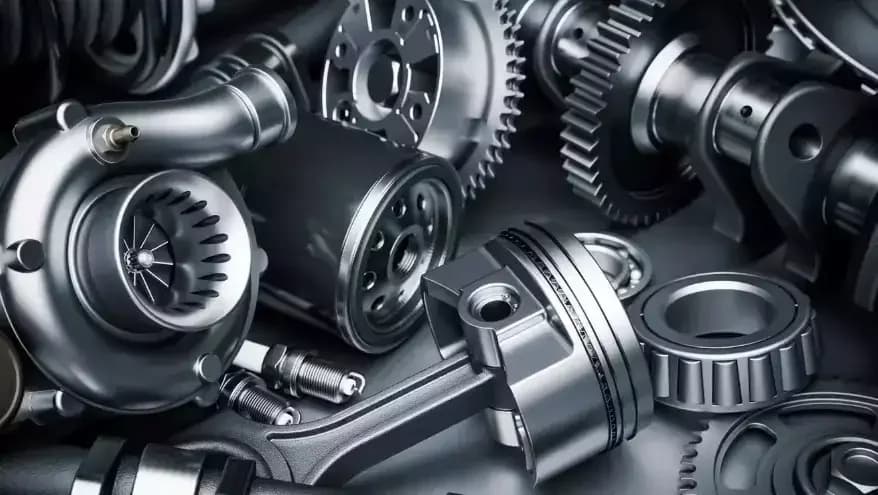
Auto ancillary stocks experienced exceptional gains on Tuesday, with GNA Axles topping the list, surging 20% to ₹425, followed by Delta Autocorp, Sterling Tools, Balkrishna Industries, Bhagwati Autocast, Tube Investments of India, Sibar Auto Parts, NDR Auto Components, Sona BLW Precision, Steel Strips Wheels, Belrise Industries, and Rolex Rings, which are up between 4.5% and 11.5%. The Nifty Auto index opened 3% higher as sectors heavily exposed to the US market witnessed significant traction. As reported by JM Financial, the US accounts for 22% of Bharat Forge's total sales, while SAMIL and Happy Forgings derive 19% and 5% respectively from the US market, and Sona BLW and Uniparts India have significantly higher exposure at 41% and 55% respectively. Morgan Stanley maintains an 'attractive view' on the India Autos & Shared Mobility sector over a 12-18 month horizon, citing strong domestic demand drivers and limited dependence on US-linked exports among local manufacturers. The brokerage noted that auto component suppliers are expected to emerge as the biggest beneficiaries of the tariff reductions, with positive read-through for companies such as Bharat Forge and Balkrishna Industries.
Electronics manufacturing services (EMS) companies also witnessed significant gains, with Dixon Technologies, Syrma SGS Technology and Kaynes Technology India rising between 5% and 7% in Tuesday's trade following the US-India trade deal announcement. According to ICICI Securities, lower US tariffs could benefit EMS exporters such as Dixon Technologies, Kaynes Technology and Syrma SGS by enhancing export competitiveness and supporting margins. India Electronics and Semiconductor Association (IESA) President Ashok Chandak said the India-US trade deal could act as a major catalyst for India's electronics, semiconductor and technology ecosystem, with the vision of USD 500 billion in bilateral trade potentially translating into over USD 100 billion in trade for the electronics and semiconductor sector. The development comes alongside Finance Minister Nirmala Sitharaman's Union Budget proposals, which announced an increase in electronics manufacturing outlay to ₹40,000 crore for the 2026-27 financial year and plans to set up high-tech tool rooms at two locations to support capital goods manufacturing.
For Indian markets, the deal removes a major overhang that had kept foreign investors on the sidelines and dragged equities into a phase of prolonged underperformance. The sharp market rally on Tuesday demonstrates the immediate positive impact of the trade deal on investor sentiment. The agreement significantly boosts price competitiveness and margins for companies with substantial US market exposure while strengthening long-term supplier relationships with US OEMs. The lower tariffs are expected to stabilize orders, improve margins, and potentially prevent job losses in labor-intensive sectors like apparel, gems, jewelry, and textiles, which were heavily impacted by previous duties. The deal provides India with a clear tariff edge over China, with more than 99% of tariff lines covering China's major exports attracting either 37.5% or 55% tariff even after factoring in the reduction in Fentanyl tariff to 10%. Over 70% of tariff lines fall in the 55% category, while electric vehicle tariffs remain at about 130%. The agreement also includes significant exemptions from even the 18% tariff, driving home a big advantage for India. As per Morgan Stanley, the India-US trade deal boosts the investment case for Indian auto ancillaries, while domestic OEMs remain largely insulated from external shocks, reinforcing a constructive sector view over the medium term.