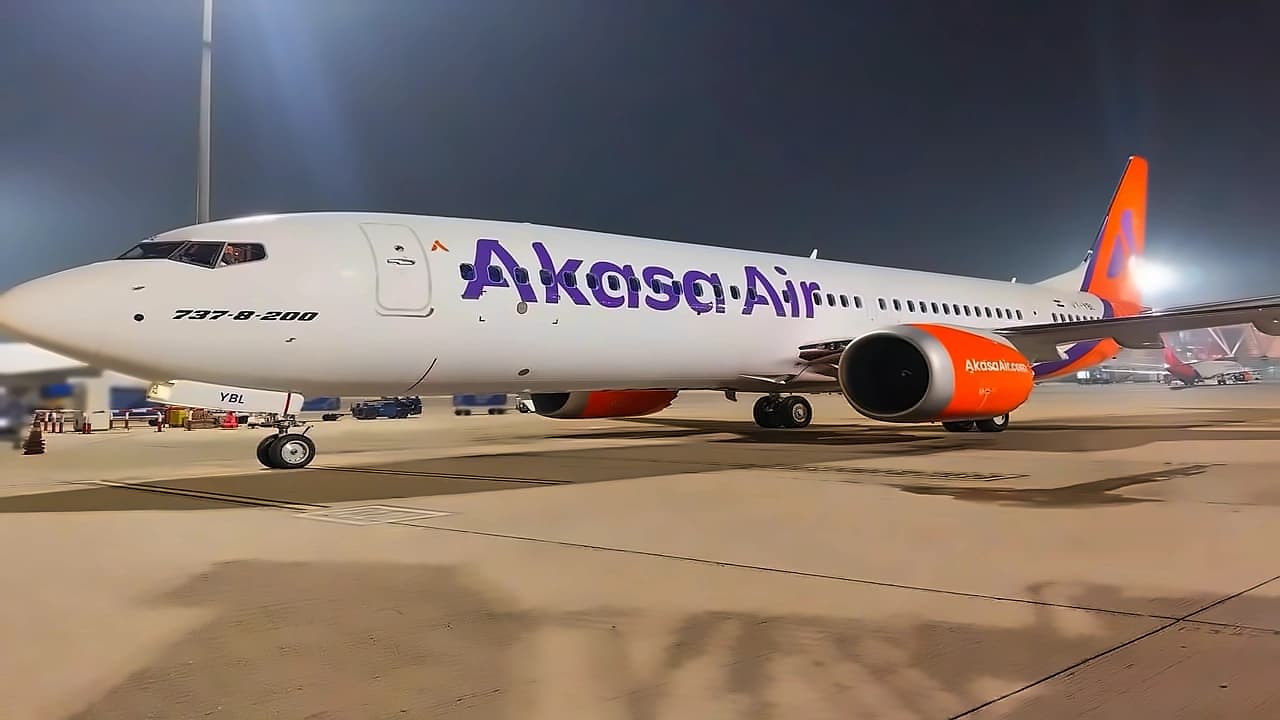
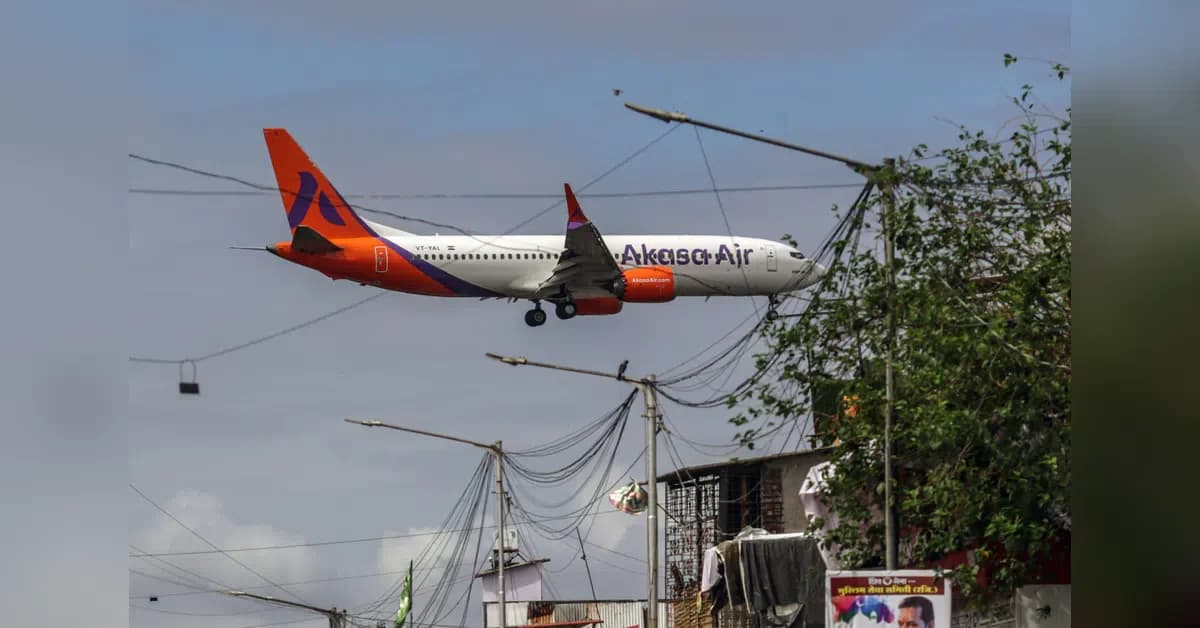
Akasa Air has suspended its non-stop flights between Noida International Airport and Navi Mumbai International Airport just two weeks after launch, making it the first airline to pull back operations on a route connecting India's two newest airports. According to reports from Moneycontrol, the Mumbai-based carrier had started a daily non-stop flight, QP 2017, between Navi Mumbai and Noida on June 16, but the service remained operational only until the end of June and was withdrawn from July 1. The suspension comes amid challenging weather conditions, with heavy rainfall across Delhi-NCR causing flight delays and traffic disruptions that may have impacted passenger demand on the route. As reported by X, the airline specifically cited heavy rainfall and waterlogging in certain parts of Delhi as factors leading to slow moving traffic and congestion on roads leading to the airport.
As reported by Moneycontrol, the airline was the only carrier offering a direct connection between the two greenfield airports. Instead of the Navi Mumbai service, Akasa deployed additional capacity on the Mumbai–Noida sector, adding two daily flights from Mumbai to Noida from July 1. The airline also discontinued its non-stop Bengaluru–Noida service, another route that had commenced on June 16 and was withdrawn on the same day as the Navi Mumbai flight. The timing of these network adjustments coincides with the challenging weather conditions affecting the region, which may have influenced the airline's operational decisions. According to X, the airline has requested passengers to plan for additional travel time to reach the airport well in advance of their flights, citing the need to ensure a seamless travel experience during the ongoing weather disruptions.
Akasa Air is seeking to raise ₹10.5 billion ($110 million) through equity and debt to cushion the impact of the Iran conflict, which has disrupted flights and driven up jet fuel costs. As reported by Business Standard, the airline has approached existing as well as two new investors to raise about ₹8 billion through equity, with existing owners contributing ₹5 billion and the remainder from one Asian investor and one American investor. Additionally, Akasa is in talks with state-run banks for at least ₹2.5 billion in debt under an India government credit line for carriers hit by the conflict. The war has triggered flight disruptions and a surge in jet-fuel prices, which accounts for about 40% of an airline's operating costs, creating fresh financial pressure. Despite these challenges, Akasa has been the only airline to meaningfully expand operations, increasing flights by 13.2% compared with a year earlier while industry capacity dropped 6% in March and April.
According to Moneycontrol reports, Akasa Air said the suspension is temporary and the flights connecting Noida International Airport and Navi Mumbai International Airport are planned to resume from October 1, 2026. The airline stated that it continuously optimises its network and schedules based on factors such as customer demand, seasonality, operational efficiencies, and aircraft deployment. On the Noida–Navi Mumbai route, Akasa said the suspension is temporary, though the challenging weather conditions and operational disruptions may have contributed to the decision to maintain the suspension beyond the initial timeline. As reported by X, the airline has acknowledged that these weather-related disruptions may inconvenience travel plans and seeks passenger understanding during this period.
As reported by Moneycontrol, the move comes amid concerns over the commercial viability of flights linking the two new airports, both of which are still grappling with limited surface connectivity. Industry executives said the lack of seamless road and rail access to both airports has dampened passenger demand. High taxi fares, the absence of direct metro or rapid rail links, and relatively steep airport charges have emerged as key deterrents for travellers, making the route less attractive despite connecting two major metropolitan regions. The current weather disruptions, including the Orange Alert issued by the India Meteorological Department for Delhi and surrounding areas, may have further impacted the route's viability during this period. Despite these challenges, Akasa has announced plans to increase capacity by 30% during the current financial year ending March 31, 2027, supported by a 30% growth in capacity measured by available-seat-kilometers.