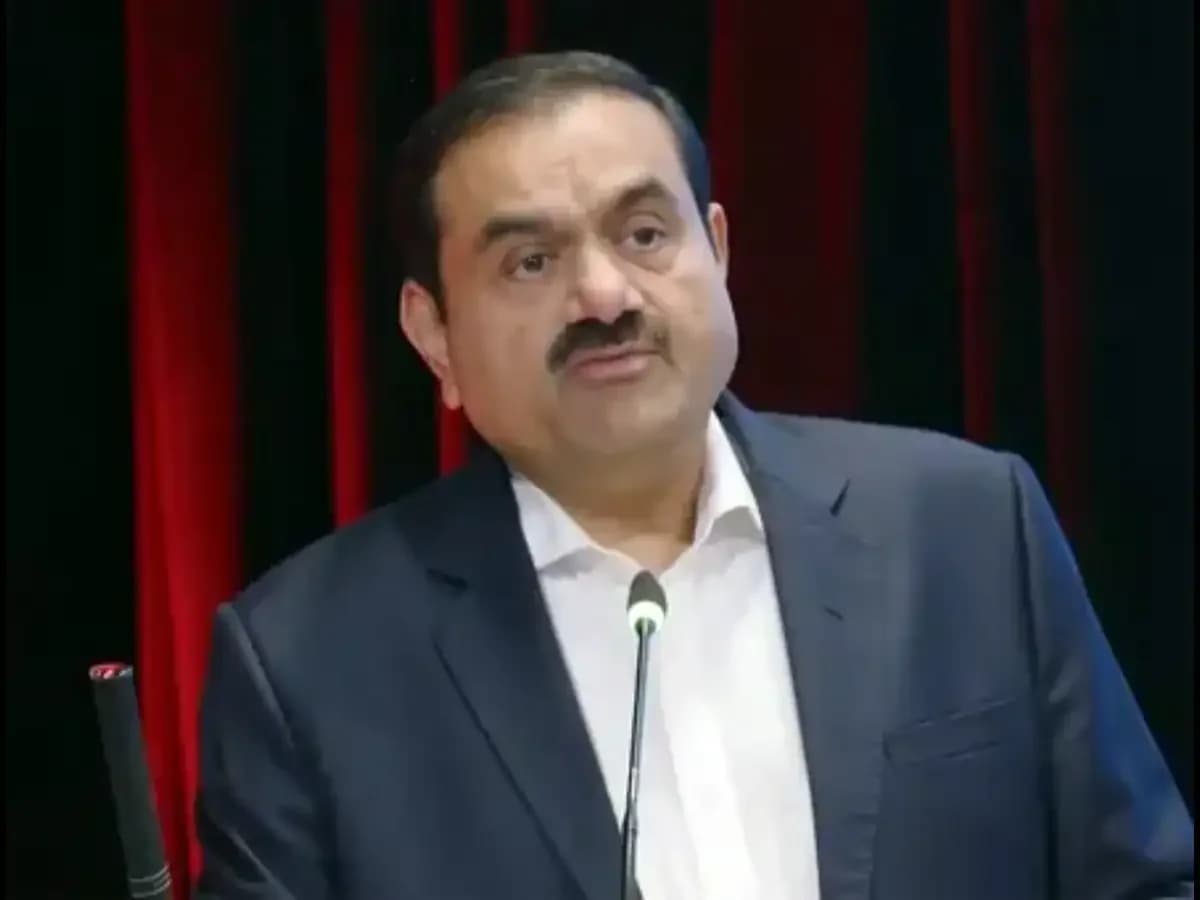
Gautam Adani has called for a fundamental overhaul of infrastructure rating frameworks, urging analysts to widen their scope of analysis in line with the sophistication of infrastructure being built in the country. Speaking at CareEdge Group's Annual Summit on August 31, 2026, Adani said India did not need lower rating standards but needed 'wider lenses' to assess a new generation of infrastructure projects that create capabilities and ecosystems beyond their standalone cash flows. 'India does not need lower standards. India needs wider lenses,' Adani said, calling on CareEdge to develop what he described as the world's first comprehensive credit framework for 'integrated platform infrastructure'. The remarks come as India accelerates investment in ports, renewable energy, power transmission, digital infrastructure and manufacturing as it seeks to build a more developed economy by 2047. As per Business Standard, Adani said such a framework should be capable of evaluating multi-dimensional infrastructure and recognising ecosystem multipliers, adjacency value and strategic resilience.
Adani highlighted the growing link between artificial intelligence and physical infrastructure, saying the future competitiveness of AI would depend not just on software and algorithms but also on the ability to build data centres, cooling systems, transmission networks and large-scale supplies of clean and reliable electricity. 'AI may look like software, but ultimately AI runs on infrastructure,' Adani said, noting that every AI model requires electricity, data centres, cooling systems, transmission networks and land. 'Therefore the competitive advantage in AI may ultimately lie not only in who writes the best code but also in who can build the infrastructure that allows intelligence to scale,' he added. He argued that assets such as Khavda could therefore become foundational to India's future AI economy by providing clean energy for computing infrastructure while supporting advanced manufacturing and digital capabilities. 'The India of 2047 will not be built by ambition alone. It will be built when ambition earns trust, when trust unlocks capital and when capital builds national capability,' Adani said. As per NDTV Profit, Adani emphasized that 'The role of an institution like CareEdge is to ensure that ambition is not constrained by fear and that risk is not ignored in the path to progress.'
Adani divided infrastructure into three distinct categories to argue that conventional credit models can underestimate platform value. According to Business Standard, he categorized infrastructure as replacement infrastructure where traditional rating models are generally adequate, growth infrastructure where models should account for ecosystem effects, and 'platform infrastructure' which can create entirely new capabilities, markets and industrial clusters. 'Platforms like Mundra, Vizhinjam and Khavda do not just satisfy existing demand. They create new demand. They create new ecosystems. They create new capabilities,' Adani said. He stressed that if India builds only for current demand, 'India will always be late for the opportunities of tomorrow.' The challenge is particularly relevant as India's infrastructure investment becomes more complex, involving projects that combine energy, transport, logistics, digital networks and manufacturing rather than functioning as isolated assets. As per NDTV Profit, Adani stated that 'Your responsibility is to protect capital, to question assumptions, to recognise execution challenges and to ensure that risks are properly quantified. But there is another equally important responsibility — understanding and reading the larger transformation taking place around us.'
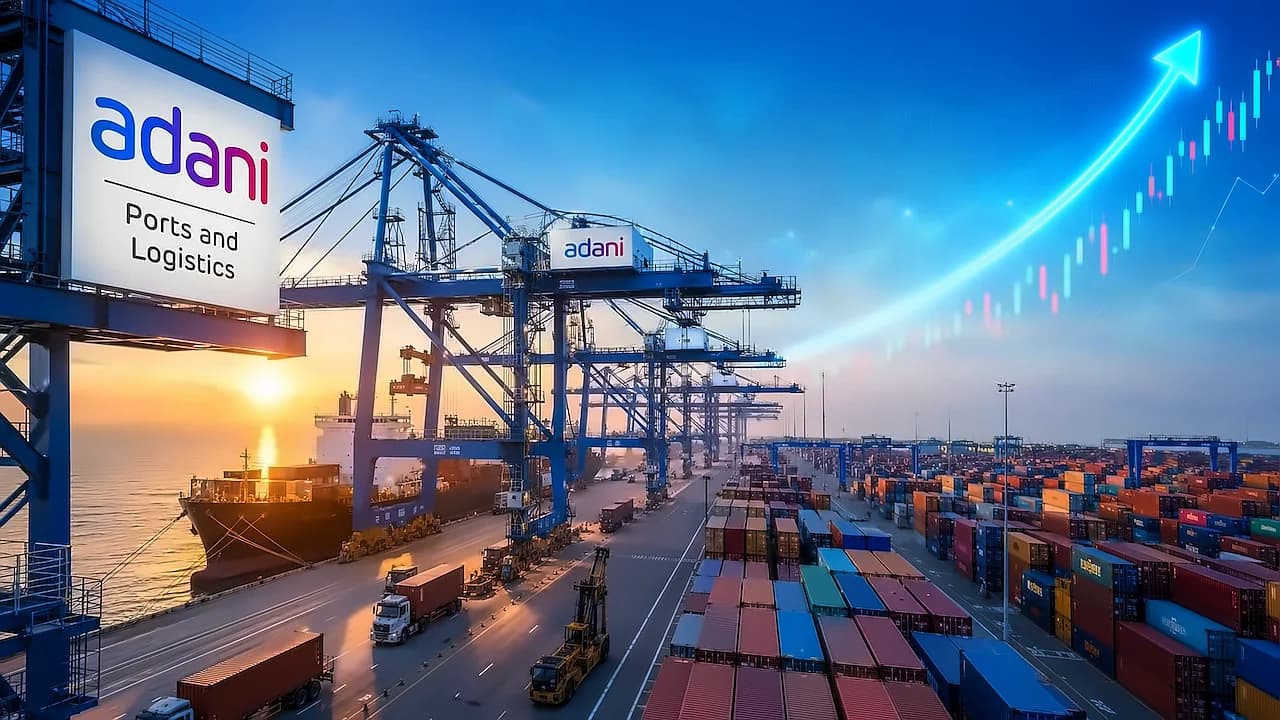
Using his experience of building Mundra Port, Adani demonstrated how conventional single-asset discounted cash flow models could not adequately capture the value created when infrastructure assets become interconnected platforms. As reported by The Economic Times, Mundra began as a port project on a marshy coastline with limited surrounding infrastructure but eventually developed into a wider ecosystem linked to railways, logistics centres, power plants and industrial zones. 'Today, Mundra is easily one of India's most important commercial gateways. But more importantly Mundra has created an ecosystem multiple times the size of the port,' Adani said, adding that it is a port connected to rail, rail connected to logistics centres, logistics connected to power plants, power connected to industrial zones and industrial zones connected to traders and manufacturers all across India. 'Mundra proved that platform infrastructure operates as a multi-layer network where each new layer cross-subsidises, feeds and de-risks the other, creating an economic compounding flywheel that linear financial models mostly fail to capture,' Adani said, illustrating the limitations of assessing infrastructure solely through standalone discounted-cash-flow models.
Adani cited the Vizhinjam port project in Kerala as strategically important for India despite facing difficulties in meeting conventional financial and risk assessment parameters. According to Business Standard, Vizhinjam, commissioned in December 2024, is India's first deep-draft mega transshipment port and handled 1.3 million TEUs in its first year and crossed 2 million TEUs within 18 months, according to Adani Ports. The port is being expanded to 5.7 million TEUs of annual capacity by December 2028. 'The greatest risk was never in building Vizhinjam. The greatest risk was India continuing to believe that it could not,' Adani said, adding that traditional financial assessments had struggled to capture the broader strategic value of the project. India, located close to some of the world's busiest shipping routes, had for decades depended on foreign ports such as Singapore, Dubai and Colombo for container transshipment. 'Conventional credit models correctly measure execution risk. But in strategic infrastructure, we must also learn to recognise the economic value of sovereign resilience,' Adani said, noting that tender after tender failed over 25 years before the Adani Group built it.
Turning to the group's 30-GW renewable energy project at Khavda in Gujarat's Rann of Kutch, Adani said the project should not be assessed merely as a power-generation asset but as a larger platform where renewable energy, artificial intelligence, manufacturing, digital infrastructure and industrial capability could converge. As reported by Business Standard, as of March 31, 2026, 9.4 GW of capacity at Khavda was operational, with the company targeting completion of the 30-GW project by 2029. 'Measured simply as a power project, Khavda will be under-rated for decades. But when measured as a transformational platform, it will be one of India's most important strategic assets,' Adani said, adding that the project could provide clean energy for India's future computing infrastructure and support the development of an AI manufacturing ecosystem. 'AI may look like software. But ultimately, AI runs on infrastructure,' he said, citing the need for electricity, data centres, cooling, transmission networks and land. According to Business Standard, Adani stated that a traditional framework could identify the project's extreme isolation, harsh desert conditions, execution risk and uncertain demand, but such an assessment would miss the wider role of the project as 'a platform where energy, artificial intelligence, manufacturing, digital infrastructure and industrial capability converge at an unprecedented scale'. The project represents a potential foundation for India's AI economy and compute infrastructure, with Adani noting that 'Measured simply as a power project, Khavda will be underrated for decades. But when measured as a transformational platform, it will be one of India's most important strategic assets'.