While air-conditioner sales struggle with 15-20% growth against expectations of 25-30%, India's livestock sector faces an equally severe crisis from extreme temperatures. According to Business Standard, rising temperatures are affecting milk yields, poultry growth and farmer incomes across the country. Ravin Saluja, Director at Sterling Agro Industries Limited, reports that dairy cattle are experiencing 5-12% milk yield losses during peak heat periods when temperatures cross the animal comfort threshold of 72°C. The dairy sector alone accounts for about 5% of India's GDP, making livestock far more than a marginal rural activity that contributes 30.23% of agricultural gross value added.
Despite India experiencing one of its harshest summers with temperatures soaring close to 50°C across North and Central India, air-conditioner sales are failing to meet industry expectations. Major players including Voltas Ltd., Blue Star Ltd., Daikin India and Godrej Appliances are reporting sales growth of 15-20% compared to last year, according to reports from NDTV Profit. This growth falls significantly below industry expectations of 25-30%, with industry executives noting that part of the current growth is coming off a low base of 2025 when sales saw a year-on-year decline. The subdued performance is attributed to geopolitical uncertainties, particularly the ongoing Gulf war, which is primarily impacting demand in the mass segment.
Industry leaders are attributing the subdued performance to geopolitical uncertainties, particularly the ongoing Gulf war. Voltas Ltd Managing Director Mukundan C P Menon told NDTV Profit that there is significant uncertainty around war, which is primarily impacting demand. The mass segment is experiencing particular pressure, as noted by Kamal Nandi, Executive Vice-President (appliances business) at Godrej Enterprises Group, who pointed out that consumers are reacting to rising costs driven by the Gulf war. When compared to the blockbuster 2024 performance, the current growth remains as low as 10-15%.
Manufacturers have implemented price hikes of approximately 8-10% this year to offset increasing raw material costs. According to reports from NDTV Profit, prices of copper, a key component for AC manufacturing, and a weaker rupee have pushed costs up across the category. Higher fuel prices, which have increased by nearly ₹7.5 per litre, along with rising household expenses, are weighing heavily on consumer spending power. In the livestock sector, major dairy companies including Amul and Mother Dairy raised milk prices by around ₹2 per litre last year as prolonged heat conditions affected milk yield and increased feed costs. Mother Dairy specifically increased prices by ₹2 per litre on May 14 after a gap of one year, citing increased input costs of around 6% over the past year.
Dealers had stocked up ahead of the summer season, expecting strong demand after last year's sales were disrupted by unseasonal rainfall. However, inflation appears to have quickly dampened those expectations. Blue Star MD B. Thiagarajan noted that the war-led supply chain crisis doesn't seem to be the major issue now, with the primary challenge being weak consumer demand. As reported by NDTV Profit, there's an uptick in North and West markets, while South remains a laggard, with sales growing about 20% year-on-year but potentially stronger without inflationary pressures. In the livestock sector, Dr K Ratnam, CEO of Milky Mist, reports that southern India is not seeing negative impact from heatwaves, with milk procurement volumes remaining stable due to calving season, green fodder availability and early pre-monsoon showers.
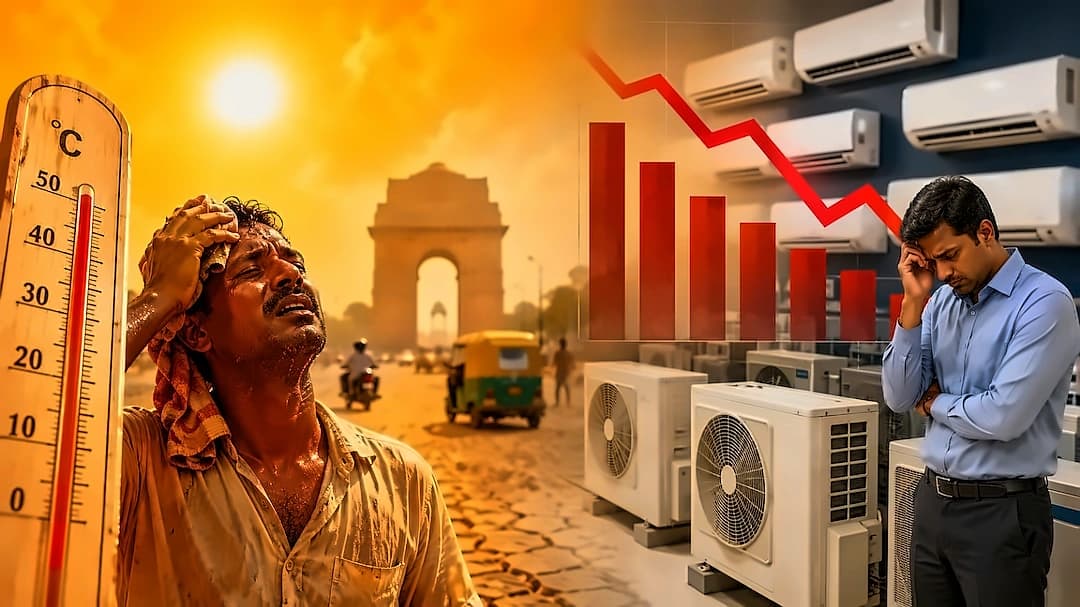
K J Jawa, Chairman and MD of Daikin India, echoed similar concerns about uneven demand across markets, stating that demand remains uneven despite the overall growth. Industry executives emphasize that while the extreme heat conditions would typically drive strong AC sales, inflationary pressures are creating a significant barrier to consumer purchasing power. In the livestock sector, experts warn that climate stress is becoming a structural challenge for India's livestock economy, with 54% of buffalo rearers, 50% of crossbred cattle rearers, and 41% of indigenous cattle rearers reporting climate impact on their animals. Future policy interventions will need to include long-term investments in climate-resilient livestock infrastructure, heat-tolerant breeds, and affordable cooling systems as heatwaves become more frequent and prolonged.