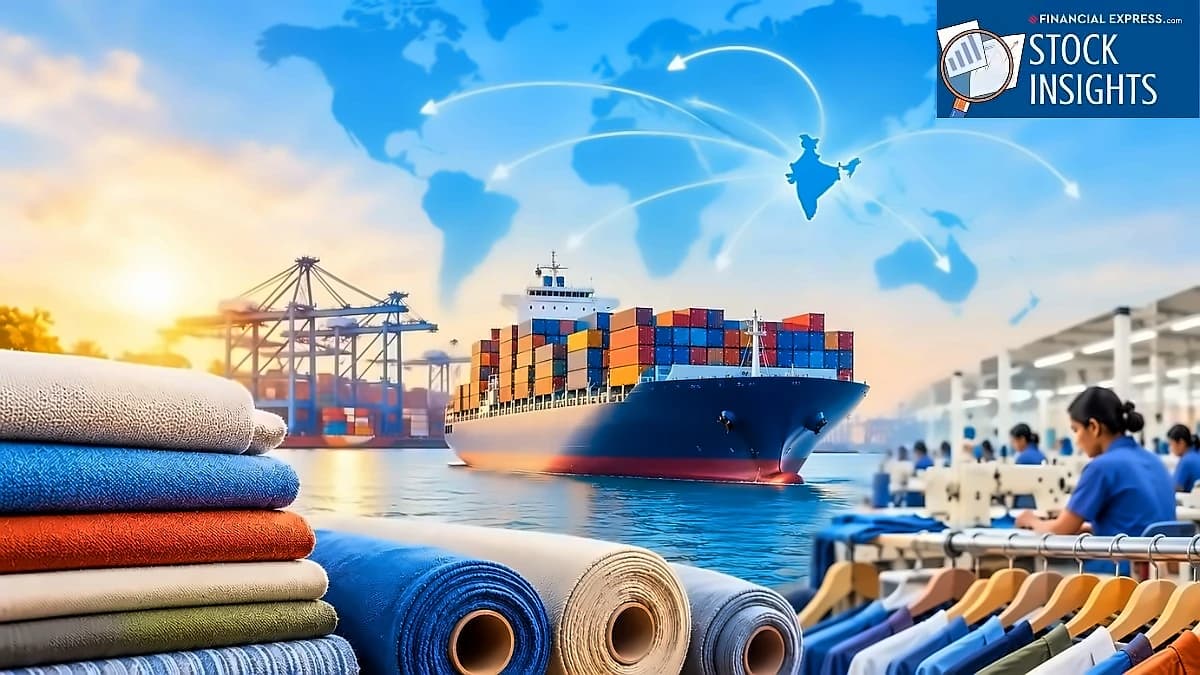
India's textile exporters are facing renewed uncertainty as trade negotiations between India and the United States have stalled once again. According to a Reuters report dated 6 October 2026, negotiations have reached a standstill, with uncertainty over future tariffs remaining unresolved. For India's textile industry, the stakes are particularly high as the US is a major export destination for Indian garments and home textiles. Higher tariffs could make Indian products less competitive against suppliers from other countries, affecting export orders, revenue growth and operating margins.
While some companies depend heavily on American customers and manufacture primarily in India, others have expanded their manufacturing operations across Africa, Southeast Asia and the Americas. According to the analysis, these diversification strategies offer partial protection against India-specific tariffs. The key question remains whether overseas manufacturing, geographical diversification and pricing power can help these businesses protect their profitability amid the current trade uncertainty.
Gokaldas Exports is a leading apparel exporter with North America contributing 77.9% of FY26 sales, making US tariff uncertainty a significant concern. However, its manufacturing operations in Kenya and Ethiopia provide alternative sourcing options, with Kenyan operations benefiting from preferential US market access under the African Growth and Opportunity Act (AGOA). In FY26, consolidated revenue rose 3.2% YoY to ₹3,987.6 crore, though net profit declined 36.8% to ₹100.1 crore due to estimated ₹97 crore in additional tariff costs. The company is expanding manufacturing capacity in Madhya Pradesh and Karnataka, with its second Madhya Pradesh unit expected to reach full utilisation by Q4 FY27.
Welspun Living is a major home textile exporter with the US accounting for approximately 59% of FY26 business, making it particularly exposed to tariff uncertainty. However, its manufacturing facilities in Ohio and Nevada provide some protection against India-specific tariffs. In FY26, consolidated revenue declined 10.9% YoY to ₹9,399.1 crore while net profit fell 68% to ₹204.4 crore. The company has approved a ₹121 crore modernisation project at Anjar and is expanding presence in the UK and Europe. Despite overseas manufacturing and diversification, Indian towel and bed-linen exports remain vulnerable to prolonged tariff uncertainty.
According to the analysis, the six textile exporters show varied performance metrics with Pearl Global Industries leading in three-year sales CAGR at 17%, followed by Indo Count Industries at 11%. Gokaldas Exports and Welspun Living recorded negative growth rates of -2% and -5% respectively. Operating margins ranged from 4.5% to 14%, with Himatsingka Seide achieving the highest at 14%. The companies' ability to navigate trade uncertainty will depend on their capacity to protect margins, retain customers and diversify revenue streams beyond US exposure.