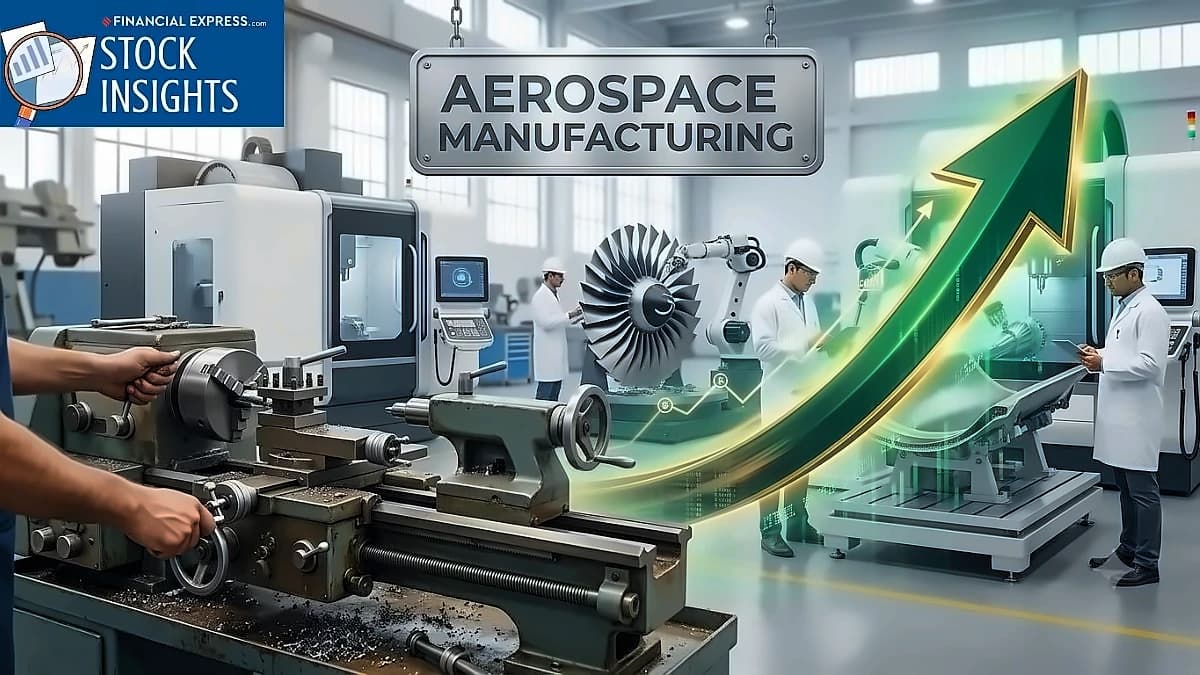
A quiet transformation is unfolding in India's engineering sector as legacy manufacturers pivot to aerospace, chasing higher margins, global customers, and long-term growth. According to reports from The Financial Express, these companies are moving beyond their traditional businesses into one of the world's most demanding manufacturing industries, where technological capability rather than production scale determines long-term success. Breaking into the aerospace supply chain isn't easy, with companies often spending years qualifying with global OEMs through rigorous audits, product testing, and process validation before supplying components.
Jyoti CNC Automation is India's largest manufacturer of Computer Numerical Control (CNC) machines, specializing in advanced 5-axis CNC machines used to manufacture complex aerospace and defence components. As reported by The Financial Express, aerospace and defence now account for 39% of total sales in FY26, down from 45% in FY25, attributed to capacity constraints with facilities operating at over 100% utilization. The company's order book stands at ₹4,732 crores as of March 2026, with 38% being aerospace and defence orders. Financial performance shows revenue increased 15% to ₹2,093 crores with gross margin expanding by 290 basis points to 55.1% in FY26.
Azad Engineering manufactures precision-engineered turbine blades, airfoils, and rotating components for global OEMs including GE Aerospace, Rolls-Royce, Mitsubishi Heavy Industries, and Siemens Energy. According to The Financial Express, aerospace and defence currently account for less than 20% of revenue in FY26, but management expects this to increase to 35-45% over the next four to five years. The company's order book is valued at over $200 million (approximately ₹1,700 crores), providing multi-year visibility. Financial performance shows sales revenue increased 32% to ₹603 crores in FY26 with EBITDA margin expanding by 180 basis points to 37.1%.
LMW has been primarily a textile machine manufacturing business for over six decades, but its aerospace ambitions are housed under the Advanced Technology Center (ATC). As reported by The Financial Express, aerospace currently contributes less than 10% to total revenue but is growing significantly faster than the legacy business. In FY26, ATC revenue grew 22% to ₹207 crores, accounting for around 6% of consolidated turnover with nearly 90% of division revenue from exports. The company plans to invest ₹150 crores over the next five years to build a larger ATC campus while maintaining EBITDA margins of around 20%.
Walchandnagar Industries has announced plans to triple its manufacturing capacity within 18-20 months, marking a significant shift from steady-state operations to rapid expansion. This 3x capacity boost targets the defense, aerospace, nuclear, and industrial machinery sectors, signaling strong growth direction and management confidence in the defense capex cycle. The expansion reflects strong internal order pipeline that exceeds current shop-floor throughput, with the timeline suggesting land and basic infrastructure may already be in place for rapid deployment. Management has emphasized debt reduction and operational efficiency as prerequisites for this expansion phase, while the move positions the company to meet heightened technical demands of Indian aerospace and defense programs.