The White House has detailed unprecedented control mechanisms in the historic Venezuela oil deal, revealing that the US will have first rights to buy 80% of oil produced by North American Blue Energy Partners (NABEP), a privately held company granted 100-year concessions on 17 oil fields. According to the latest fact sheet released Monday, the US will also have veto power over board appointments and a majority of the board must be US citizens. NABEP is granting the US State Department the right to purchase a guaranteed 20% of its offtake from current and future fields, ensuring stable supplies of cheap oil at production cost. President Trump boasted of the arrangement, calling it 'maybe the greatest deal ever made' and announcing plans to use the oil to restore the emergency US stockpile.
Venezuelan interim President Delcy Rodríguez confirmed on August 29 that the country's bilateral energy pact with the United States will run for 25 years and target crude output of more than 1.5 million barrels per day, initially from 17 strategic oilfields with eight greenfield blocks in a wider expansion. President Trump announced on August 28 that the US government is partnering with private companies to gain access to 65 billion barrels of Venezuelan oil reserves, controlling 55% of the joint venture's production and receiving the oil at cost. The deal could generate approximately $209 billion in revenue for the Venezuelan state at a benchmark oil price of $65 per barrel, with roughly $19 flowing to Venezuela from every barrel sold under the arrangement. According to reports from EcoNiti Daily Brief, Chevron is reported to be among the firms finalising talks for this significant energy partnership. The oil reserves are mostly located in eight blocks in the Orinoco Belt with the rest in the Lake Maracaibo region, as confirmed by a list shared with Reuters. However, fields in the Orinoco Belt have little or no access to infrastructure, with industry experts estimating that 'those fields will take five to seven years, at best, to deliver increased production for the market'. NABEP plans to boost production from its operations in Venezuela's Lake Maracaibo and Orinoco Belt to more than 1 million barrels of oil per day - an ambitious target in a country where current daily output is about 1.1 million barrels.
Despite President Trump's claims of securing 'majority control' of Venezuela's 65 billion barrels of oil reserves, the market has delivered a different reality. As of August 31, 2026, Brent crude reached $90.17 per barrel, up 2.71% over 24 hours, with WTI crude at $85.24 per barrel, up 2.87%. The market's response demonstrates that 'marginal supply' - actual production capacity - matters more than underground reserves. According to CITIC Securities research, the 6.5 billion barrels figure represents reserves, not immediate supply capacity, with Venezuela's current output at only 1.12 million barrels per day as of August 2026. Venezuela's interim President Delcy Rodríguez has confirmed that the 25-year agreement involves development of 17 oilfields and could initially increase production to approximately 1.5 million barrels per day, though analysts and industry experts broadly expect that bringing the country's daily output back to a long-term level of 3 million barrels could take more than 10 years. There's a lot of uncertainty about whether the deal will be viable over the long term, with significant political risks in both Washington and Caracas. As Rapidan Energy president Bob McNally noted, a Democratic president in 2029 would likely reconsider or terminate the deal, while even if a Republican wins, a future Venezuelan government could tear up the agreement as Caracas has done before.

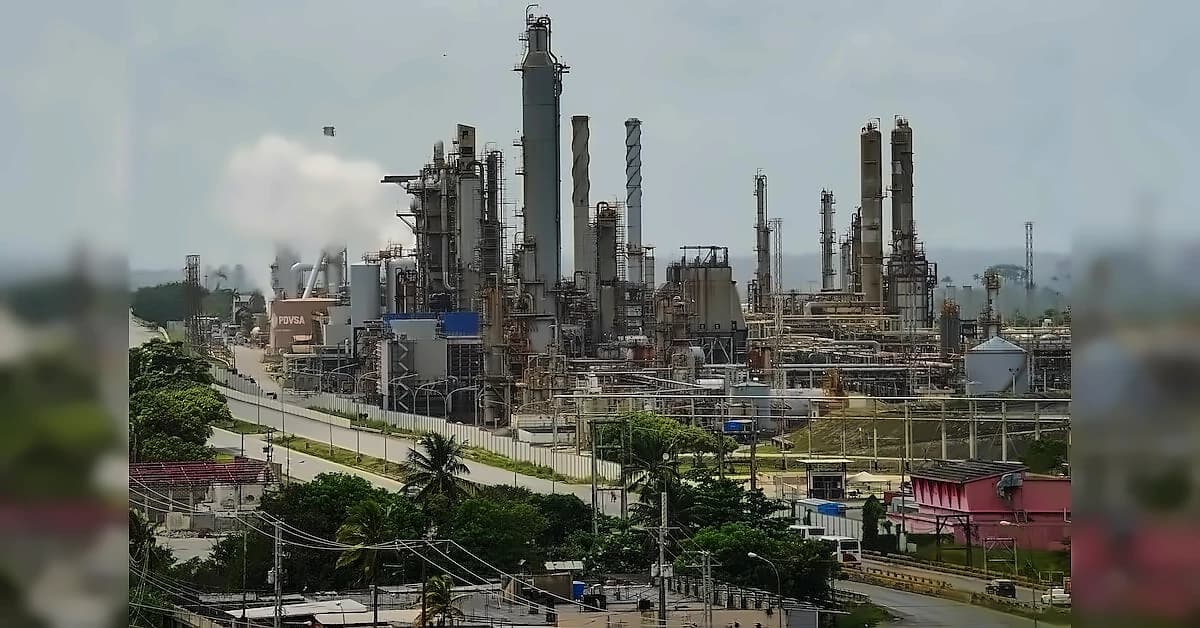
The US-Venezuela oil deal represents the outgrowth of Trump's policy of expanding influence in the Western Hemisphere, dubbed the 'Donroe Doctrine'. According to the latest White House fact sheet, the Pentagon's Office of Strategic Capital will hold a 35% equity stake in NABEP's corporate parent, representing up to hundreds of billions in value and dividends for the US. US officials have explicitly stated that taxpayers won't be on the hook to support the venture, with the focus on strategic capital rather than direct government funding. The arrangement is designed to give producers more confidence to commit to developing the 17 oil fields involved in the deal. However, it remains unclear whether any oil company could rapidly boost Venezuela's crude output, especially on the scale US officials and NABEP are describing, given decades of corruption and underinvestment that have left a network of rusty pipelines, oil spills and damaged equipment.
Venezuela's oil infrastructure is in a state of disrepair after years of mismanagement by its socialist government, creating significant logistical challenges for the partnership. Secretary of State Marco Rubio said Friday that Trump's deal will bring nearly $100 billion of private-sector investment to the country, though the specific structure and participating companies remain unclear. Tankers are waiting up to 30 days to load crude oil cargoes from Venezuela due to challenges with aging infrastructure and power outages that impacted its ports. The terminals 'would have to be expanded in order to handle more production,' but 'it's unclear who's taking on that project,' according to industry analysts. Chevron is the only major U.S. oil company currently active in the country, through joint ventures with state-owned PDVSA, with its production increasing 15% to 280,000 bpd this year. The oil major expects to grow production up to 50% through 2028, which would put Chevron's Venezuela output at around 400,000 bpd in around two years, though production growth will be constrained by these infrastructure limitations. The deal faces political challenges, with questions remaining about whether the arrangement would be fully embraced by a future American president, or how it might endure any political upheaval in Venezuela. Some members of Venezuela's opposition had also fretted that the deal could reduce the odds of a political transition by solidifying interim President Delcy Rodríguez's hold on power.