The United Arab Emirates has accelerated construction of a new oil pipeline designed to bypass the strategically critical Strait of Hormuz, a move aimed at boosting export resilience and securing global energy flows amid ongoing Gulf conflict. According to the Abu Dhabi media office, the pipeline will transport crude oil from Abu Dhabi to Fujairah on the Gulf of Oman, significantly expanding the country's ability to export oil without relying on the Strait of Hormuz, one of the world's busiest energy shipping lanes. The initiative comes as the UAE seeks to double its capacity to export crude oil bypassing the Strait of Hormuz by next year, as reported by The Hindu BusinessLine. Crown Prince Sheikh Khaled bin Mohamed bin Zayed announced the acceleration of the West-East Pipeline project to "meet global demands" at an executive meeting held by the Abu Dhabi National Oil Company (ADNOC) on Friday, as reported by Gulf News.
The project, known as the West-East Pipeline, is currently under construction and is expected to become operational in 2027. Once completed, it will double ADNOC's export capacity through Fujairah, as reported by the Abu Dhabi media office. The UAE currently operates a 1.5 million barrel-a-day pipeline from its oil fields to the port on the eastern coast, a link that has proven to be a lifeline for the country during the conflict. However, this existing pipeline can carry less than half of ADNOC's normal export volumes, likely affecting the country's oil revenue, according to The Hindu BusinessLine. The pipeline, which started working in 2012, has the capacity of about 1.5 million barrels of oil per day (bpd) and runs from Habshan, an oil and gasfield in the southwestern area of Abu Dhabi, to the port of Fujairah, which has come under attack recently.
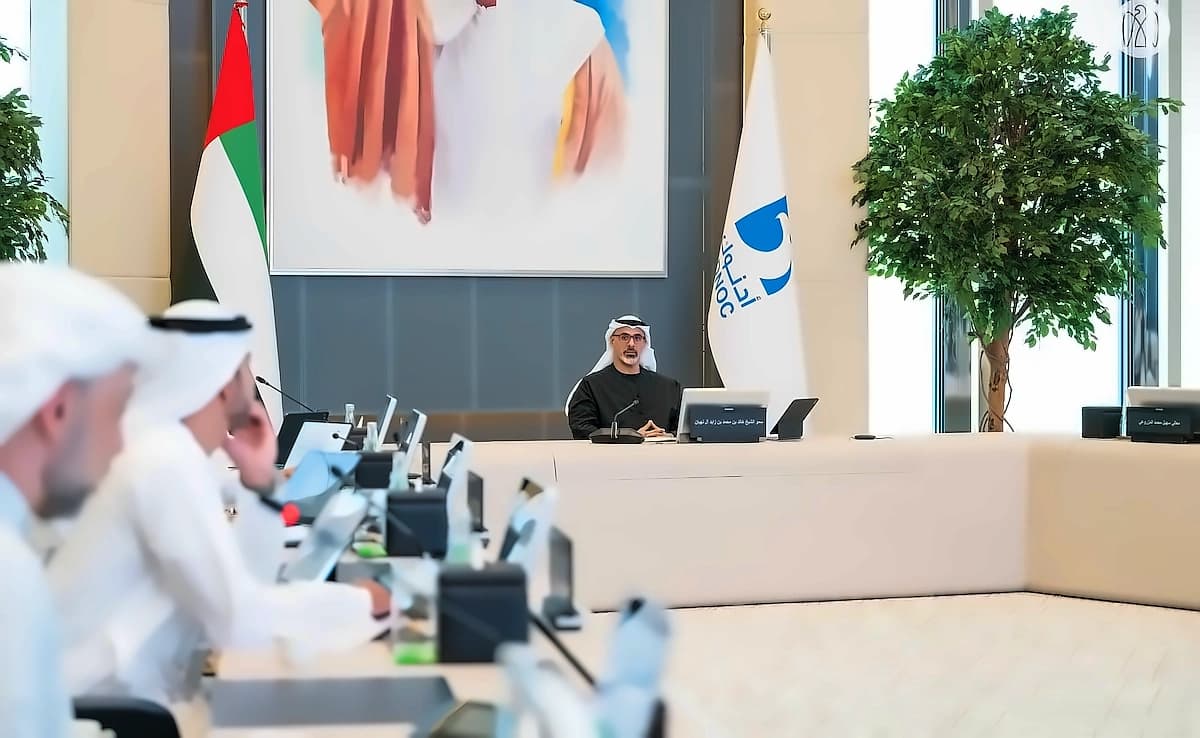
Sheikh Khaled Bin Mohamed Bin Zayed Al Nahyan, Crown Prince of Abu Dhabi and Chairman of the Abu Dhabi Executive Council, chaired a meeting of the Executive Committee of the ADNOC Board of Directors at the company's headquarters in Abu Dhabi. During the meeting, Sheikh Khaled praised ADNOC for maintaining 'safe operations' while continuing to reliably supply energy to domestic and international markets. He was briefed on progress of the West-East Pipeline project and directed ADNOC to accelerate delivery of the infrastructure as the company enters what officials described as a 'new phase of world-scale project execution' to meet rising global energy demand. Sheikh Zayed said ADNOC is "well positioned as a responsible and reliable global energy producer, with the operational flexibility to responsibly increase production to meet market needs when export constraints allow."
The Gulf Today reported that Sheikh Khaled said ADNOC remains 'well-positioned as a responsible and reliable global energy producer,' with the operational flexibility to increase output 'when export constraints allow.' This strategic initiative represents the UAE's commitment to maintaining energy security amid potential disruptions to the Strait of Hormuz, which handles a significant portion of global oil trade. The UAE and Saudi Arabia are the only major Gulf producers able to get significant quantities of crude to market during the war, with state oil companies of both countries quietly managing to ship cargoes out of the Gulf in recent weeks, avoiding the Iranian blockade. Gulf nations have been forced to find alternative trade routes to maintain oil and gas exports as the United States and Israel's war on Iran shook global energy supply chains across the world.
While the existing 252-mile (406-kilometer) pipeline to Fujairah hasn't been targeted in the war, infrastructure at both ends has faced attacks. Iranian drones hit a gas-processing facility near the pipeline's starting point at Habshan, while at the other end, the port of Fujairah has sustained damage that's temporarily disrupted shipments in multiple attacks during the conflict, according to The Hindu BusinessLine. The UAE's decision to exit the Organization of Petroleum Exporting Countries has freed the country from production limits, with the UAE planning to increase output to meet a war-related boost in demand. Additional export capacity through Fujairah will give the country more options even after Hormuz reopens to shipping. Oman borders the Gulf of Oman with an extensive coastline outside the Strait of Hormuz, while Kuwait, Iraq, Qatar, and Bahrain depend almost entirely on the waterway for their trade shipments.