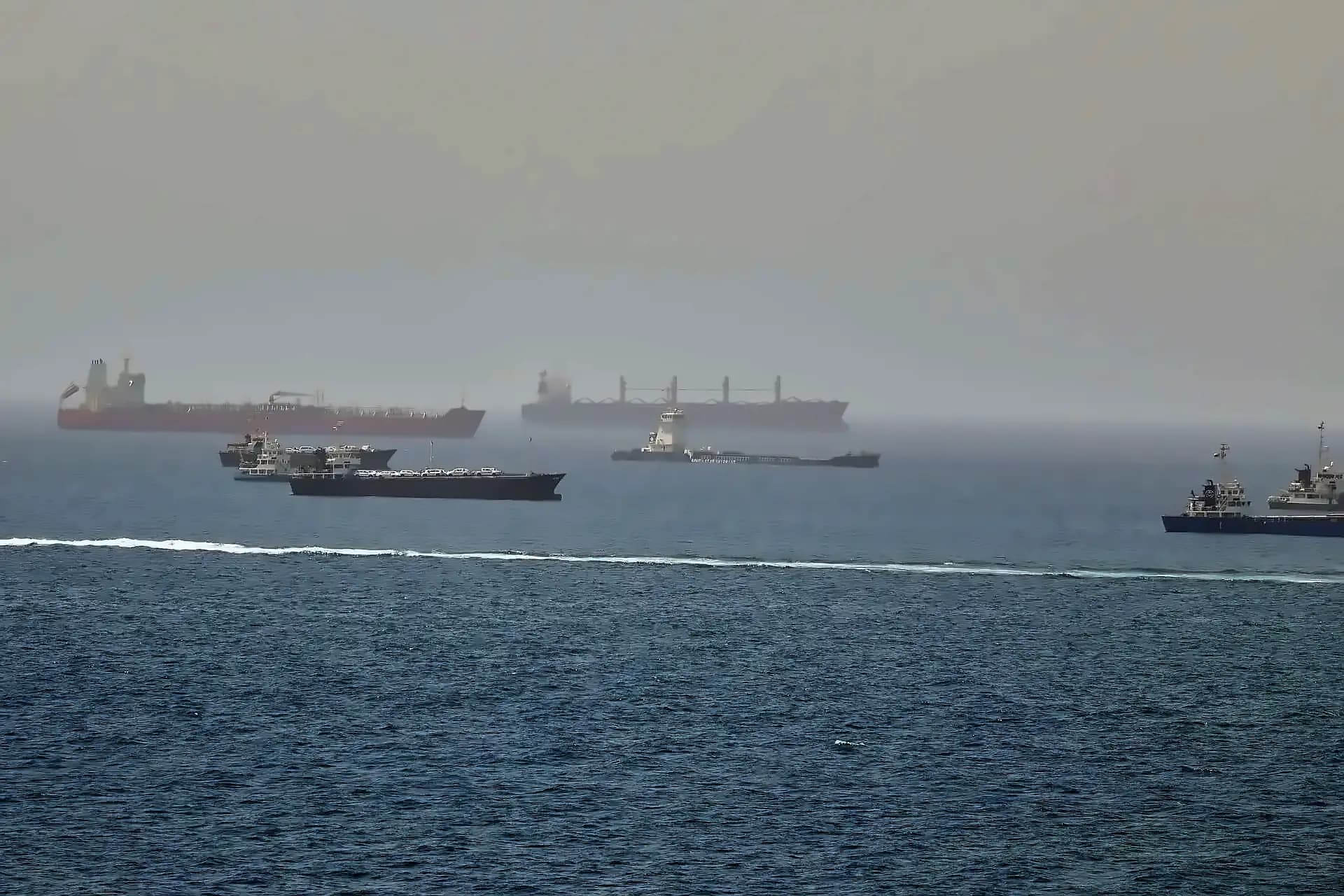
Oil prices fell on Friday, extending their losing streak to a third consecutive day despite earlier gains following reports that US President Donald Trump was unwilling to return to earlier terms of a deal with Iran. Brent crude futures slipped 25 cents, or 0.3%, to $89.45 a barrel, while West Texas Intermediate (WTI) crude futures fell 22 cents, or 0.3%, to $83.31 a barrel. Both benchmarks were set to post weekly losses, with Brent down 5.3% and WTI lower by 4.3% for the week. As per The Economic Times, the decline came as signs of progress in Iran-Oman talks to restore shipping through the Strait of Hormuz eased supply concerns, though traders viewed the US measures as less immediately disruptive to Iranian crude exports than previously feared. The Trump administration has repeatedly conveyed to mediators that it is not interested in reviving the June memorandum of understanding, making efforts to bring the two sides back to the negotiating table more difficult.
Iranian Foreign Minister Abbas Araghchi and Omani counterpart Badr Albusaidi discussed plans for a "temporary joint maritime corridor" aimed at restoring safe passage through the Strait of Hormuz, according to the state-owned Oman News Agency (ONA). Iran's deputy foreign minister Kazem Gharibabadi confirmed on August 25 that both countries would continue discussions on establishing a permanent shipping route within the next 30-60 days. Gharibabadi stated that both sides had already agreed on a temporary route, though details and implementation timelines remain undisclosed. This represents a significant development as the two countries have been engaged in intermittent discussions for weeks on regulating traffic through the waterway, which handled about one-fifth of global oil and liquefied natural gas shipments before the US-Iran conflict began in February. A senior Iranian source said on Wednesday that Iran and Oman are working on finalizing details of an agreement to control the Strait of Hormuz, after Iran's Revolutionary Guards said the two countries had agreed how to share the waterway that connects major Gulf oil producers to markets and its revenues.
Qatar's prime minister will head to Iran on Thursday to relaunch diplomatic talks to end the conflict which is nearly six months old, as reported by The Economic Times. The U.S. has halted its attacks on Iran for about a month and is seeking to impose greater economic pressure on Iran, which has raised investors' expectations for an easing of the Gulf supply disruptions. However, the countries are far apart on their demands to end the fighting and Iran has struck shipping in the Gulf and strait to impose its control on the waterway. Iranian officials have also said the strait would not open unless the U.S. met Tehran's conditions under an interim ceasefire agreement that was struck in June and later unraveled. The diplomatic engagement comes as the U.S. appears unwilling to sign on to the Iran-Oman arrangement and is instead pushing for greater pressure on Tehran, adding another layer of uncertainty to the negotiations.
Overall crossings in the Strait of Hormuz rose 2.5% to 121 in the week ending 23 August, according to maritime intelligence firm Kpler's data. However, this modest recovery masks a concerning underlying trend - cargo-carrying transits fell 27% during the same period. As reported by The Financial Express, the disconnect between more ships and less cargo represents a significant shift in the strait's commercial substance, with actual economic movement declining despite increased vessel activity. Kpler notes that "traffic edged higher through the Strait of Hormuz and Bab el-Mandeb last week, but headline volumes obscure contrasting risk signals." Recent data shows fewer than 20 commodity vessels crossed the waterway over the weekend, with Iran also threatening to retaliate against countries that cooperate with the US sanctions campaign, raising the possibility that measures could ultimately have a larger impact on oil supplies if Tehran responds by further restricting shipping through Hormuz.
According to Kaynat Chainwala, AVP Commodity Research at Kotak Securities, crude oil extended its losing streak as diplomatic progress on the Strait of Hormuz outweighed a smaller-than-forecast US inventory build. "Prices have since pared losses, with Brent and WTI recovering to $88.2 and $82.2, underscoring how two-sided the market remains as traders balance diplomatic optimism against limited evidence of a meaningful improvement in physical flows. The path forward hinges on whether the 30-to-60-day corridor timeline holds and physical loadings actually rise, leaving prices vulnerable to sharp reversals on any setback," Chainwala said. Brokerage firm Choice Broking believes that the upcoming September–November refinery maintenance cycle should further tighten product availability and provide additional support to refining margins. "We expect Brent price to average at USD84/b for FY27 and USD86/b for the current quarter (July-Sept 2026),"
Security concerns have intensified significantly, with incidents in the Strait of Hormuz costing the lives of 20 seafarers and port workers since the start of the war. According to the International Maritime Organization (IMO), there have been 68 incidents in the Strait of Hormuz since the US and Israel attacked Iran in late February, with another individual missing and 35 people injured. On average, an incident occurs approximately every 2.6 days, with the majority categorized as "attacks." Meanwhile, a tanker was hit in the engine room by an unknown projectile 9 nautical miles northeast of Al-Sisheh in Oman, as reported by the United Kingdom Maritime Trade Operations (UKMTO), with the crew reported to be safe. The escalating situation has prompted concerns that the US economic war may provoke retaliation and escalating reaction from Iran, with the Quincy Institute noting that "the US has almost never succeeded in converting pressure into policy change."