The domestic steel sector is positioned for significant growth with Tata Steel CEO T V Narendran projecting domestic steel demand to grow 8-10% in the second half of FY27. As reported by The Hindu BusinessLine, Narendran made these remarks on Tuesday during the Indian Foundation for Quality Management (IFQM) Symposium 2026 in the national capital. The positive outlook is driven by all consuming sectors being quite strong, with the industry executive expressing quite positive prospects for the steel industry. This domestic optimism contrasts with the mixed global picture, where EUROFER cut its 2026 EU steel demand forecast to just 0.1% growth while projecting 2.3% growth in 2027 to 138 million tonnes.
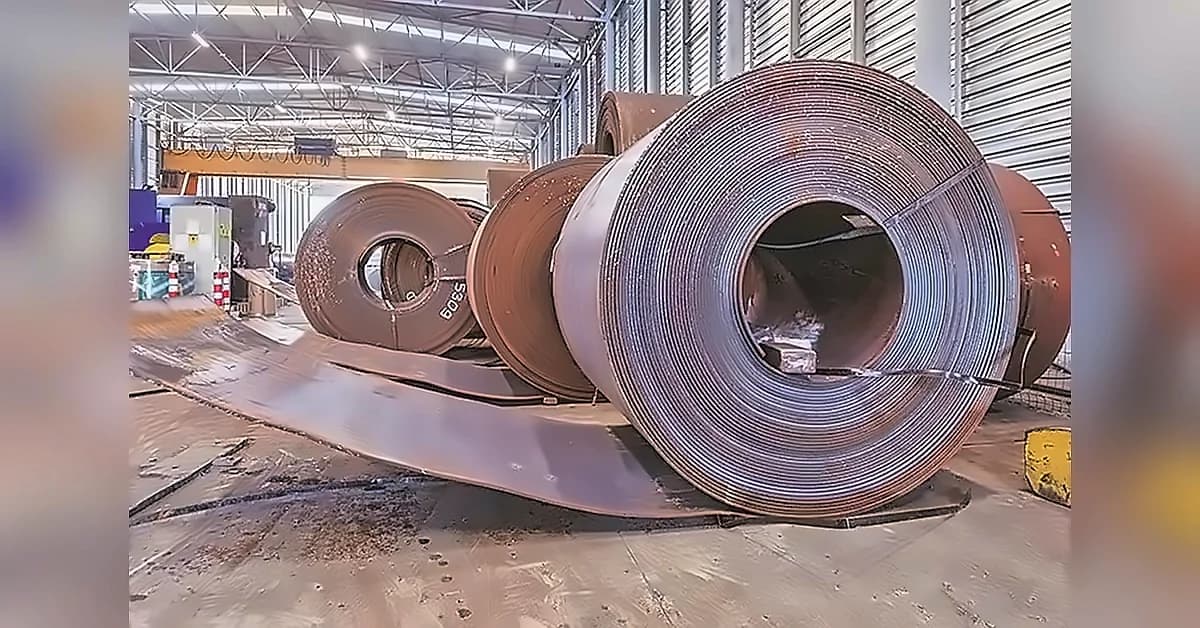
The domestic steel sector is positioned for several strong quarters ahead, driven by low inventories, stronger seasonal demand, and firm prices. According to reports from Business Standard, domestic hot-rolled coil (HRC) prices are currently at small premiums to import-parity prices, with HRC prices up 2% month-on-month and 19% year-on-year. In September, per tonne domestic HRC and primary rebar prices continued to rise to ₹61,700 and ₹57,300, respectively, with rebar rebounding from ₹48,000 a tonne in July. The recovery was attributed to planned maintenance shutdowns, lower inventories, and good demand. However, global developments like EUROFER's cautious forecast suggest that while domestic markets remain strong, international trade dynamics may pose challenges for export-dependent steel producers.
In the July-September quarter (Q2), Tata Steel's consolidated Ebitda stood at ₹9,264 crore, up 25% year-on-year but down 6% quarter-on-quarter, which was in line with consensus estimates. The company's consolidated revenue was ₹60,794 crore, up 14% Y-o-Y but down 4% Q-o-Q, ahead of consensus expectations. SAIL delivered strong performance with adjusted Ebitda of ₹4,462 crore, up 72% Y-o-Y, beating consensus estimates, while PAT reached ₹1,644 crore, up 121% Y-o-Y. Coal India reported muted Ebitda with adjusted Ebitda of ₹10,238 crore, down 9% Y-o-Y and 17% Q-o-Q.
On the raw material front, iron ore prices have softened with NMDC cutting prices in August in response to softer global ore prices, while coal prices continued to rise month-on-month in September. According to Business Standard, coking coal prices remain high but mine restarts in China should reduce prices due to supply expansion. Stainless steel prices also strengthened, up 3% month-on-month and 17% year-on-year, while European coking coal costs are expected to rise. The recent recovery from July lows and absorption of rising raw material costs indicate that supply-demand equations support the price uptrends. However, global supply constraints continue to impact markets, with EU steel production falling 2.9% year-on-year last year to a record low of 125.8 million tonnes, and output declining 1% year-on-year in the first five months of 2026.
Tata Steel continues to address challenges in its international operations, particularly in the Netherlands. As reported by The Hindu BusinessLine, Tata Steel is actively engaged with the government there to resolve issues before signing a binding agreement for its IJmuiden facility. The company faces issues related to coke oven closure and how to classify and handle steel slag, which need to be addressed before any agreement can be finalized. India-based Tata Steel owns a steel manufacturing plant at IJmuiden with an annual installed capacity of around 7 million tonnes, and has adopted a transformation programme to maximise production efficiencies, lower fixed costs and optimise product mix and margins at the facility by installing low-carbon emitting steel processes.