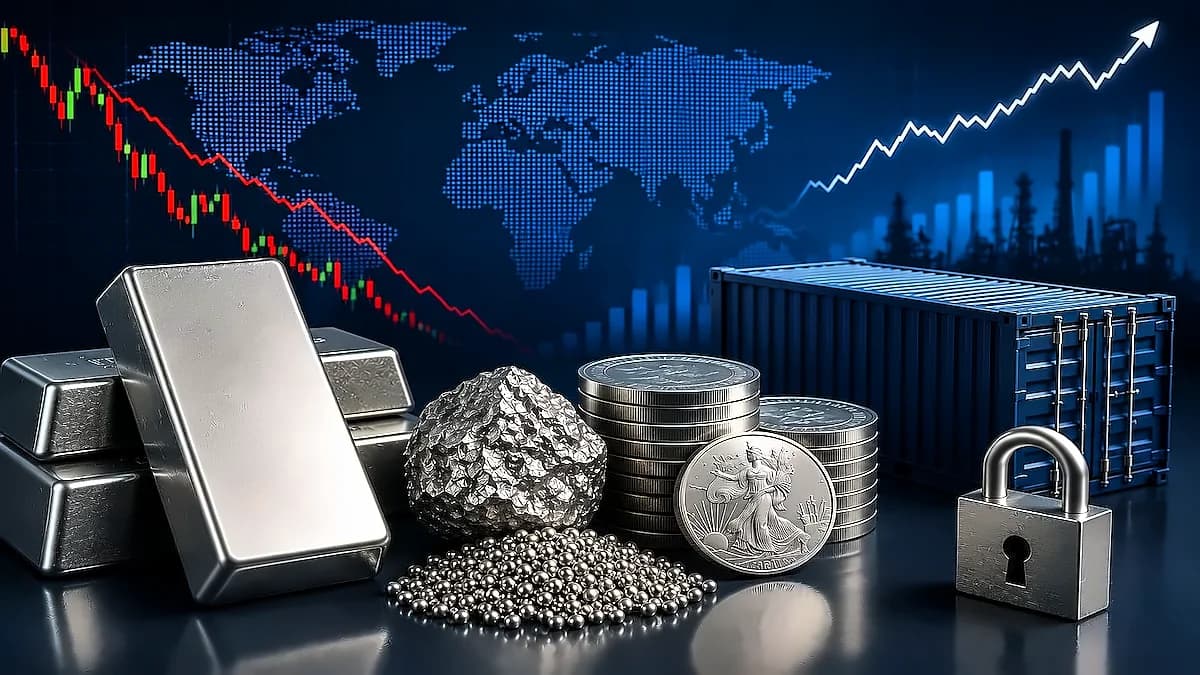
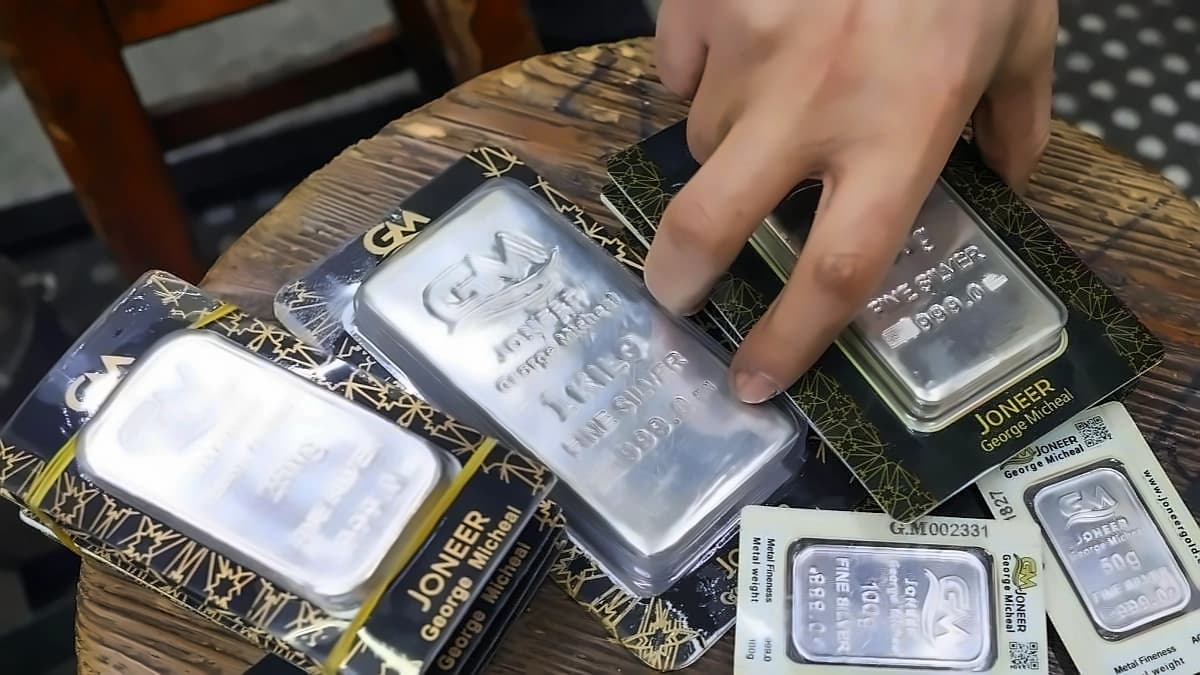
Silver prices have experienced a dramatic reversal, falling nearly 50% from its January all-time high of $121.75 to current levels near $64 within just five months. According to The Economic Times, silver prices tumbled from a record ₹4.28 lakh per kg to around ₹2.39 lakh in India's MCX futures market, reflecting the global correction. The precious metal has now lost approximately ₹47,000 crore in market value as part of a broader precious metals selloff that has wiped out over $12.95 trillion combined from gold and silver in just 132 days. The current decline follows a pattern where sellers took out the support near $69, which aligned with the 0.618 Fibonacci retracement of the rally from $36.20 to $121.75, with the next major support identified at $54.50 at the 0.786 Fibonacci level. As reported by The Economic Times, the speed of the correction suggests a strong speculative component, with global central banks turning more cautious on rate cuts and speculative long positions unwinding rapidly.
Despite the sharp decline, silver maintains one crucial defense mechanism - a four-year trendline in the daily Relative Strength Index (RSI) that is approaching its fifth test. As reported by BeInCrypto, the daily RSI has been trading above an ascending trendline since May 2022, producing four bounces in May 2022, March 2023, October 2023, and April 2025. The indicator currently reads near 30 and approaches the trendline for the fifth time, with a potential bounce here capable of resetting momentum and fueling a counter-trend rally. However, a clean break would end the four-year pattern and confirm that bearish momentum dominates, potentially opening the path to the $54.50 support level and eventually the $50 area. The 0.382 Fibonacci level near $89 remains the key resistance, with only a move above this level invalidating the broader bearish structure.
The underlying supply-demand picture for silver has not deteriorated drastically, with global mine supply remaining relatively stable with only marginal increases in output and recycling supply staying consistent. However, investment demand for silver has weakened considerably in recent months, as reported by The Economic Times, with exchange-traded funds (ETFs) seeing outflows and speculative interest declining after the price correction. On the positive side, industrial demand remains a long-term positive, with silver playing a crucial role in renewable energy, particularly in photovoltaic (solar) cells, EVs and electronics. While short-term demand may fluctuate with economic cycles, the structural demand outlook remains strong, providing a floor to prices. In India, high gold prices traditionally lead to substitution demand for silver, especially among retail and rural investors, with silver becoming a more affordable alternative for jewellery and investment.
The current decline occurs against a backdrop of elevated oil prices near $90, active Iran conflict, and persistent inflation, conditions that historically favor precious metals. According to The Economic Times, the selloff happened while these conditions remained active, making the decline particularly striking. The broader precious metals complex has experienced significant pressure, with gold crashing 26.50% from its January peak as part of the same correction. Market sentiment has turned notably bearish, with mockery from Bitcoin circles adding to the negative tone, as on-chain analyst Checkmatey ridiculed the crash with satirical posts about supply inflation. This capitulatory sentiment often clusters near bottoms, though it offers no timing guarantee for a potential recovery.
Despite the strong performance earlier in 2026, Bloomberg Intelligence Senior Commodity Strategist Mike McGlone warns that the metals rally may be running out of road. McGlone suggests that silver's "2026 pump-then-dump" possibly front-running gold, with the metals sector potentially forming a multiyear high. As reported by Bloomberg, broad metals performance is waning despite surging volatility that risks spilling over into the stock market. The warning comes as early 2026 data showed gold, silver, copper, and the broader metals subindex initially performing independently while the S&P 500 stayed flat, but by late spring, these lines began converging with the S&P 500 and started rolling over together. The current breakdown removes a trend support that held through the entire bull cycle, representing a fundamental shift in market dynamics.