Iran has escalated tensions by warning that blocking its oil exports could trigger widespread regional disruptions, with Iranian Parliament Speaker Mohammad Bagher Ghalibaf stating that if Iran cannot sell its oil, "no one will sell oil" on Wednesday. As reported by Business Standard, Ghalibaf emphasized the "equation of this war is clear: either all or none" in a post on X. He also warned that if Iran's security is not guaranteed, regional infrastructure would not be safe, adding that the Strait of Hormuz would only be secure in the absence of US forces and that conditions in the strategic waterway would not return to pre-conflict levels. This warning comes after US President Donald Trump said American forces would destroy an Iranian bridge or power plant every time Iran attacks ships in the Strait of Hormuz.
Oil prices have surged to record levels on Thursday, with Brent crude oil prices reaching $96.46 per barrel, representing a 9.4% surge for the week and marking the highest level since the conflict began. According to Investing.com data, Brent crude oil prices surged 2.5% to their intraday high of $96.46 per barrel on Thursday, compared to $94.07 at the previous commodity market close. US benchmark West Texas Intermediate (WTI) crude oil prices gained 2.1% to their intraday high of $88.67 per bbl, compared to $86.83 per bbl at the previous market close. As of morning market hours, WTI crude oil prices were trading 1.5% higher at $88.15 per bbl on Thursday's market. The latest surge builds on the 6-week high from the previous session, with Brent having surged nearly 30% this month and crude oil prices gaining 42% so far in calendar year 2026, according to Investing.com data. The concerns have intensified because the Iran-aligned Houthis have also threatened to target vessels carrying Saudi oil through the Bab el-Mandeb Strait and announced a naval blockade of Saudi Arabia.
Iran-backed Houthi militants have escalated their campaign against Saudi oil shipments by attacking two Saudi Arabian tankers in the Red Sea, marking the first strikes on oil tankers in the region. The Houthis fired drones and missiles at the vessels -- Encelia and Layla -- for violating their naval blockade. According to Saudi Press Agency, citing an official source at Saudi's Transport General Authority (TGA), the vessel ENCELIA, owned by a Saudi company, was targeted while sailing in the Red Sea, resulting in a fire at the bow of the vessel. The source confirmed the safety of all crew members and that all relevant authorities have taken necessary measures to secure the vessel and its crew and protect the marine environment. These attacks represent a significant escalation from the earlier warnings and route disruptions that had already affected multiple vessels, opening a new front in a conflict that has already disrupted shipping through the Strait of Hormuz, one of the world's most critical oil transit chokepoints.
At least five vessels have now reversed course in the Red Sea following warnings from Yemen's Iran-aligned Houthi militia, according to the latest reports. The original disruptions included two tankers carrying Saudi Arabia crude oil that were bound for China and India. The Xin Long Yang, which loaded 2 million barrels of Saudi crude at Yanbu on Monday, and Rodos, a smaller tanker carrying around 700,000 barrels of Saudi crude destined for India, are now steering toward the Suez Canal instead of continuing along the Yemeni coastline near the entrance to the sea. The change in route followed a warning issued by the Houthi group, which announced a naval blockade on Saudi Arabia on Monday. Two Chinese very large crude carriers carrying a combined 4 million barrels of Saudi Arabian oil were heading toward the Bab el-Mandeb Strait on Thursday, according to shipping data, highlighting the growing impact of these disruptions on global oil flows. The prospect of simultaneous disruptions at both the Bab el-Mandeb Strait and the Strait of Hormuz presents a rare risk to global oil markets, as noted by Priyanka Sachdeva, Senior Market Analyst at Phillip Nova, to Reuters.
US President Donald Trump has escalated tensions with Iran through his latest statements on social media, threatening comprehensive retaliation for any attacks on commercial vessels. "From this point forward, any time the Islamic Republic of Iran shoots at a ship in the Strait of Hormuz, whether it be by Missile, Rocket, Drone, or any other device or weapon, the United States will bomb and destroy one bridge or power plant, including those located next to, or in, the Capital City of Tehran," Trump stated in his Truth Social post on Wednesday evening. According to reports citing a local news agency, "If the Americans target an Iranian bridge or power plant, Iran will respond by striking infrastructure and bridges across the region, including energy facilities in which the United States has interests." Iran has responded by stating that the authorities will not relinquish their control over the key oil trading route, the Strait of Hormuz, and that any attacks on the region will be treated as an expansion of the war. These threats come after US Central Command launched a fresh round of strikes on Iran at President Donald Trump's direction on Wednesday, marking a 12th successive night of American attacks. Iran's Foreign Minister Abbas Araghchi also responded to Trump's remarks on Wednesday, saying Tehran's defence doctrine was based on "an eye for an eye" and warning that any aggression against Iran, including attacks on its infrastructure, would be met with a "powerful and decisive response."
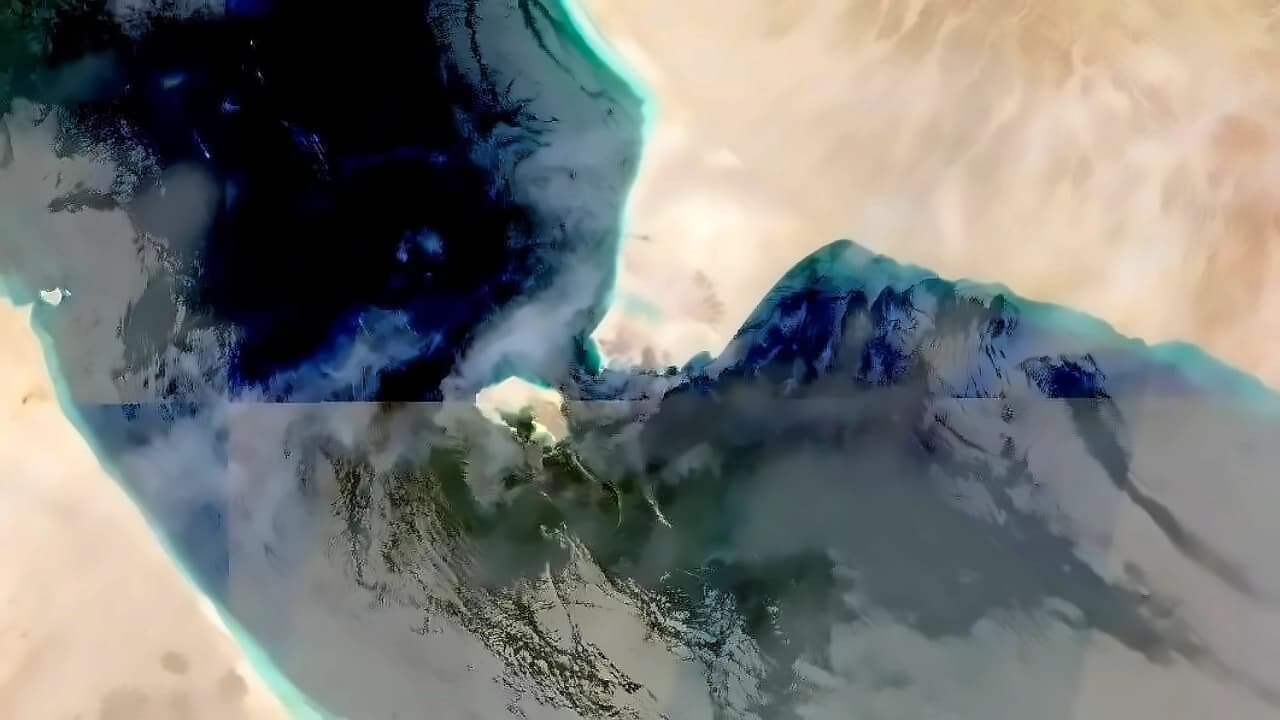
The Houthi threat to impose a naval blockade against Saudi Arabia could significantly widen the war and strain the US military, current and former US officials said. The conflict has created two chokepoints on global oil supplies - Iran's near-total blockade of the Strait of Hormuz and the new threat in the Red Sea. The waterway has become an increasingly important export route for Saudi Arabia, allowing crude shipments to bypass the Strait of Hormuz -- one of the world's busiest oil transit corridors. Millions of barrels per day of Saudi oil have been heading to the kingdom's Red Sea port of Yanbu to avoid the Strait of Hormuz, but if shipments cannot pass through the Red Sea's southern strait, they have only the northern route through the Suez Canal, adding weeks and costs to the journey. The escalation has also seen Iranian media reports saying the US twice attacked a military target in Bushehr, near the country's only operating commercial nuclear power reactor, marking three strikes there in two days. Despite claims from Washington that it has destroyed Iran militarily, Tehran has demonstrated it retains missile and drone capabilities, with Iran pounding vital water desalination and energy plants in Kuwait this week and striking US military assets there, in Bahrain and in Jordan. The latest warning from Iran that "no one will sell oil" if Iranian exports are blocked has already unsettled energy markets, with oil prices climbing to their highest level in more than six weeks as investors weigh the risk of supply disruptions through the Strait of Hormuz.