India and Poland have resolved their differences over India's imports of Russian oil following diplomatic engagement between the two nations. As reported by ANI, Poland's Deputy Minister of Foreign Affairs Wladyslaw Teofil Bartoszewski said the two countries have resolved their differences and now better understand each other's positions. The Polish Deputy Minister acknowledged that Poland had earlier expressed concerns that India's purchases of discounted Russian crude were helping finance Russia's war economy, noting that "we were critical about India buying Russian oil. We understood the economic reason for that because it was at a heavy discount, about 40 per cent less than the market price." However, Bartoszewski emphasized that "this matter has been changed and resolved, and this is really not much of a topic of conversation now. We understood India's position. India understood our position." His remarks come in the backdrop of External Affairs Minister S. Jaishankar's strong comments during talks with Poland's Deputy Prime Minister and Foreign Minister Radoslaw Sikorski in January, when he said India had been selectively targeted over the Russia-Ukraine conflict and its energy ties with Moscow, describing such criticism as both unfair and unjustified.
India's crude oil imports from Russia will continue at 50% in July and August 2026, ensuring energy security amid ongoing geopolitical tensions. According to The Hindu BusinessLine, July 2026 crude oil imports are expected to maintain June's rally when barrels from Moscow accounted for half of New Delhi's monthly shipments. Russian crude imports rose to around 2.6 million barrels per day (mb/d) in June, accounting for more than 50% of India's crude imports, and have been steadily increasing since March 2026. July arrivals are also tracking at healthy levels and could match or even exceed June's volumes, with refiners leveraging Russian barrels to hedge against sudden supply disruptions. August may also follow the same trajectory as first half supplies are largely done, though West Asian producers' share is rising with suppliers using alternate routes such as Sohar port in Oman and the UAE's Fujairah and Khor Fakkan ports.
Despite Russian crude imports carrying a $46-per-ton premium in May, with import value surging 83% amid a 2% fall in volume, Indian refineries continue prioritizing margins and energy security over cost considerations. Market analysts report that refineries now look at the total cost of getting the oil, how much they can get out of it, and how well their equipment works, rather than just looking at the price. As per Business Standard, these elevated costs have made Russian crude more competitive despite higher discounts on West Asian alternatives. Private companies that refine oil have kept buying it because they can get it from different places, and they have equipment that can handle many types of oil. Government-owned refineries have also maintained purchases, balancing business needs with the country's need for energy security. The Union Ministry of Commerce and Industry (MCI) data reveals that Russian imports had reached pre-sanction levels of more than 40%, marking the highest in two years. Russian barrels have enabled Indian refiners to maintain high refinery run rates, ensure uninterrupted fuel supplies, and avoid the disruptions experienced by several other Asian refining systems.
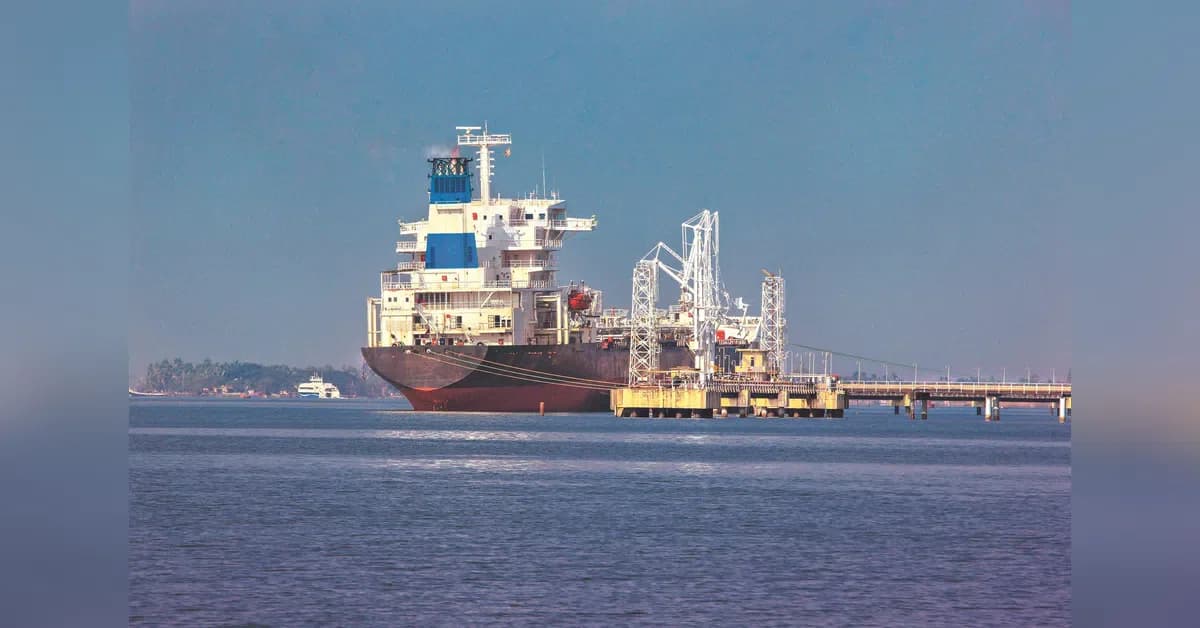
Indian refineries have significantly expanded their Russian crude processing capabilities, with major facilities recording substantial increases in Russian crude imports. According to CREA data, Reliance Industries' Jamnagar refinery raised imports of Russian crude by 150% over the previous month, while Indian Oil Corporation's Paradip refinery recorded a 126% rise. Bharat Petroleum Corporation Ltd's Kochi refinery increased purchases by 83%, and Nayara Energy's Vadinar refinery also expanded imports, with Russian crude shipments climbing 45%. These developments illustrate how Indian refineries continue to play an increasingly important role in supplying refined petroleum products to global markets after processing Russian crude. CREA estimates that €369 million worth of exports were refined from Russian crude oil, highlighting India's role as a major refining hub. Kpler emphasises that Russian crude has become India's strongest energy security hedge, particularly since the SoH disruptions.
Despite India's heavy reliance on Russian crude, experts warn about the strategic implications of this concentration. As noted by Business Standard, India cannot overlook the diplomatic costs as Russian energy dependence risks sanctions. The country must strike a balance between having long-term stable contracts with multiple producers, and selectively using the spot-market to mitigate the procurement risks. Until the Russia-Ukraine conflict, nearly 70% of India's crude imports came through long-term contracts, particularly from West Asia. The current situation reflects that regardless of whether India increases or decreases its imports of Russian oil, its decisions appear to be driven by considerations other than strategic autonomy. India's yuan-based payments give China an edge to internationalise its currency at India's expense, even if it has no bearing on the domestic strength of the Indian rupee due to strict capital controls. There are currently few alternative suppliers capable of replacing Russian crude at the same scale, reliability, and economics, with Russian crude remaining the most practical and competitive source of supply for Indian refiners.
India has significantly expanded its role in supplying refined petroleum products to global markets after processing Russian crude. According to CREA, refineries in India, along with those in Turkey, Brunei and Georgia, exported petroleum products worth €814 million to countries that have imposed sanctions on Russia during June 2026, including the European Union, the United States and Australia. The report notes that India imported Russian oil products worth €488 million and coal worth €444 million during the month, together accounting for the remaining share of the country's €5.5 billion fossil fuel imports from Russia. Notably, the United Kingdom received its first shipment of jet fuel from Reliance Industries' Jamnagar refinery, valued at around €63 million, following changes in UK rules allowing imports of fuels refined from Russian crude in third countries. These developments demonstrate how Indian refineries continue to play an increasingly important role in global energy markets despite geopolitical tensions.
The concentration of Indian crude imports on Russia has intensified following the withdrawal of the US's GL 134C licence, which protected buyers from sanctions when completing purchases of cargo loaded on designated vessels. As noted by Claire Jungman, director of maritime risk & intelligence at Vortexa, India's position as the buyer carries extra weight now that this protection mechanism is gone. The current situation reflects the complex interplay of geopolitical tensions, sanctions regimes, and logistical challenges that continue to shape India's crude oil sourcing strategies in an increasingly volatile global market. Experts think Russia will keep being a big oil supplier to India as long as its oil is cheaper and better than what other countries offer. India must expand its strategic petroleum reserves to cushion temporary disruptions and maintain a diversified energy strategy to avoid increasing and unsustainably high one-country concentration that could weaken its bargaining power and reduce flexibility. The June to September period in India is marked by rains leading to lower mobility and industrial operations, which brings down consumption of petrol, diesel, jet fuel, etc., while refiners might use this period to top up inventory preparing for the October-December festival and marriage season.