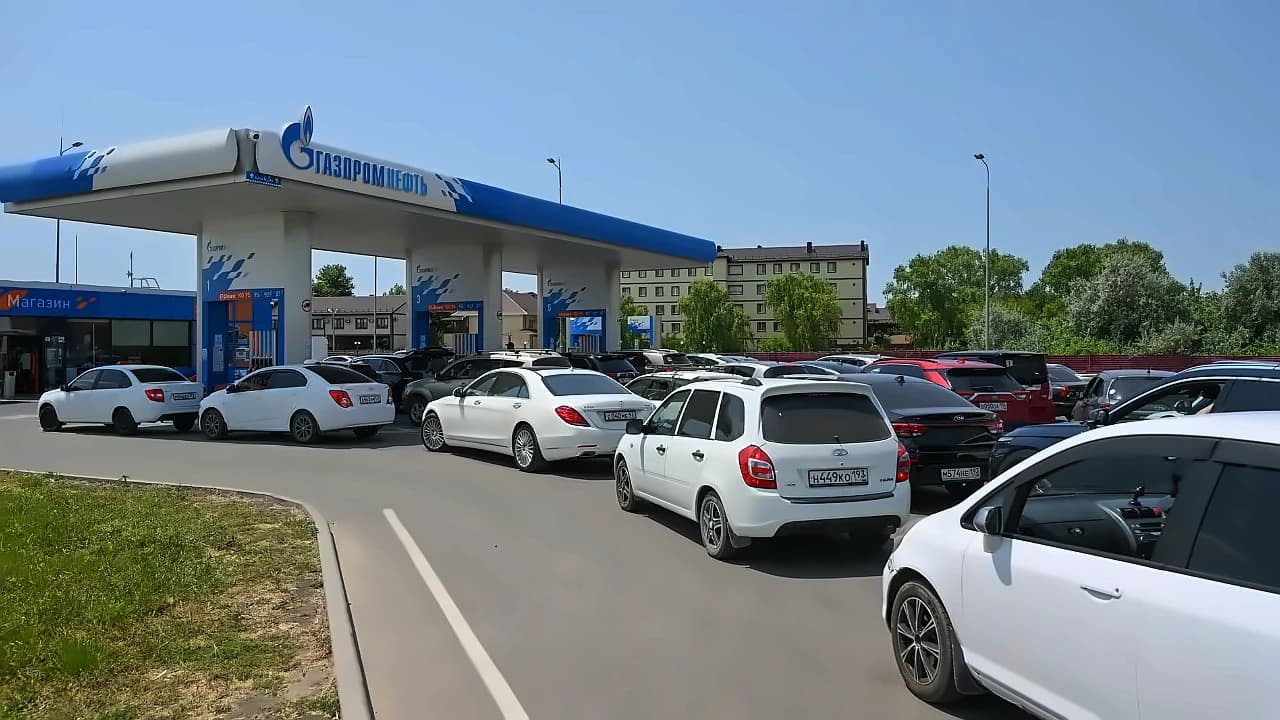
Russia's oil production has declined to its lowest level since 2009 following sustained Ukrainian drone attacks on refineries throughout May. According to Reuters, diesel fuel production decreased by about 10% in May due to these attacks, forcing Moscow to implement temporary bans on exports of gasoline and jet fuel to address potential fuel shortages. This represents a dramatic escalation from the 460,000 barrels per day decline reported earlier this year, with the current crisis marking the most severe production disruption since the 2009 financial crisis. The International Energy Agency had previously confirmed Russia's crude oil production fell by 460,000 barrels per day in April from a year earlier to around 8.8 million barrels per day.
The Russian government has responded to the production crisis with unprecedented financial support, paying oil refiners 204.3 billion rubles ($2.8 billion) in May, nearly five times more than in May 2025. As reported by Bloomberg, these payments represent a nearly two-year high for compensation to refiners, who have been targeted by Ukrainian drone attacks almost daily in recent months. The subsidies, which partially compensate refiners for the gap between domestic fuel prices and export prices, surged following the rise in global oil markets triggered by the war in Iran. Russia's oil and gas revenues totaled 678.9 billion rubles ($8.6 billion) in May 2026, up 32.4% from a year earlier, though they were 20.7% lower than in April despite remaining 10% higher than in March 2026.
Ukraine has systematically targeted Russian energy infrastructure with drone strikes and attacks across multiple refineries throughout May. According to Investing.com, the most significant attacks included the Yaroslavl Refinery (15 million metric tonnes annual capacity), Syzran Refinery (8.5 million tonnes annual capacity), and Tuapse Refinery (12 million tonnes annual capacity). Other major facilities affected included the NORSI Refinery (16 million tonnes annual capacity), Moscow Refinery (11 million tonnes annual capacity), and Ryazan Refinery (13.1 million tonnes processed in 2024). The sustained attacks have caused processing halts and operational disruptions across Russia's refining network, with some refineries accounting for nearly 5% of Russia's total refining volumes. These facilities have been targeted by Ukrainian drone attacks almost daily in recent months, making them crucial for Russian fuel producers.
Despite higher global oil prices linked to the war in Iran, Russia's oil and gas revenues face significant challenges from the production decline. As reported by Bloomberg, Russia's excessive profits from high oil prices were caused by the war in the Middle East, unlikely to help revitalize its economy which is teetering on the brink of recession. The country relies on oil and gas revenues to finance its war against Ukraine and has benefited from higher energy prices linked to the conflict in Iran. However, the current production crisis and massive compensation payments to refiners are reducing the country's overall oil and gas revenues even as global oil prices rise. This represents a fundamental shift from Russia's previous ability to capitalize on geopolitical tensions through increased energy exports.
Russia continues to navigate the complex geopolitical landscape while managing domestic production challenges through strategic export responses. Despite production difficulties, Russia has been stepping up its export infrastructure to its maximum capacity to maintain market presence, with crude oil exports through western ports rising 15% in May from the previous month. Novak emphasized that the OPEC+ group of oil-producing countries remains important in the global oil market despite the United Arab Emirates leaving the alliance. However, the current crisis with fuel shortages due to Ukrainian drone attacks and the lowest production levels since 2009 presents new challenges for Russia's energy strategy and economic stability as it continues to rely on oil and gas revenues to finance its ongoing military operations.