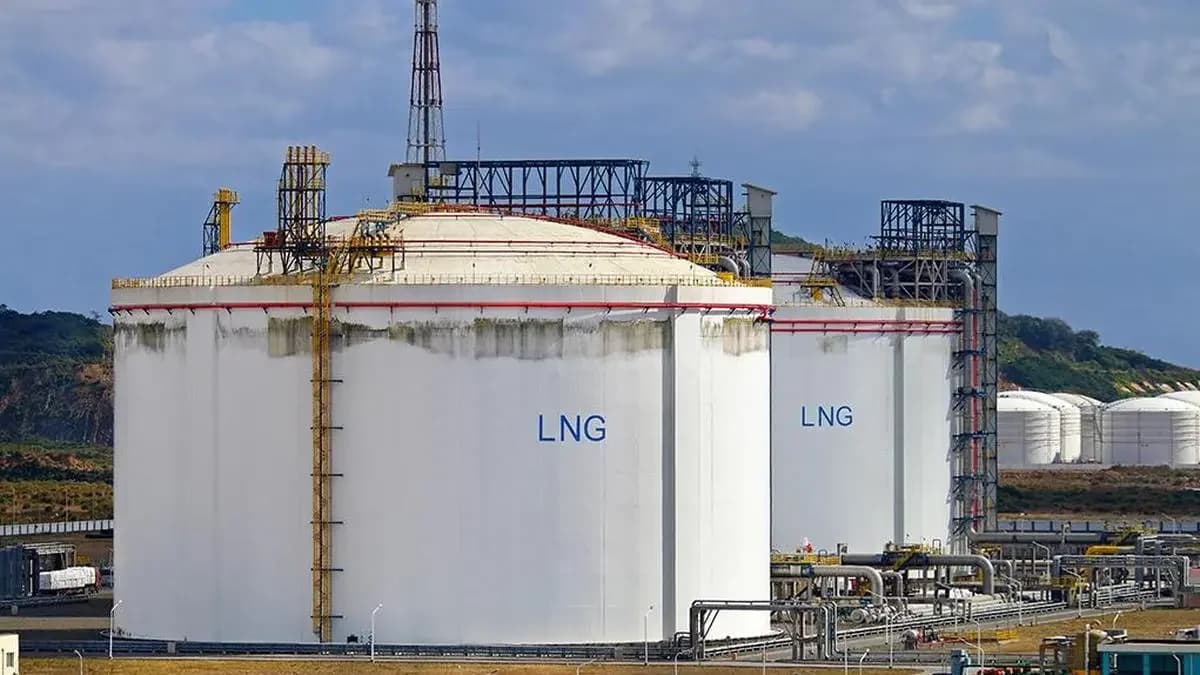
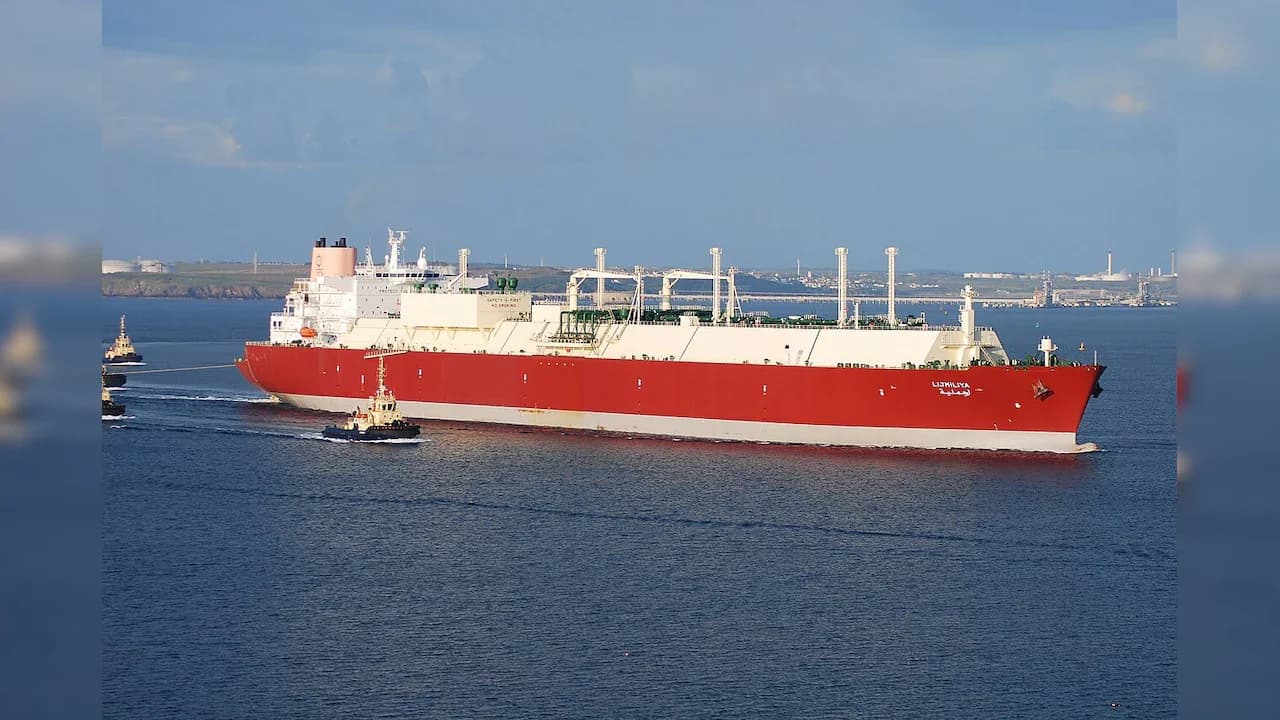
Qatar has resumed LNG exports through the Strait of Hormuz for the first time since July, with the Al Marrouna tanker sailing through the waterway on Tuesday morning and signaling Port Qasim in Pakistan as its next destination. According to Bloomberg ship-tracking data, the vessel, which loaded in Qatar early last month, was broadcasting its location during the journey through Hormuz and is expected to arrive Thursday. This development comes after several empty Qatari LNG tankers started heading back toward the Persian Gulf, signaling that the supplier may be positioning vessels for a resumption of exports even after recent US-Iran escalations. Qatar, which accounted for a fifth of the world's LNG exports before the war, had all but halted shipments since one of its tankers was attacked in late July, with outbound LNG flows from the Persian Gulf remaining below pre-war levels of three shipments a day.
LNG prices have surged to multiyear highs as escalating US-Iran tensions and West Asian supply disruptions create a perfect storm for global markets. According to reports from Business Standard, benchmark TTF month-ahead gas prices rose by almost 90% year-on-year in August to an average of $21/MMBtu — their highest level since December 2023. In Asia, S&P Platts' Japan Korea Marker (JKM) prices moved in tandem with TTF, rising 90% on the year to an average of $22/MMBtu. The Argus-assessed prices for deliveries to west and east India for the first half of October stood at $25.34/MMBtu and $25.57/MMBtu respectively. Latest data shows European natural gas prices started the week higher, with October-dated TTF contracts closing at €71.95 per megawatt-hour on Friday, rising 3.3% to €74.35 per megawatt-hour at 10:42 a.m. local time. Gas prices in Europe and Asia have surged to their highest levels in over three years amid fresh strikes on vessels in the region and persistent disruptions to Qatari exports.
A critical shortage of ship fuel oil threatens to further escalate shipping costs and rates as refinery disruptions and war-related supply constraints create unprecedented market tightness. According to Reuters, the fuel oil deficit is expected to hit 218,000 barrels per day in the third quarter, marking the first significant shortfall since the third quarter of 2025 when it was a marginal 6,000 bpd. The price of very low sulphur fuel oil has surged 76% since the Iran war started to just under $825 per metric ton ($130 per barrel) in Singapore as of September 1, outstripping a 40% rise in benchmark Brent crude oil. Fuel oil stocks are 30% below three-year seasonal averages in top hubs Singapore, Amsterdam-Rotterdam-Antwerp and Fujairah, with Asia being hardest-hit as it relies most heavily on Gulf flows disrupted by the Iran war.
Escalating US-Iran tensions are raising fresh concerns over LNG flows from the Gulf region as Europe approaches the heating season. According to Anadolu Agency, Iran will declare a new 'restricted' maritime zone outside the Strait of Hormuz in the coming days, warning that any vessel entering the area would be placed on a sanctions list. Iran's top national security official Mohsen Rezaei announced that the zone will begin from the US Navy's blockade line and extend into parts of the Gulf, with Iran and Oman set to sign an agreement on a new corridor through Hormuz. The announcement follows US military attacks on three Iranian oil tankers belonging to the Islamic Revolutionary Guard Corps after Iran targeted two US warships in the region. On Monday, Iran said a deal with Oman to manage shipping through Hormuz was imminent, a move traders are still weighing because it could tighten Tehran's control over the waterway and raise questions about how the US would respond. These developments are raising concerns that LNG shipments from the region could face further delays, supporting continued price increases.
The war in West Asia has created significant supply disruptions, with Qatar and the Emirates effectively cut from global LNG trade for over 6 months, leading to a cumulative LNG supply loss of more than 50 bcm through the March-August period. As reported by Business Standard, this decline equates to around half of China's LNG imports in 2025. Qatar has declared force majeure on term LNG shipments until October/November for buyers including India's Petronet LNG, which has a long-term contract for 8.5 million tonnes a year of LNG supplies, a third of overall LNG imports. Two of Ras Laffan's LNG trains could take 3-5 years to resume exports. Last month, Qatar extended force majeure on LNG deliveries to European and Asian buyers into October, helping keep prices elevated. However, Qatar has continued loading LNG onto available empty tankers inside the Gulf and exporting it to Kuwait, allowing it to manage storage and keep parts of its massive export complex running at minimum levels.
Asian importers are increasingly turning to the United States as Middle Eastern supplies falter. According to International Information Network Analysis, US LNG exports have similarly shifted toward Asia, with exports to Japan increasing by 515%, South Korea by 568%, Thailand by 262%, India by 107%, and Taiwan by 23% between February and May 2026. Singapore, which had no LNG imports from the United States in February, imported 102.5 billion cubic feet in May. Meanwhile, Europe's imports of American LNG have declined sharply—down 88% for the United Kingdom, 45% for France, and 89% for Turkey. US crude exports have risen dramatically since the start of the Iran war, increasing from 120 million barrels in February 2026 to 160 million in April and 170 million in May. Shipments to Asia rose from 34.11 million barrels in February to 83.64 million in May, increasing their share of total US crude exports from 28% to 47%.
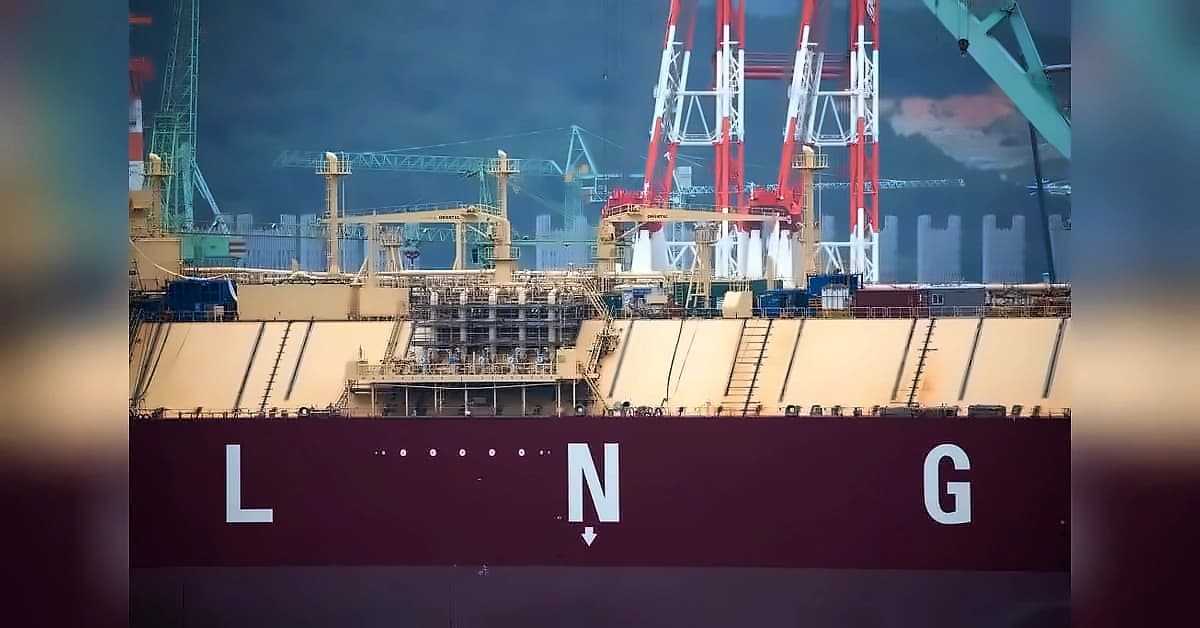
Indian city gas utilities are facing significant price pressures as they compete with Europe for LNG supplies. According to reports from Business Standard, IGL, India's biggest city gas utility, took its biggest single-day hike for compressed natural gas (CNG) by increasing its price in Delhi by ₹3.9/kg, bringing its cumulative CNG price hike since the start of the year to ₹9.9/kg — the highest among CGD companies. State-controlled gas distributor GAIL may have purchased October delivery at around $25.10-25.20/MMBtu and November delivery at around $24.90-25/MMBtu. Despite price increases, South Asian LNG imports rose by 34% year-on-year to nearly 2.5 million tonnes in August. European gas storage facilities are approaching critical levels as the heating season approaches, with EU gas storage facilities at 66.6% full according to Gas Infrastructure Europe (GIE) data, below the seasonal average. The EU requires storage facilities to reach 90% by December 1, with flexibility allowing the target to be met between October 1 and December 1 under revised rules.