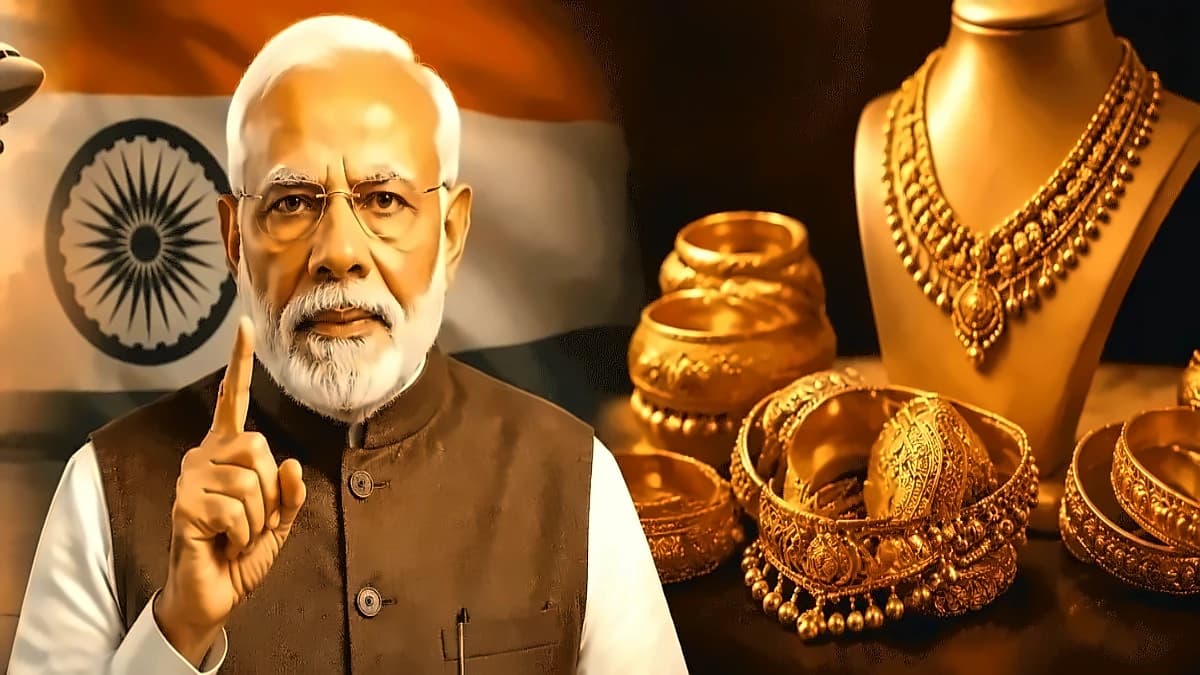
Prime Minister Narendra Modi's recent appeal to avoid buying gold for a year has triggered severe market reactions, with jewellery stocks experiencing sharp declines. Titan Company fell more than 8% and Kalyan Jewellers dropped over 10% amid fears of weakening sales and lower consumer footfall. The twin developments of Modi's appeal and record-high bullion prices have created what traders describe as a 'double whammy' for the jewellery industry. Retail gold prices in India have surged above ₹100,000 per 10 grams in several cities, severely hurting affordability and intensifying the impact of the government's policy change.
Modi's gold appeal is part of a broader economic strategy to address India's foreign exchange challenges. As per Arpit Sharma's analysis, 'India imports almost all of its gold — every purchase sends dollars out of the country.' The Prime Minister explained that 'More imports → More dollars leave India → Rupee falls → Your savings lose real value' while 'Less imports → Dollar outflow slows → Rupee stabilises → Inflation stays in check.' The appeal comes amid the West Asia war impact spiking global oil prices, with India already spending heavily on crude oil imports. Modi has now expanded his message to include limiting fuel usage, reducing travel, and even postponing weddings as part of broader efforts to conserve foreign currency amid rising global oil prices and external financial pressures.
Prime Minister Narendra Modi's recent appeal to avoid buying gold for a year has sparked panic buying across the country, particularly for bridal jewellery. In a move aimed at protecting the stability of the Indian economy and conserving foreign exchange reserves, the government has increased the import duty on gold and silver from 6% to 15%, effective May 13. According to reports from Goodreturns, this policy change has intensified buying ahead of the wedding season, which typically accounts for 50-60% of annual jewellery demand. The appeal has particular resonance in India, where gold anchors everything from family savings to wedding rituals, making Modi's request sound almost personal rather than routine policy.
Following the announcement, panic buying has intensified with jewellers reporting a sharp rise in sales, though recent developments show enquiries have slowed over the past few days as customers remain unsure about future prices and government messaging. Rajesh Rokde, chairman of the All India Gem & Jewellery Domestic Council, noted that gold sales have risen by 15-20% as consumers buy ahead of potential tax increases. As reported by Economic Times, Varghese Alukkas, managing director of Joy Alukkas, confirmed that customers are rushing to purchase ornaments, with some even buying for weddings in the November-December period due to confusion about potential government restrictions. However, the combination of soaring prices and the Prime Minister's call for restraint has created what traders describe as a 'double whammy' for the jewellery industry.
The government's strategic move has further unsettled the jewellery sector, which was already grappling with raw material supply disruptions caused by the West Asia crisis. Brijesh Goyal, chairman of the Chamber of Trade & Industry (CTI), told IndiaToday.in that India consumes around 700-800 tonnes of gold annually, making it one of the world's largest gold markets. Industry bodies have warned that the slowdown could severely affect employment across the labour-intensive gems and jewellery sector, which supports more than 10 million workers, including artisans, polishers, traders and small retailers. Singh Rajput, national president of the Akhil Bharatiya Swarnkar Sangh, said the burden of economic adjustment should not fall disproportionately on ordinary citizens and small jewellers, noting that 'Gold is social security for millions of Indian families, especially in rural areas where households save for years to buy jewellery for weddings and emergencies'.