India's jewellery industry is preparing for a behavioural shift, not a demand collapse, after Prime Minister Narendra Modi's appeal to citizens to cut down on gold purchases for a year. According to The Hindu BusinessLine, large organised jewellers say the immediate impact of the Prime Minister's remarks could accelerate a transition already underway in the market: consumers increasingly exchanging old gold for new jewellery instead of making fresh bullion-heavy purchases. M.P. Ahammad, Chairman of Malabar Group, said, "What we expect over the coming quarters is not a contraction in demand so much as a shift in how that demand is met." He expects exchange-led purchases to become the dominant buying trend as consumers turn more value-conscious amid elevated gold prices and policy messaging around reducing imports.
The GTRI report reveals that India's gold bar imports have jumped sharply from $36.5 billion in 2022 to $58.9 billion in 2025, increasing pressure on the country's trade balance as India imports almost all the gold it consumes. According to The Times of India, India's gold imports hit a record $71.98 billion in 2025-26, rising over 24% from $58 billion a year earlier, largely due to skyrocketing global gold prices. During his speech on May 10th, PM Modi specifically appealed to people not to buy gold for weddings for one year, stating that "Gold purchases are another area where foreign exchange is used extensively. In the national interest, we must resolve not to purchase gold for a year." The Prime Minister made these remarks during a speech delivered in Hyderabad's Secunderabad, where gold is not just an investment but an emotion deeply woven into tradition, weddings, and household savings.
After PM Modi's announcement, jewellery stocks saw a sharp sell-off, with investors reacting to concerns over a possible hit to demand. According to latest market data, Senco Gold slipped 8.69% or 31 points to 333 on the BSE, while Titan fell 6.45% or 291 points to 4,222 as of 11:11 am. Kalyan Jewellers also declined 8.3% to 389, and PC Jeweller was down 3.26% at 9. The World Gold Council report revealed that Indian gold demand rose 10% year-on-year to 151 tons in Q1 and in value terms, the demand surged 99% year-on-year to a Q1 record of ₹2,275 billion. India, which imports more than 88% of its crude oil requirements, has been hit hard from the spike in global oil prices amid the ongoing US-Iran war, with the rupee also weakening sharply against the US dollar. Union petroleum minister Hardeep Singh Puri said state-run oil companies are currently absorbing massive losses to shield consumers from fuel price hikes.
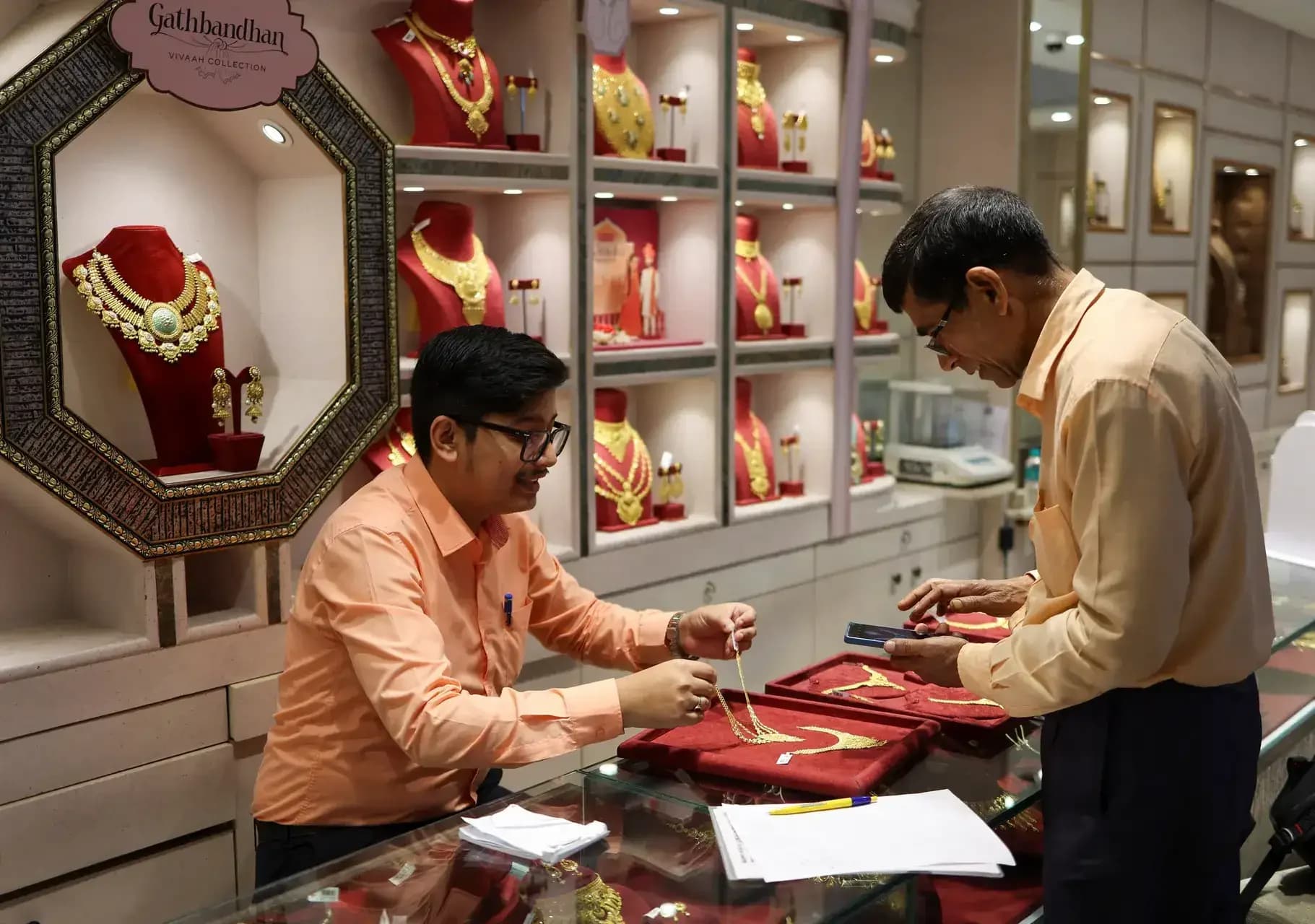
Industry players see a broader opportunity emerging around gold recycling and monetisation. As per The Hindu BusinessLine, India is estimated to hold nearly 25,000 tonnes of gold in households, much of it lying idle. M.P. Ahammad noted, "We believe recycling and monetisation are the more sustainable expression of the same national goal." However, some jewellers cautioned against relying on higher import duties to curb demand. Dr C Vinod Hayagriv, Managing Director of C. Krishniah Chetty Group, warned that raising customs duty could revive illegal imports and expand the parallel economy. Instead, he suggested restricting bullion sales to GST-registered buyers to discourage speculative hoarding and reduce raw bullion imports.
Executives indicate that wedding and occasion-led jewellery demand remains relatively resilient, while investment-driven buying is likely to slow first. According to The Hindu BusinessLine, Varghese Alukkas, Managing Director of Jos Alukkas, said, "The investment-led segment is more vulnerable to messaging of this kind than jewellery is. Jewellery buying for occasions has historically been more resilient." While organised retailers say footfalls and wedding bookings have held steady so far, they admit the next few weeks will determine whether the Prime Minister's appeal translates into a sustained behavioural shift. The comments come at a time when the industry is already battling record-high gold prices, tight margins and cautious consumer sentiment.