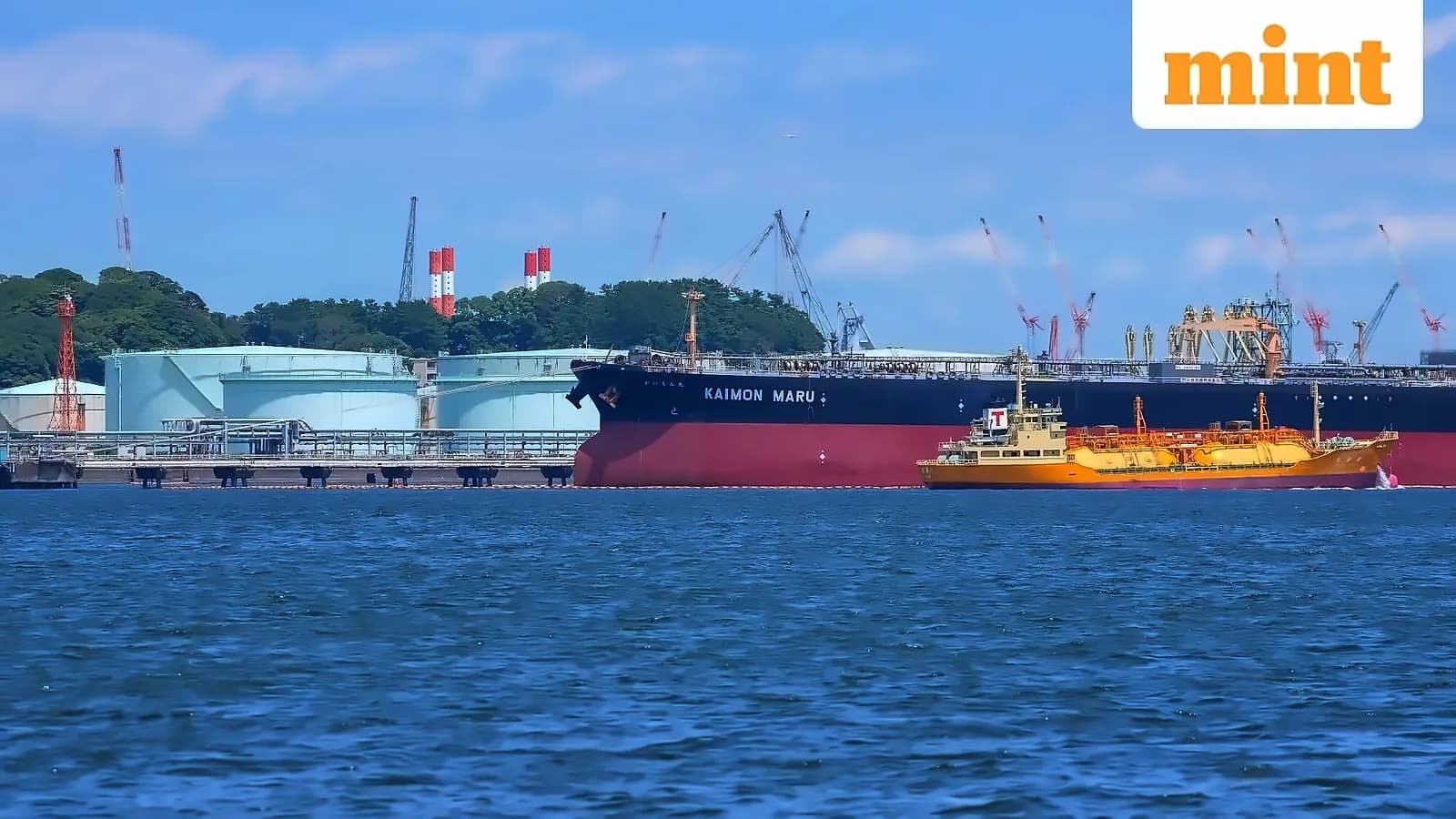
India's crude oil import benchmark has jumped over $8 per barrel in just 10 days, climbing from $68.21 per barrel on July 3 to $76.28 per barrel on July 13, according to The Financial Express. This surge puts fresh pressure on the energy import bill and effectively ends expectations of petrol and diesel price cuts after the recent de-escalation in West Asia. Pankaj Srivastava of Rystad Energy noted that every $10-per-barrel increase in crude translates into roughly $42 million a day in additional crude import costs for India. The immediate pressure on oil marketing companies' (OMCs) marketing recoveries may emerge gradually as much of their near-term crude procurement has already been secured, though the sharp rise has complicated expectations of lower retail fuel prices.
Brent crude traded near $85 a barrel on Thursday, after rallying about 12% over the previous three sessions, while West Texas Intermediate (WTI) hovered around $80 a barrel, according to NDTV Profit. The latest gains came after the United States launched another round of airstrikes on Iran, saying it had also disabled an unladen oil tanker headed for an Iranian port. Oil prices climbed for a fourth consecutive session as escalating military action between the United States and Iran kept traders focused on the risk of supply disruptions through the Strait of Hormuz, one of the world's most important energy corridors. This marks a sharp reversal from last week when Brent had settled at $76.01 per barrel amid hopes that shipping through the Strait of Hormuz would resume despite the conflict. An analyst described the recent move in oil towards $86 per barrel as "primarily a geopolitical risk repricing rather than a reflection of stronger underlying demand fundamentals."
State-run oil marketing companies have kept petrol and diesel prices unchanged on July 16, as fuel rates remain at the levels set after the late-May hike. Petrol prices on July 16 range from ₹102.12 per litre in Delhi to ₹115.69 per litre in Hyderabad, while diesel prices vary from ₹95.20 per litre in Delhi to ₹103.82 per litre in Hyderabad. Indian Oil, Bharat Petroleum and Hindustan Petroleum continue to follow the daily dynamic pricing system, under which pump rates can be adjusted every morning based on global crude prices and currency movements. Fuel prices in the nation have escalated four times over the last four months amid the Iran war, increasing by about ₹7.5-8 per litre during the period, as reported by NDTV Profit.
Oil Minister Hardeep Singh Puri had indicated last week that reducing local fuel costs is not an option at this time. As reported by The Economic Times, this policy stance continues despite the recent crude price surge and rising inflation concerns. However, his remarks came days after Union Petroleum and Natural Gas Minister Hardeep Singh Puri said oil marketing companies could consider revising retail fuel prices if international crude oil price remains stable over a sustained period. According to PwC India's Manas Majumdar, "The retail fuel price cuts we were expecting post-ceasefire are now off the table." Lowering retail prices at this stage would risk pushing OMCs back into daily losses as their crude procurement costs rise. The decision to maintain current fuel prices reflects the government's approach to managing fuel costs amid global market dynamics and ongoing geopolitical tensions, with Bank of America noting that petrol and diesel prices are unlikely to see an immediate cut even as India's retail inflation has climbed above the Reserve Bank of India's 4% target for the first time in 17 months.
India has increased windfall taxes on exports of diesel and aviation turbine fuel (ATF) and lowered the levy on petrol exports, reflecting the recent rebound in global crude oil prices. Export duty on diesel has been raised to ₹15.5 per litre from ₹8.5 per litre, while the levy on ATF exports has been increased to ₹14.5 per litre from ₹7.5 per litre. The duty on petrol exports, however, has been reduced to ₹2.5 per litre from ₹4 per litre. For India, which imports more than 85% of its crude oil requirement, the latest crude price surge could significantly impact the economy. For every $10 per barrel rise in crude, India's subsidy bill grows by roughly $13-15 billion, widening the current account deficit, according to PwC India's Majumdar. The consequences could extend beyond petrol pumps, with ATF and fertiliser costs expected to be among the first to feel the impact of the renewed energy price surge.