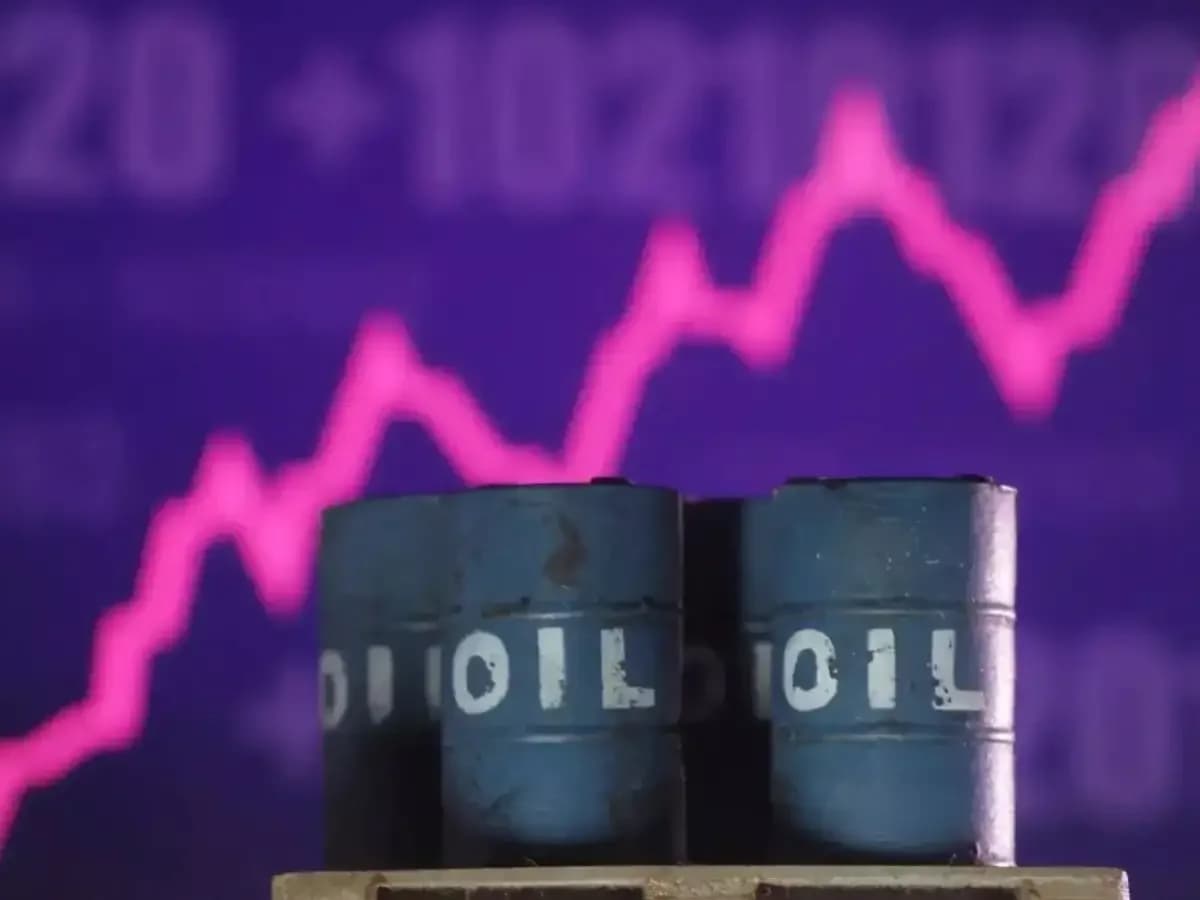
Petrol and diesel prices remained unchanged across major Indian cities on April 27, even as global crude oil markets continued their upward trajectory. Brent crude for June delivery rose 1.69% to $100.83 per barrel after touching an intraday high of $107, while West Texas Intermediate (WTI) crude also increased 1.48% to $95.80 per barrel, according to latest market data. This surge comes as the Strait of Hormuz, which carries nearly 20% of global oil trade, remains disrupted due to ongoing tensions between the U.S. and Iran. The latest price stability comes despite global crude benchmarks posting their biggest weekly gains since the start of the war. However, Emkay Global Financial Services has indicated that ongoing disruptions could lead to a possible revision in fuel prices, with any initial hike projected around ₹10 per litre, though such an increase would only partly offset losses faced by oil marketing companies.
In Delhi, diesel continued to be priced at ₹87.67 per litre, while petrol was priced at ₹94.77 per litre. As reported by Reuters, rates vary across states due to differences in value-added tax (VAT) and local levies. Mumbai recorded diesel rates at ₹90.03 per litre and petrol at ₹103.50 per litre. Other major cities showed higher prices, with Hyderabad recording diesel at ₹95.70 per litre and petrol at ₹107.50 per litre, while Kolkata saw diesel at ₹92.02 per litre and petrol at ₹105.41 per litre. The stability in retail fuel rates comes amid renewed geopolitical tensions after efforts to restart peace talks between the US and Iran failed, resulting in continued disruption in the Strait of Hormuz and a tightening global supply situation.
The surge in global crude prices has been driven by stalled peace talks between the United States and Iran and continued disruptions in the Strait of Hormuz — a critical global oil transit route handling nearly a fifth of the world's oil flows. According to Reuters, limited tanker movement and supply constraints have kept markets tight. The ongoing closure of the Strait of Hormuz has intensified market uncertainty, with daily ship movement through the strait dropping sharply as competing restrictions are enforced, disrupting not only crude oil but also fuel, natural gas and fertiliser supplies. Fuel prices in India are influenced by multiple factors, with global crude oil rates being the most significant driver, along with the rupee-dollar exchange rate, state-level VAT, central excise duties, transportation costs, and local demand-supply conditions.

The International Energy Agency (IEA) has warned that global oil supply plummeted by over 10 million barrels per day (mb/d) last month as a result of the ongoing naval blockade and infrastructure damage in the region. The "dual blockade" in the Gulf, with the U.S. Navy blockading Iranian ports and Iran restricting traffic through the Strait, has forced shipowners to reroute or anchor vessels. The closure has triggered the largest disruption to world energy supplies since the 1970s, with insurance costs for tankers reaching prohibitive levels. In India, oil marketing companies continue to hold rates steady, but the widening gap between international procurement costs and retail prices is putting pressure on fiscal margins. The Indian Basket of crude, which was last recorded at $108.55 per barrel on April 23, has sparked concerns over future inflationary pressure for Indian consumers.