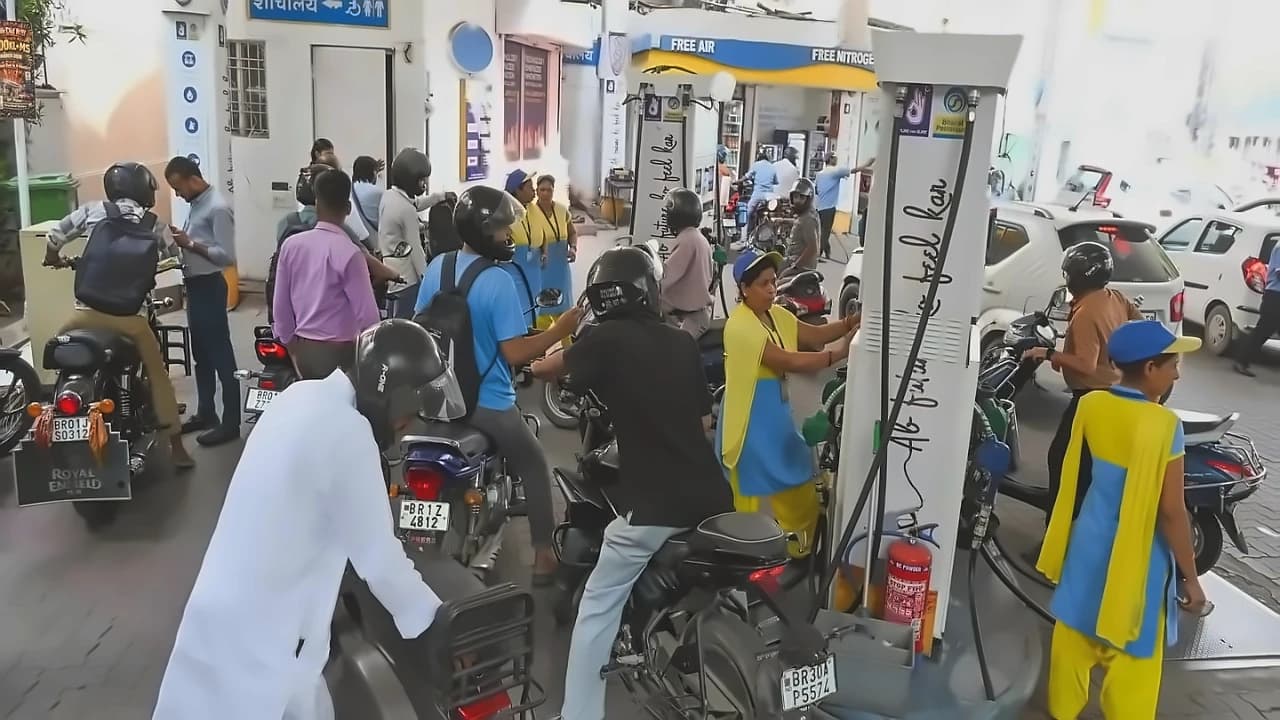
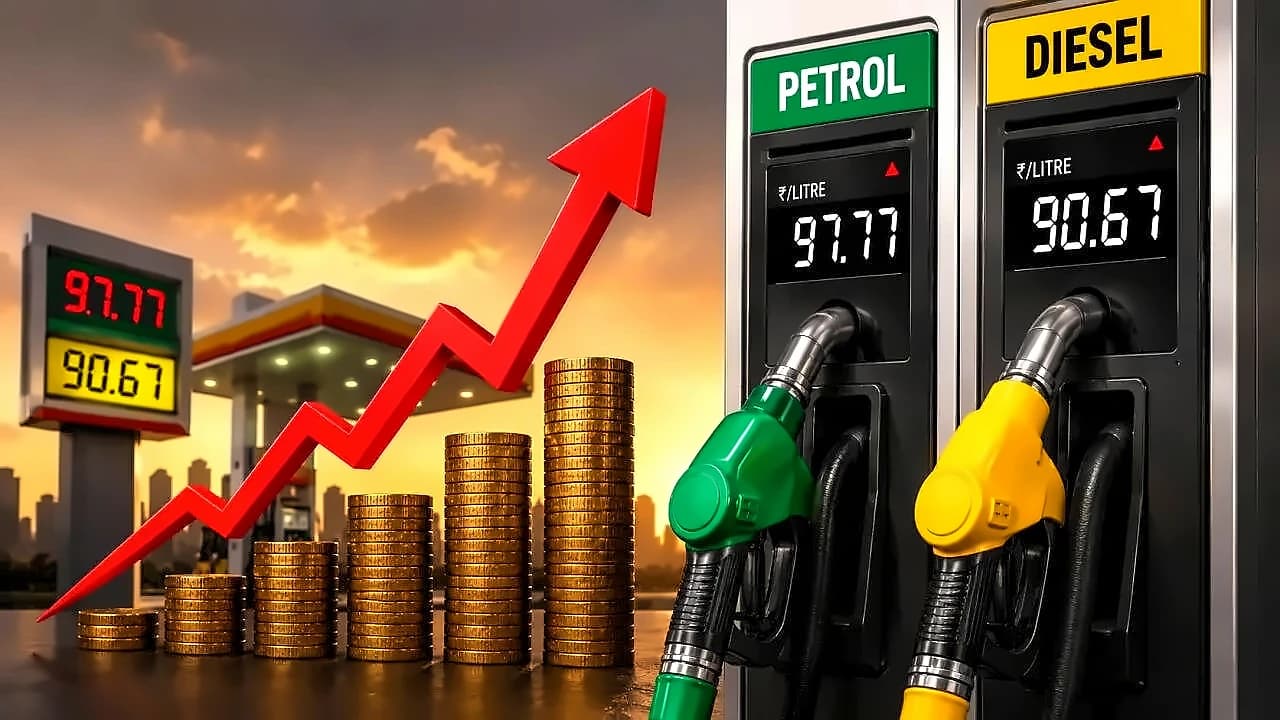
Public sector oil firms announced a ₹3 per litre increase in petrol and diesel prices across metros on Friday, which was lower than expected. According to reports from The Economic Times, the hike came a fortnight after elections in four states and Puducherry ended. The increase will only partially cover the losses of state-run oil retailers, with ratings agency Crisil estimating under-recoveries at ₹10 per litre for petrol and ₹13 for diesel. Oil company executives did not rule out the possibility of further increases, but that will depend on government approval including extent and timing. Indian Oil Corporation (IOC) Director (Refineries) Arvind Kumar described the increase as a "very small rise" and acknowledged there was "a lot of pressure" on the sector, noting that refineries are working round the clock at more than 100% capacity to prevent any crisis.
The revised rates came into effect immediately across the country, with Delhi seeing petrol prices rise by ₹3.14 per litre to ₹97.77 and diesel becoming costlier by ₹3.11 per litre. According to IANS, amid the Middle East crisis, oil companies have also raised CNG prices by ₹2 per kilogram, with the new CNG rate in Delhi at ₹79.09 per kilogram. The cost of crude for Indian refiners has increased 53% from an average $69 per barrel in February to over $106 so far in May, with a jump of around 75% each for petrol and diesel. Global oil prices spiked to more than $120 per barrel before easing to around $100-$105 a barrel following the near-closure and severe disruption of the Strait of Hormuz, triggered by the conflict.
According to IANS, Petroleum Minister Hardeep Singh Puri warned that India's state-run oil marketing companies are staring at the possibility of their entire FY26 profits being wiped out if crude oil prices remain elevated. Speaking at the CII Annual Business Summit 2026, Puri said the ongoing energy crisis triggered by the conflict in the Middle East has sharply increased pressure on Indian fuel retailers, with oil marketing companies currently losing nearly ₹1,000 crore every day. Sujata Sharma, joint secretary in the Union Petroleum Ministry, revealed that the combined underrecovery of petrol, diesel, and LPG has reached nearly ₹30,000 crore every month. The Centre had already cut excise duties on petrol and diesel, sacrificing nearly ₹14,000 crore in monthly revenue, but under-recoveries continue to widen significantly.
Congress president Mallikarjun Kharge on Friday slammed the Modi government over the fuel price hike, alleging an economic crisis in the country due to the government's "leadership crisis, lack of vision and incompetence." In a post on X, he said, "this crisis is a government-made crisis, the consequences of which the people of the country are bearing out of their own pockets on petrol, diesel, and LPG." Karnataka CM Siddaramaiah criticised the increase, saying the Modi government "once again punished the people for its own failures by increasing petrol and diesel prices by ₹3 per litre." Haryana Congress will hold district-level protest demonstrations against the increase, with president Rao Narender Singh strongly criticising the BJP-led central government. PMK leader Anbumani Ramadoss demanded that oil companies immediately withdraw the hike, claiming it will put heavy burden on poor and middle-income households. Tamil Nadu CM Vijay called the price increase "unacceptable" and urged an immediate rollback, stating it will have a huge impact on monthly income of poor and middle-class people.
India's consumers are likely to face more fuel price hikes in the near term, as the government grapples with the economic impact of the months-long conflict in the Persian Gulf, according to Bloomberg News. A further 2-4 rupee increase is expected soon if crude prices remain high, they told Bloomberg News. State-owned refiners have indicated they would need add closer to ₹15-20 rupees per litre in order to cope with the current crisis. Union Minister G Kishan Reddy said the hike was an unavoidable move due to the global energy crisis, urging citizens to understand the circumstances behind the increase. The Supreme Court has directed that all matters listed on miscellaneous days shall be heard only through video conferencing until further orders, encouraging car-pooling arrangements among judges to ensure optimum utilisation of fuel.